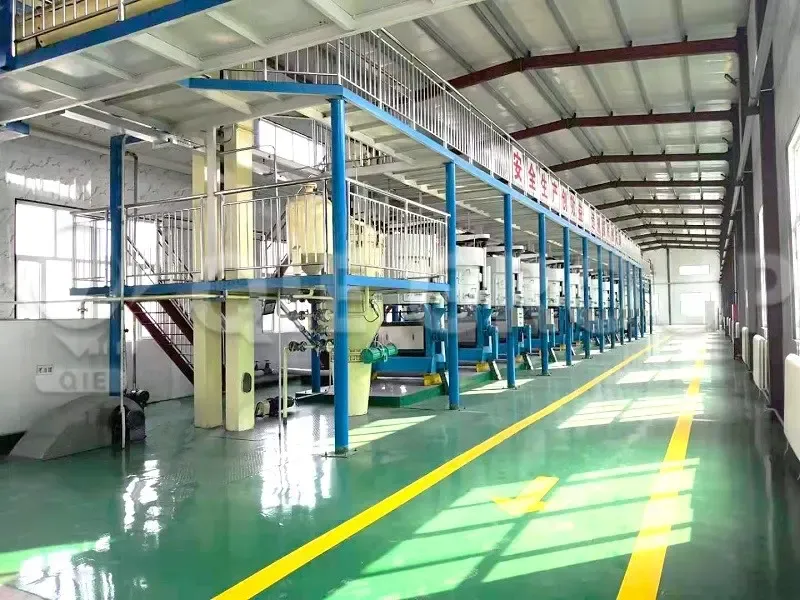
In recent years, driven by the global surge in demand for natural plant oils and functional health foods, Black Seed Oil (also known as Nigella Sativa Oil) has gained immense attention across the dietary supplement, pharmaceutical, high-end culinary, and cosmetics industries due to its rich content of Thymoquinone (TQ) and essential bioactive compounds. Consequently, an increasing number of investors and agricultural processing enterprises are planning to establish black seed oil extraction facilities.
However, when procuring equipment, investors frequently face critical choices:
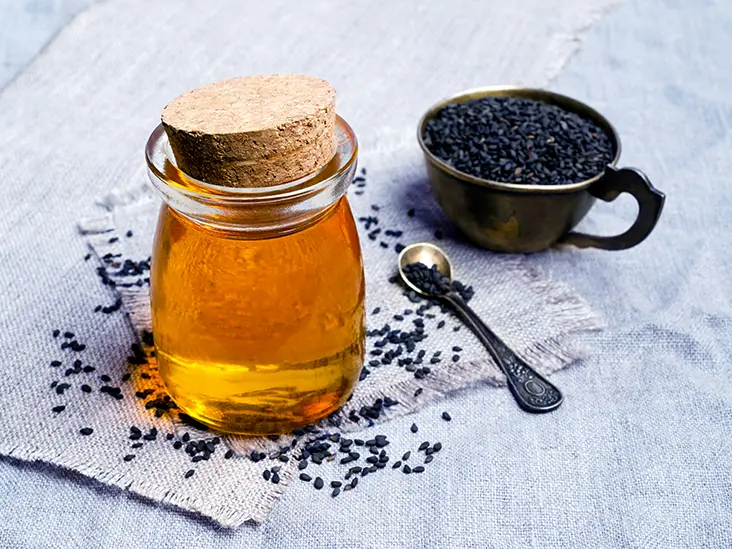
Black seed oil is a high-value functional specialty oil. Equipment selection not only dictates operational efficiency and yields but directly governs bioactive retention, organoleptic quality, and ultimate profitability. This comprehensive guide covers commercial planning, technical routes, equipment selection, and turnkey EPC implementation.
Before recommending any specific machinery, a professional engineering equipment supplier must help you evaluate the following four commercial and operational dimensions:
Capacity is the primary metric determining equipment configuration and facility footprint:
Expansion Provision: If multi-phase investment is planned, reserve structural interfaces for material handling, filtration upgrades, and floor space during initial engineering to avoid costly retrofits.
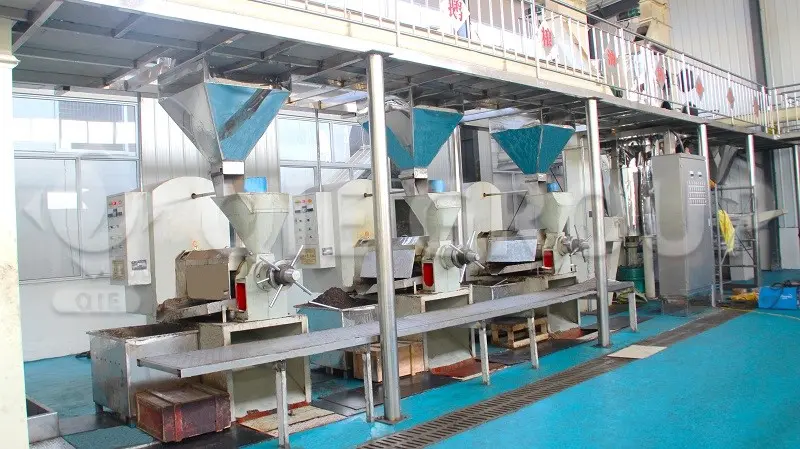
Black seed (Nigella Sativa) has small, hard seeds rich in volatile oils. A standard industrial black seed oil production line consists of the following core stages:
| Process Stage | Core Equipment | Technical Highlights & Key Functions |
|---|---|---|
| 1. Seed Cleaning | Vibrating Screen, Gravity De-stoner, Magnetic Separator | Removes sand, stones, dust, and metallic impurities; protects pressing equipment and ensures raw oil purity. |
| 2. Oil Extraction | Low-Temp Hydraulic Press or Water-Cooled Cold Screw Oil Press | The core extraction unit. Controls process temperature to ensure high oil recovery while preserving delicate bioactives. |
| 3. Cracking & Slag Removal | Vibrating Slag Screen, Crude Oil Tank, Anti-Settling Agitator Tank | Rapidly separates coarse meal particles from crude oil to prevent oil re-absorption into seed cake. |
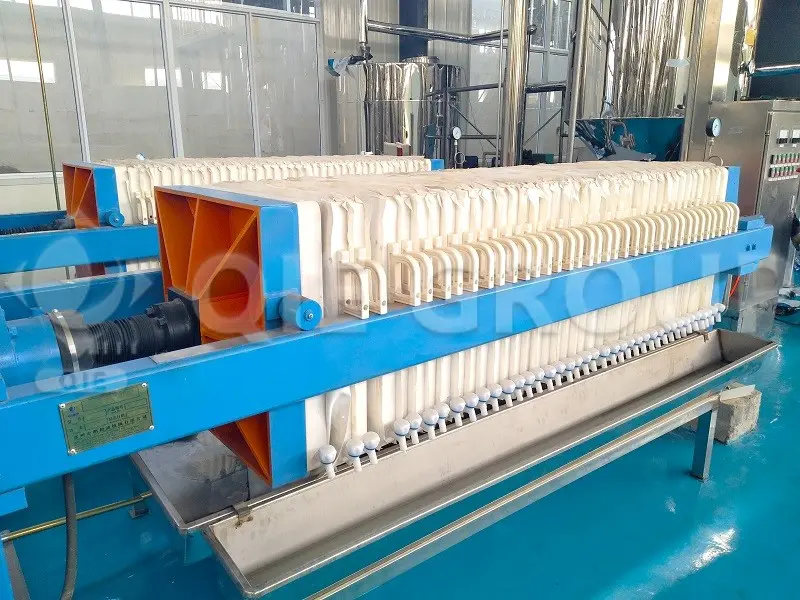
| 4. Precision Filtration | Plate & Frame Filter Press or Vertical Leaf Filter / Micro-Filter | Achieves multi-stage primary filtration (10–20 microns) and fine polishing (down to 1–5 microns), eliminating fine suspended solids to yield crystal-clear, sediment-free oil. |
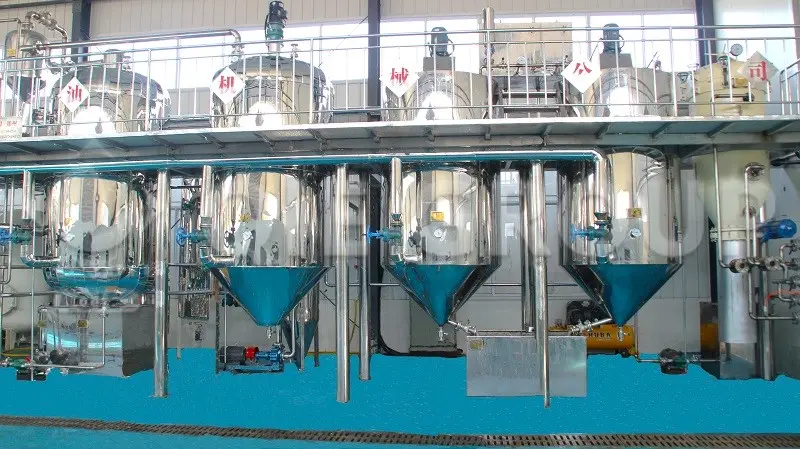
| 5. Storage & Filling | Nitrogen-Purged SS Tank, Semi/Full-Auto Bottling Machine | Built with food-grade SS304/SS316L; utilizes nitrogen blanketing to prevent oxidative degradation of active oils. |
| Dimension | Low-Temperature Cold Pressing | Thermal Conditioning / Hot Pressing |
|---|---|---|
| Pressing Temp. | Strictly controlled < 60°C | Cooking/conditioning > 90°C |
| Thymoquinone (TQ) Retention | Exceptional (Minimal thermal loss) | Lower (Partially volatilized & degraded) |
| Flavor & Color | Natural herbal aroma; golden to dark brown color | Darker color; heavy roasted or charred aroma |
| Oil Yield | Moderately lower (Requires high pressure/double pass) | Higher (Thermal conditioning reduces oil viscosity) |
| Market Positioning | High-End Nutraceuticals, Pharma, Premium Oils | Commodity Culinary Oil, Bulk Industrial Oil |
Expert Recommendation: Because the market premium of black seed oil stems primarily from its Thymoquinone (TQ) content, low-temperature cold pressing is strongly advised to establish a high-value product identity.
This is the most frequent dilemma encountered during procurement:
| Dimension | Hydraulic Oil Press | Screw Oil Press |
|---|---|---|
| Operation Mode | Batch processing (Loading – Pressing – Holding – Discharging) | Continuous processing (Automatic feeding & cake discharge) |
| Thermal Control | Outstanding (Minimal shear heat generation; pure physical static pressure) | Requires specialized water-cooling jacket/shaft to control heat |
| Throughput | Smaller (Ideal for small batches and high-value runs) | High (Designed for commercial, continuous scale) |
| Cake Residual Oil | Approx. 8%–12% | Approx. 6%–8% (Higher extraction efficiency) |
| Best Application | Boutique workshops, startups, cold-press purists | Medium-to-large factories, continuous exporter lines |
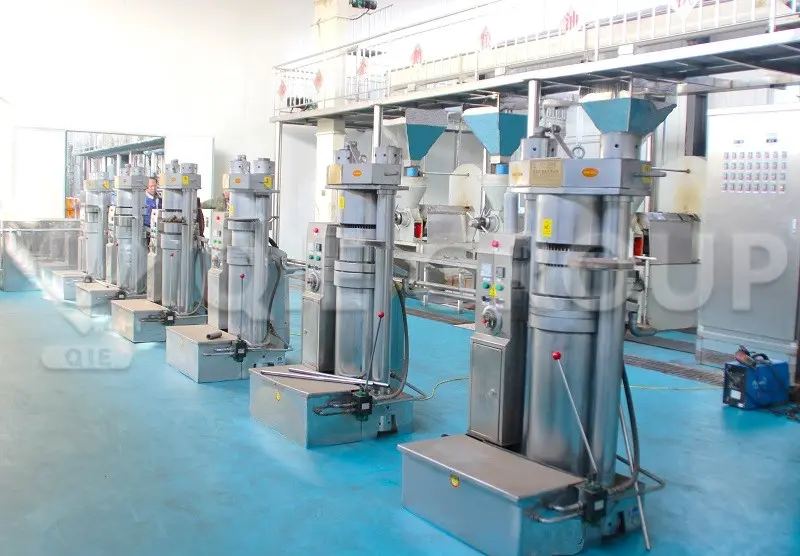
Configuration: Seed Cleaner + Low-Temp Hydraulic Press Unit / Water-Cooled Screw Press + Plate Filter Press + Nitrogen Storage Tank + Semi-Auto Filler.
Characteristics: Low initial CAPEX, compact footprint, highly flexible; ideal for market validation and launching proprietary premium brands.
Configuration: Integrated Cleaning & De-stoning Machine + Bucket Elevator + Cold Screw Press Battery + Auto Slag Separator + Enclosed Leaf Filter + Auto Bottling Line + PLC Control Panel.
Characteristics: Continuous semi-automated operation, reduces labor costs by >50%, ensures exceptional batch-to-batch oil consistency.
Configuration: Automated Raw Material Handling & Silo System + Dual De-stoning System + Parallel Water-Cooled Press Batteries + Multi-Stage Micro-Filtration + (Optional) Low-Temp Deacidification/Deodorization Module + PLC Control System.
Characteristics: Fully continuous and intelligent operation; minimizes energy consumption and oil loss; fully compliant with international GMP/HACCP standards.
This is a common point of confusion for investors.
Specialty functional oil equipment differs significantly from commodity soybean or palm oil machinery. Evaluate prospective engineering suppliers on the following capabilities:
Does the supplier understand the physical characteristics of Nigella Sativa? Does their machinery feature water-cooled screw shaft technology to prevent friction-induced heat build-up?
Can they deliver a seamless line—from cleaning to pressing, filtration, nitrogen storage, and filling—rather than a mismatched collection of standalone units?
Are all oil-contact surfaces constructed from food-grade SS304 or SS316L stainless steel to prevent heavy metal contamination?
Can they provide comprehensive engineering services, including plant layout design, piping design, onsite installation, commissioning, training, and long-term technical support?
A: Black seed (Nigella Sativa) typically contains an initial oil content of 30%–35%. Under optimal low-temperature cold pressing, dry seed oil yield is generally between 18% and 24% for single-pass cold pressing (up to 26% with specialized multi-pass systems), depending on seed quality, moisture levels, and temperature control.
A: Yes. Most cold-press screw and hydraulic systems can process a variety of specialty high-oil seeds, such as sesame, flaxseed, evening primrose, and rapeseed, by making minor adjustments to clearance settings and operating temperatures.
A: Black seed oil is rich in polyunsaturated fatty acids and volatile active compounds. Processing lines should incorporate enclosed filtration systems and nitrogen blanketing (nitrogen purging) technology across storage tanks and bottling units to isolate oxygen and light.
Selecting black seed oil processing machinery is not merely a matter of comparing unit prices or equipment brands. It requires a well-calculated decision centered around product positioning (Thymoquinone retention), capacity planning, CAPEX budget, and long-term OPEX efficiency.
If you are planning to establish a black seed oil processing facility, we recommend proceeding through the following steps:
As an international manufacturer of oilseed processing machinery and a provider of EPC Turnkey Solutions, QIE GROUP brings extensive engineering experience in cold pressing and processing specialty, high-value oils such as black seed, sesame, and flaxseed.
✓ Customized Cold-Press Process Design: Precise thermal control systems engineered to maximize Thymoquinone (TQ) retention.
✓ Premium Complete Cold-Pressing Machinery: Water-cooled pressing units, micron-level enclosed filtration, and nitrogen preservation systems.
✓ 3D Factory Layout & Pipework Engineering: Optimized material flow and cleanroom-compliant plant design.
✓ EPC Turnkey Delivery: Equipment manufacturing, international shipping, onsite installation, commissioning, and operator training.
Get customized plant layouts, technical drawings, and precise CAPEX estimates within 24 hours.
 245
|
245
|
 sesame oil production line
sesame oil processing
sesame oil pressing machine
sesame roasting process
hydraulic oil press sesame
screw oil press sesame
180
|
High oil yield press
Edible oil pressing equipment
Peanut oil extraction efficiency
Sesame cold press machine
Oil and fat equipment upgrade
Small-scale oil pressing production line
84
|
edible oil extraction plant cost
oil milling business profitability
turnkey cooking oil processing factory
soybean oil plant ROI
solvent extraction technology Africa
136
|
Peanut oil press improves oil yield
Peanut oil press pretreatment method
Peanut oil press operation techniques
Peanut oil press machine for high-efficiency pressing
Peanut oil press process optimization
353
|
tea seed oil extraction machine supplier
tea seed oil processing plant
camellia oil press machine
turnkey tea seed oil refinery
edible oil extraction machinery
sesame oil production line
sesame oil processing
sesame oil pressing machine
sesame roasting process
hydraulic oil press sesame
screw oil press sesame
180
|
High oil yield press
Edible oil pressing equipment
Peanut oil extraction efficiency
Sesame cold press machine
Oil and fat equipment upgrade
Small-scale oil pressing production line
84
|
edible oil extraction plant cost
oil milling business profitability
turnkey cooking oil processing factory
soybean oil plant ROI
solvent extraction technology Africa
136
|
Peanut oil press improves oil yield
Peanut oil press pretreatment method
Peanut oil press operation techniques
Peanut oil press machine for high-efficiency pressing
Peanut oil press process optimization
353
|
tea seed oil extraction machine supplier
tea seed oil processing plant
camellia oil press machine
turnkey tea seed oil refinery
edible oil extraction machinery