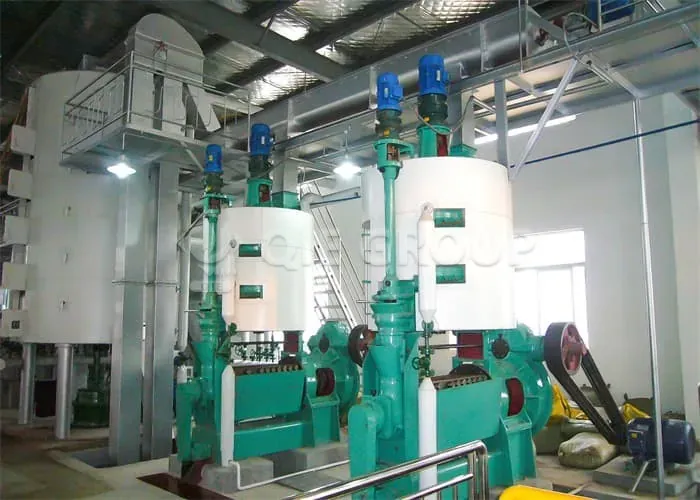
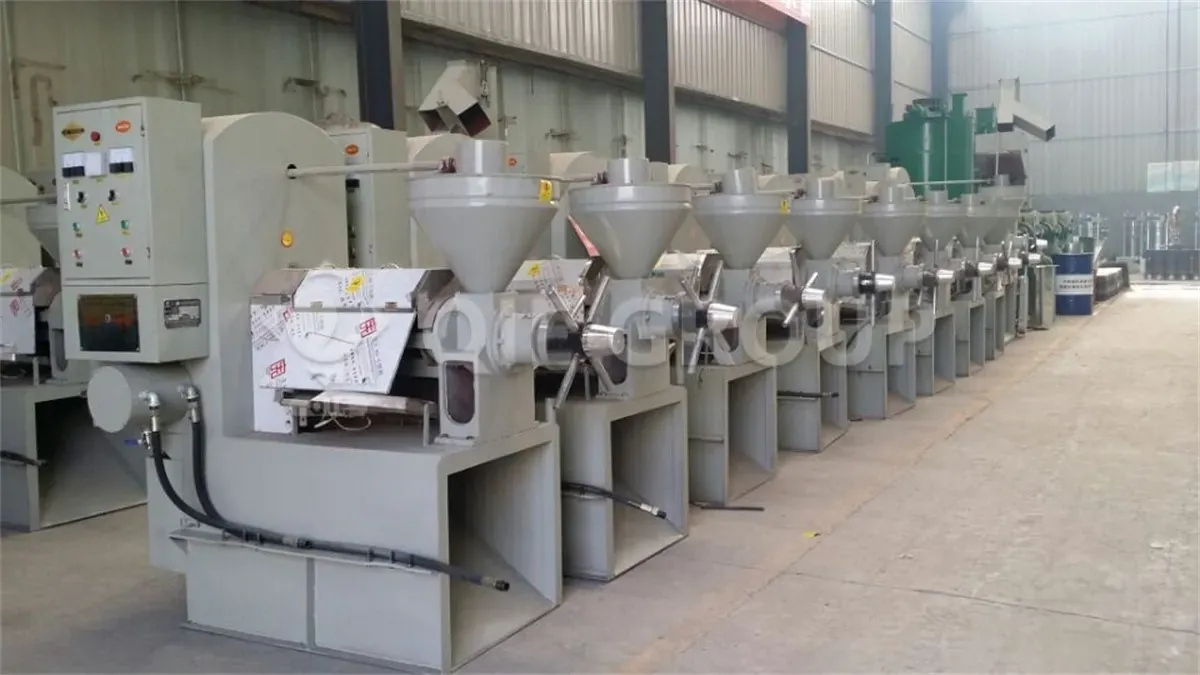
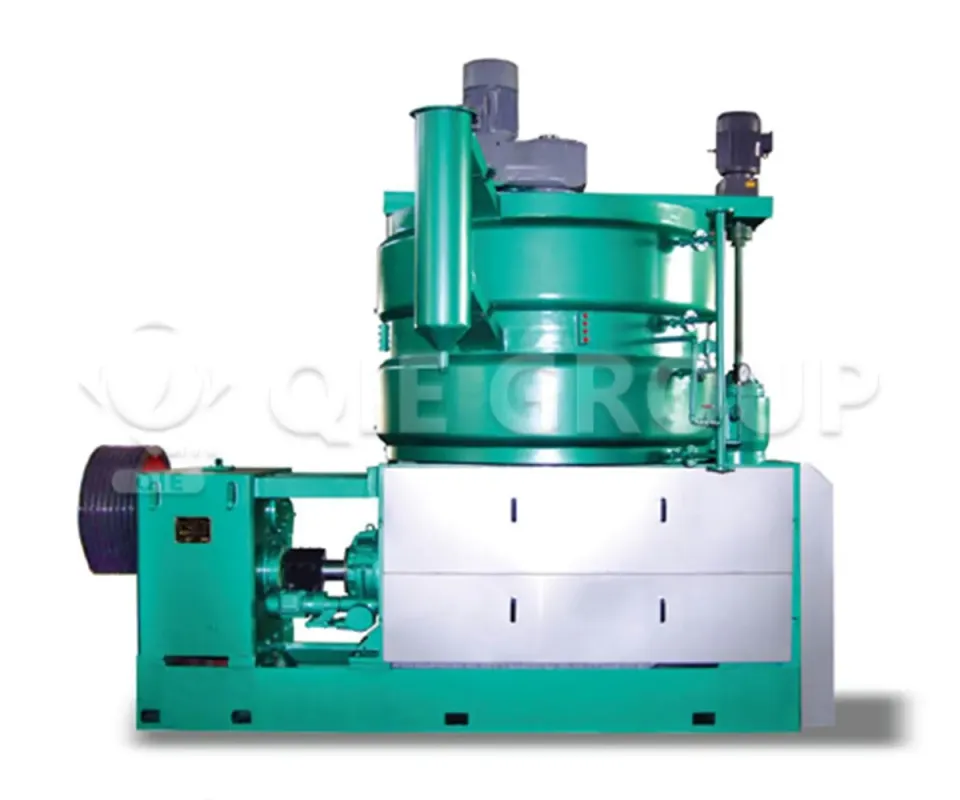
How to Strategically Select Edible Oil Extraction Capacity: A Comprehensive Engineering Guide from Blueprint to Profit

Zhengzhou QIE Grain and Oil Machinery Co., Ltd
2026-05-12
Question Reflection

Are You Facing These Production Dilemmas?

In the vegetable oil industry, equipment selection—specifically capacity planning—is the bridge between a blueprint and a profitable reality. A single miscalculation often leads to significant "sunk costs":

Scale Mismatch:
Equipment is too small to meet orders, or too large, causing massive depreciation to crush your cash flow.
System Bottlenecks:
High pressing capacity but an undersized refinery; or high-end machinery that the local power grid cannot support.
Short-sighted Planning:
Rigid factory layouts that make future expansion impossible without starting over.

As a global EPC contractor with 43 years of expertise, QIE Group knows that capacity is not an arbitrary choice—it is a result of precise engineering. This guide provides a practical perspective to help you select the right equipment from day one.
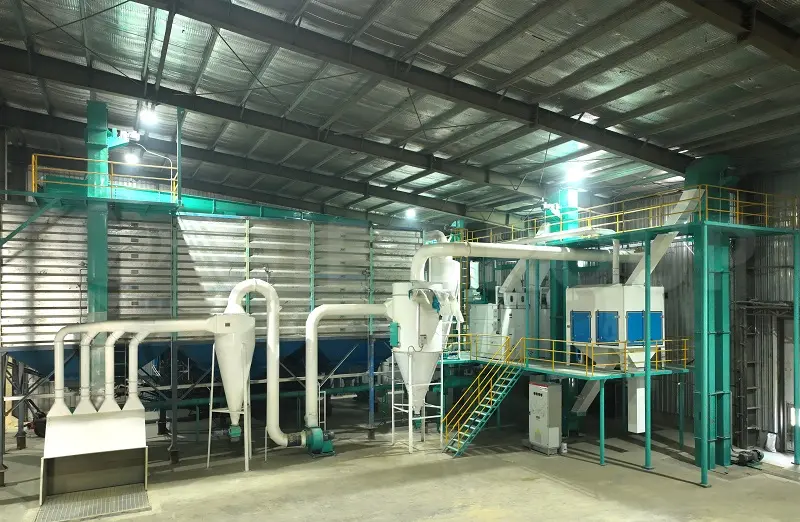
Equipment for cleaning and preliminary processing of oilseeds used at edible oil production plants

1. Defining "Actual Capacity" in Oil Extraction

Capacity refers to the amount of raw material a system can stably process within a specific timeframe (TPD/TPH). Capacity is a systemic metric that requires seamless synchronization:

  • Pressing Section: The capacity of the expellers (screw oil press or hydraulic oil press) to process raw seeds.
  • Solvent Extraction Section: The ability to process pre-pressed cake, usually matched based on the pressing output.
  • Refining Section: The capacity to process crude oil (degumming, deacidification, decolorization, deodorizing). Its design margin must always exceed the crude oil output of the pressing/extraction stages.

2. Core Constraints Influencing Capacity Selection

Before finalizing a model, QIE Group recommends evaluating these "Wooden Bucket" factors:

I. Raw Material Supply

  • Stable Availability: How many tons can you realistically and economically source daily?
  • Seasonality: Are there peak harvest gaps? Do you need large-scale silos for storage?
  • Logistics: The distance from the source to the factory directly dictates your profit margins.

II. Market Sales Volume

  • Absorption Limit: How many tons of finished oil can your sales channels move?
  • Channel Depth: Are you selling bulk crude oil to large refineries or operating your own retail brand?

III. Investment Budget & ROI

Capital Security: As capacity scales, costs for equipment, civil engineering, and working capital increase exponentially.

Pro Tip: Small lines (10-20 TPD) offer faster payback; large solvent plants (50 TPD+) have higher CAPEX but significantly lower long-term OPEX per ton.
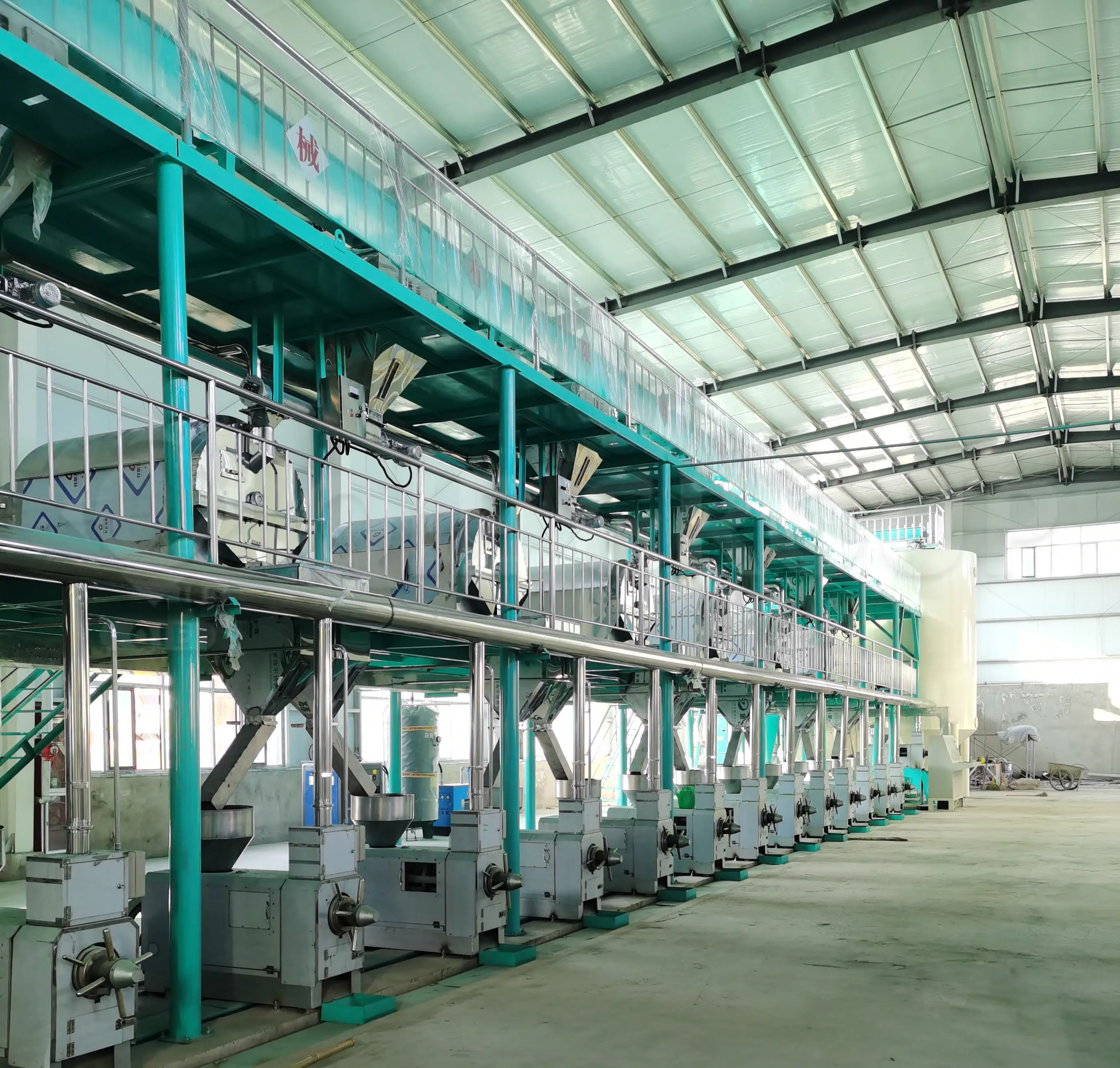
oil press equipment for processing oilseeds used in edible oil production plants

IV. Power and Utility Infrastructure

Grid Stability: Large-scale motors require stable voltage. In regions with unstable power, the cost of backup generator sets must be factored in.

Steam and Water: Extraction and refining require significant thermal energy and cooling water.

V. Factory Layout and Modular Expansion

Forward-looking Design: Expert EPC design reserves space for second-phase expellers and future power load interfaces. QIE Group’s modular approach allows for seamless upgrades in 3–5 years without major civil reconstruction.

VI. Labor Cost and Automation

Technical Balance: In high-labor-cost regions, prioritize PLC+SCADA automation. In regions with abundant labor, a balance between manual operation and equipment investment can be struck.

VII. Environmental Compliance

Zero-Emission Challenges: Solvent extraction requires advanced recovery systems. Strict environmental regulations necessitate closed-loop pressing and high-efficiency exhaust treatment.
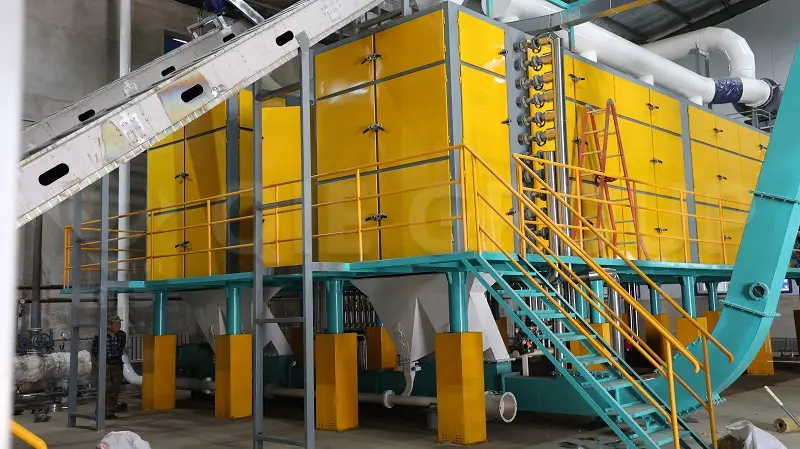
Industrial solvent extraction equipment with cable chain for edible oil processing plant

3. Global Investment Benchmark: Selecting by Scale

Type Capacity Range Est. Investment (USD) Best Use Case & Features
Small Scale 1-20 TPD $50,000 - $300,000 For startups or specialty oils (cold-pressed sesame, camellia). Small footprint, fast ROI.
Medium Scale 20-50 TPD $500,000 - $2,000,000 For regional brand operators. Economies of scale become evident; high automation.
Large Scale 100 TPD+ $3,000,000 - $15,000,000+ For global commodity players. Fully automated (PLC+SCADA) with high management demands.

4. Recommended Configurations by Oilseed Type

Soybean (Full Solvent Extraction)

Oil content ~20%. Direct pressing is inefficient. We recommend a 50-100+ TPD starting point with a mandatory refinery.

Peanut/Sunflower (Pre-pressing + Extraction)

Oil content >45%. For <30 TPD, full pressing is viable. For 100 TPD+, pre-pressing 70% of the oil followed by solvent extraction is the gold standard.

Palm Fruit (Pressing)

The focus is on processing Fresh Fruit Bunches (FFB). Recommended at 5-120 TPH. Due to fruit bulk, large-scale production is necessary for profitability.

Sesame (Pressing)

Focused on aroma and clarity. Usually utilizes cold or hot pressing with a "boutique" small-to-medium capacity focus.
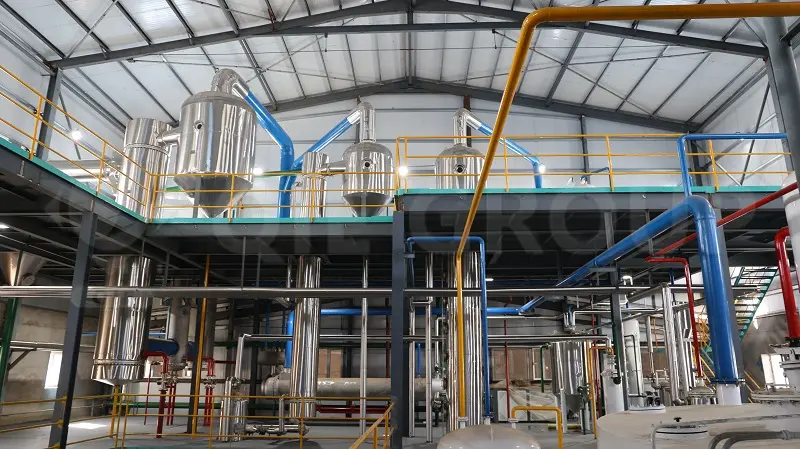
Equipment for refining edible oil for a soybean oil processing plant

5. The Golden Ratio: Matching Sections

QIE Engineering Rule:

Refining Design Capacity ≥ Pressing/Extraction Oil Output × 110%~120%

Why? Refining involves multiple integrated stages. If the refinery capacity only perfectly matches the pressing output, maintenance or high-acid-value feedstock will cause crude oil storage to overflow, forcing the entire line to shut down. Refinery redundancy is the "safety fuse" for continuous production.

6. Common Pitfalls: Why 100 TPD Might Not Suit You

  • 🛑 Blind Pursuit of Scale: Choosing 100 TPD when local supply only supports 5 TPD leads to massive depreciation and financial ruin.
  • 🛑 Ignoring Utilities: Buying a 100-ton expeller only to find the factory boiler cannot provide enough steam for the cookers.
  • 🛑 Refinery Bottlenecks: Producing vast amounts of crude oil with nowhere to refine it leads to oil oxidation and quality degradation.

7. QIE Group: Your Professional EPC Turnkey Expert

As Zhengzhou QIE Grain and Oil Machinery, we provide B2B clients with the certainty of success from commissioning to profit:

Customized Planning
Integrated Delivery
Leading Technology (PLC+SCADA)
Global Experience (Africa, Asia, Europe)

FAQ: Top 8 Questions on Capacity Selection

Q: How do I calculate my required capacity?

A: Base it on your stable daily raw material procurement and your target market's daily sales volume.

Q: How much does a 100 TPD plant cost?

A: A full turnkey line (Pressing + Extraction + Refining) typically ranges from $3M to $10M USD, depending on automation levels.

Q: Why must the refinery be larger than the pressing section?

A: To allow for maintenance buffers and ensure the pressing line never stops due to crude oil accumulation.

Q: What is the best use for a small-scale plant?

A: Specialty oils or serving local community markets. Investment starts around $50,000 - $150,000 USD.

Q: How do I choose an expeller model?

A: It must be selected based on oilseed type, cold/hot press requirements, and the total system capacity.

Q: What is the priority for building a plant in Africa?

A: Power stability, local raw material security, and choosing a supplier with robust overseas spare parts support.

Q: What is the difference between large and small plants?

A: Economies of scale, process complexity (inclusion of solvent extraction), and the level of automation.

Q: When do I need a solvent extraction system?

A: When processing low-oil seeds or when you require residual oil in the cake to be below 1.5% to maximize profit.

Name *
Email *
WhatsApp *
Message*

Recommended Products

Related Reading

In-Depth Analysis of QIE Group Multi-Seed Hydraulic Oil Press: Efficient Pressing of Multiple Seeds

2025-10-22 | https://shmuker.oss-accelerate.aliyuncs.com/tmp/temporary/60ec5bd7f8d5a86c84ef79f2/60ec5bdcf8d5a86c84ef7a9a/20240305161110/eye.png 459 | https://shmuker.oss-accelerate.aliyuncs.com/tmp/temporary/60ec5bd7f8d5a86c84ef79f2/60ec5bdcf8d5a86c84ef7a9a/20240305160636/lable.png Hydraulic oil press Oilseed press Low-temperature cold pressing technology Peanut oil Walnut oil

Rapeseed Oil Pressing Line: Technical Guidelines for High Oil Yield

2026-02-06 | https://shmuker.oss-accelerate.aliyuncs.com/tmp/temporary/60ec5bd7f8d5a86c84ef79f2/60ec5bdcf8d5a86c84ef7a9a/20240305161110/eye.png 210 | https://shmuker.oss-accelerate.aliyuncs.com/tmp/temporary/60ec5bd7f8d5a86c84ef79f2/60ec5bdcf8d5a86c84ef7a9a/20240305160636/lable.png rapeseed oil pressing production line high oil yield rapeseed oil pressing process screw oil press turnkey edible oil plant

Why Does Oil Yield Matter in Oil Pressing Equipment Selection?

2026-04-16 | https://shmuker.oss-accelerate.aliyuncs.com/tmp/temporary/60ec5bd7f8d5a86c84ef79f2/60ec5bdcf8d5a86c84ef7a9a/20240305161110/eye.png 353 | https://shmuker.oss-accelerate.aliyuncs.com/tmp/temporary/60ec5bd7f8d5a86c84ef79f2/60ec5bdcf8d5a86c84ef7a9a/20240305160636/lable.png Oil pressing equipment Oil extraction efficiency Edible Oil Processing Return on investment of oil mill Oil yield

Reducing Soybean Press Residual Oil: Optimization Solutions for Large Screw Oil Presses

2025-11-27 | https://shmuker.oss-accelerate.aliyuncs.com/tmp/temporary/60ec5bd7f8d5a86c84ef79f2/60ec5bdcf8d5a86c84ef7a9a/20240305161110/eye.png 151 | https://shmuker.oss-accelerate.aliyuncs.com/tmp/temporary/60ec5bd7f8d5a86c84ef79f2/60ec5bdcf8d5a86c84ef7a9a/20240305160636/lable.png Soybean crushing Residual oil rate optimization Large oil press Oil refinery energy-saving upgrade Screw oil press

Palm Kernel Oil Press Production Line Guide

2026-03-13 | https://shmuker.oss-accelerate.aliyuncs.com/tmp/temporary/60ec5bd7f8d5a86c84ef79f2/60ec5bdcf8d5a86c84ef7a9a/20240305161110/eye.png 416 | https://shmuker.oss-accelerate.aliyuncs.com/tmp/temporary/60ec5bd7f8d5a86c84ef79f2/60ec5bdcf8d5a86c84ef7a9a/20240305160636/lable.png Palm Kernel Oil Production Line Oil Processing Equipment Palm Kernel Oil Press Palm Kernel Oil Refining Palm Kernel Solvent Extraction
Popular articles
https://shmuker.oss-accelerate.aliyuncs.com/data/oss/67e0b65a46c0fb5645db7c5b/6826fda536368b75a754738d/20250820140230/Hydraulic-sesame-oil-press-machine.webp
https://shmuker.oss-accelerate.aliyuncs.com/data/oss/67e0b65a46c0fb5645db7c5b/6826fda536368b75a754738d/20251223163758/commercial-oil-press-machine-edible-oil-production-qie-group.webp
https://shmuker.oss-accelerate.aliyuncs.com/data/oss/67e0b65a46c0fb5645db7c5b/6826fda536368b75a754738d/20260313171113/palm-kernel-oil-processing-plant-01.webp
https://shmuker.oss-accelerate.aliyuncs.com/data/oss/67e0b65a46c0fb5645db7c5b/6826fda536368b75a754738d/20260420162818/edible-oil-pressing-equipment-oilseed-expeller-machine.webp
https://shmuker.oss-accelerate.aliyuncs.com/data/oss/67e0b65a46c0fb5645db7c5b/6826fda536368b75a754738d/20251217144149/peanut-oil-machine-1.webp
https://shmuker.oss-accelerate.aliyuncs.com/data/oss/67e0b65a46c0fb5645db7c5b/6826fda536368b75a754738d/20251111151341/coconut-screw-oil-press-1.webp
https://shmuker.oss-accelerate.aliyuncs.com/data/oss/67e0b65a46c0fb5645db7c5b/6826fda536368b75a754738d/20251204145833/peanut-screw-press-extractor-QIE-1.webp
https://shmuker.oss-accelerate.aliyuncs.com/data/oss/67e0b65a46c0fb5645db7c5b/6826fda536368b75a754738d/20251127155618/screw-oil-press-for-peanut-oil-production-2.webp
https://shmuker.oss-accelerate.aliyuncs.com/data/oss/67e0b65a46c0fb5645db7c5b/6826fda536368b75a754738d/20260105141348/screw-oil-expeller.webp
https://shmuker.oss-accelerate.aliyuncs.com/data/oss/67e0b65a46c0fb5645db7c5b/6826fda536368b75a754738d/20260205111953/rice-bran-oil-preprocessing-equipment-02.webp
Recommended Reading
Contact Us
https://shmuker.oss-accelerate.aliyuncs.com/tmp/temporary/60ec5bd7f8d5a86c84ef79f2/60ec5bdcf8d5a86c84ef7a9a/thumb-prev.png