As a core component of the global food supply chain, the production and trade landscapes of edible oil are undergoing profound shifts. According to the latest global oils and fats market data, the African fats and oils market is expanding at a Compound Annual Growth Rate (CAGR) of 5.04%, while the Asia-Pacific region firmly commands over 55% of global edible oil consumption.
However, launching an oil milling or refining business in Africa and Asia is far from a simple buy-low, sell-high commodity play. Cyclical volatility in raw material pricing, underdeveloped local supply chains, and increasingly stringent environmental regulations and Trans Fatty Acids (TFAs) compliance standards have caused many unprepared investors to flounder.
To answer whether an oil milling business is profitable, one must look beyond macro demand and dissect the venture across three core engineering dimensions: technological pathways, per-ton cost control, and co-product monetization sync. Drawing upon over 40 years of international turnkey edible oil processing experience at QIE Group, this article delivers an investment decision framework grounded in hard data and field execution.
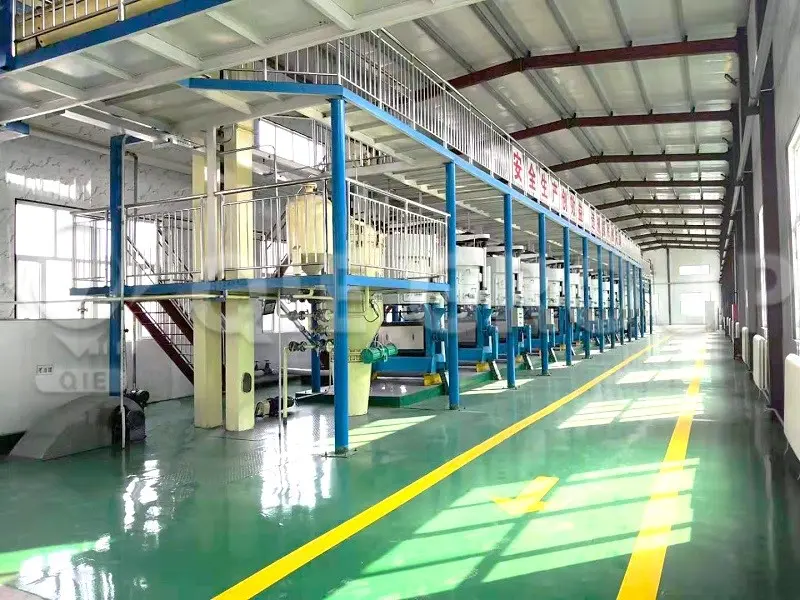
In the edible oil processing industry, raw materials (oilseeds) typically account for 75% to 85% of the total operational expenditure (OPEX). This means the survival line of an oil mill is entirely dictated by residual oil cake control and the monetization efficiency of co-products (meal/cake).
Below is a breakdown of a typical medium-to-large-scale oil factory's cost structure and optimization pathways, synthesized from QIE Group’s delivery of over 1,000 industrial oil projects across Africa and Asia:
| Cost & Revenue Components | % of Total OPEX | 2026 Industry Benchmarks & QIE Technical Optimization Pathways |
|---|---|---|
| Raw Materials (Primary Cost) | 75% - 85% | QIE’s proprietary cleaning, de-hulling, and flaking pre-treatment lines minimize seed loss during front-end handling, improving comprehensive oil utilization rates by 3% to 5%. |
| Energy & Utilities | 8% - 12% | Heat recovery systems are integrated into the conditioning and refining deodorization stages. In the deodorization section, an advanced vacuum system (stable pressure at ≤ 400 Pa / 3 mbar) cuts per-ton electricity and steam consumption by 10% to 15%. |
| Solvent Loss (Extraction Only) | < 2% | Traditional extraction plants suffer high solvent losses of 3–5 kg/t. QIE’s multi-stage condensation solvent recovery loops drive solvent consumption down to ≤ 1.5 kg per ton of raw material, significantly easing routine cash flow pressures. |
| Co-product Revenue | + 25% - 40% (Cash Flow) | High-temperature oil cakes/meals (soybean meal, peanut cake) are sold directly to local feed mills. High-protein meal is a rigid demand asset whose revenue frequently offsets the factory’s entire labor and depreciation costs. |
Different regions present vastly distinct infrastructure realities and market maturities. Deploying the wrong equipment or technical process is the leading cause of cross-border investment failures.
Market Dynamics: Nations like Nigeria, Ivory Coast, and Ghana exhibit per capita edible oil consumption rates well below the global average. Due to local currency depreciation and strict forex controls, moving away from imported refined oils toward "localized oilseed crushing and import substitution" has become a high-priority national strategy for many governments.
Market Dynamics: Southeast Asia (Vietnam, Indonesia) and Central Asia (Kazakhstan, Uzbekistan) feature highly mature markets dominated by international conglomerates. While profit margins on bulk oils (soybean, rapeseed) are tight, demand is surging for refining upgrades and specialty vegetable oils, such as cold-pressed sesame oil, rice bran oil, and high-quality sunflower oil.
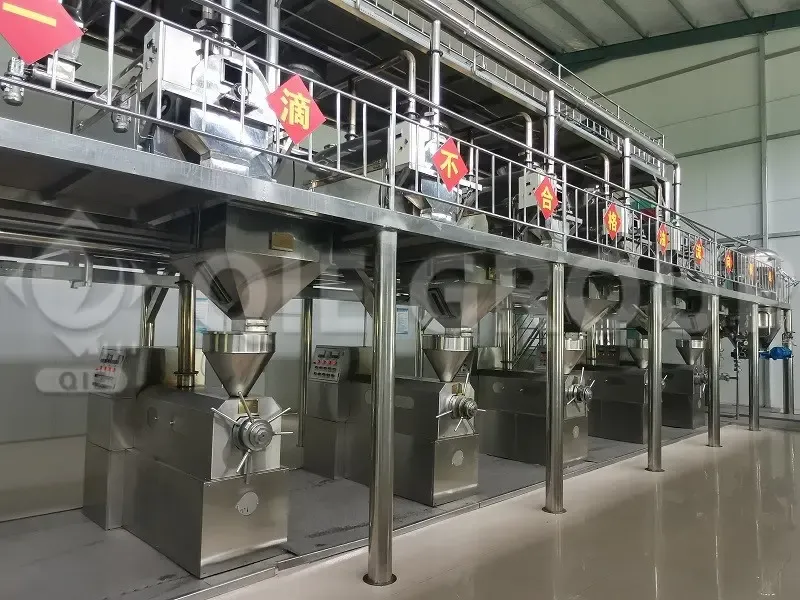
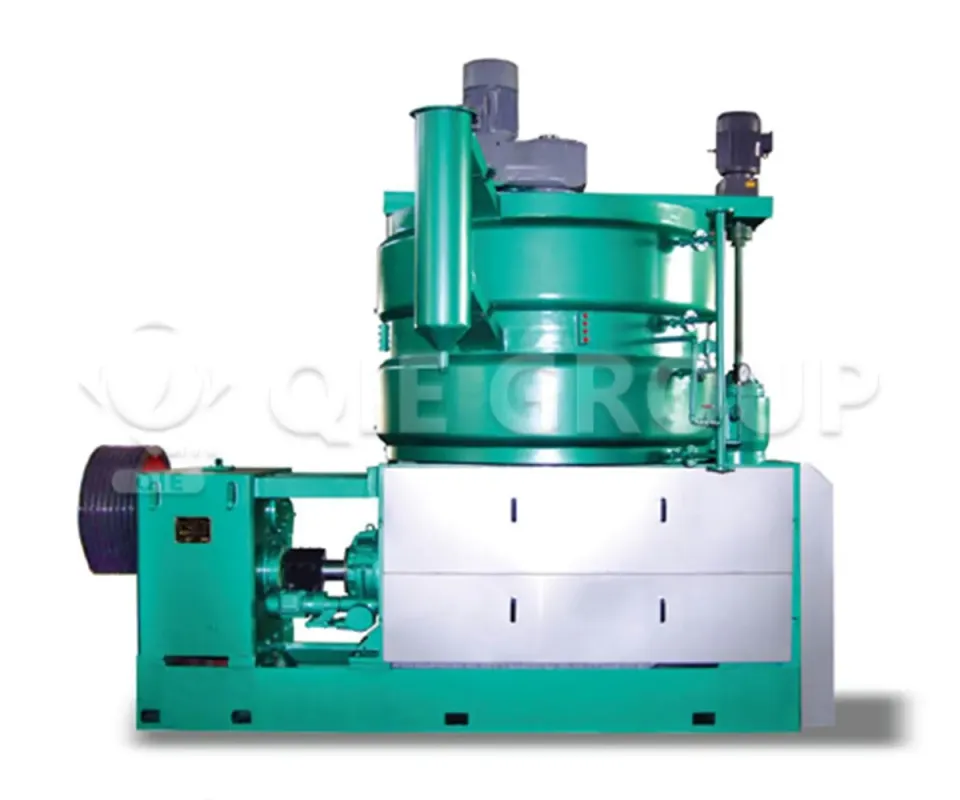
A: Solvent extraction successfully drives residual oil in meal down to below 1.0%. However, it demands two harsh prerequisites: stable raw material throughput (typically requires at least 100 tons per day to make solvent recovery economically viable) and a secure solvent supply chain alongside explosion-proof safety infrastructure. In many inland African regions, sourcing commercial hexane is difficult, and shipping it involves astronomical logistics costs. Therefore, where raw material collection cannot be centralized, deploying QIE’s high-efficiency screw presses paired with a batch or semi-continuous refinery is the safest route for rapid capital recovery, typically yielding a ROI within 1.5 to 2.5 years.
A: This is a critical hurdle for high-end local markets and export compliance. QIE Group utilizes Mild Refining Technology. By precisely regulating steam temperatures (capping at 240°C) and retention times during the deodorization phase, paired with carefully metered active bleaching earth processing, our systems guarantee oil clarity and smoke point parameters while keeping TFA levels strictly within World Health Organization (WHO) international safety limits.
A: This is a hidden pitfall of cross-border investments. Our most successful clients implement a dual-track business model: "Selling edible oil locally for domestic cash flow, while exporting co-products or specialty oilseeds (e.g., sesame, shea butter, cottonseed meal) to generate foreign exchange." We configures multi-seed processing lines with flexible, modular engineering. For instance, out of the primary soybean season, the line can switch to press local sesame or high-value specialty seeds for export to Asian or European markets. Settling trades directly in foreign currency serves as a reliable hedge against local currency devaluation.
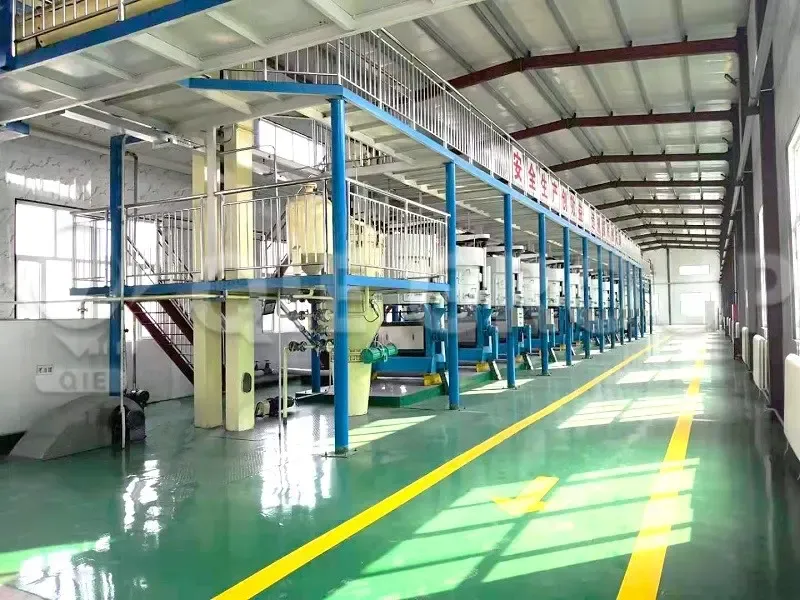
A: Traditional procurement models where equipment manufacturing and civil construction are disjointed often suffer from severe delays. QIE Group bypasses this through our EPC turnkey model integrated with 3D digital plant pre-design. Equipment fabrication at our advanced manufacturing facilities takes 3 to 4 months. While the machinery is in transit, we provide comprehensive civil embedding blueprints so local teams can lay foundations simultaneously. Upon cargo arrival, Our experienced field engineers manage the site, conducting steel structure erection and modular equipment installation concurrently. The entire line moves from groundbreaking to wet commissioning within 6 to 8 months, reducing project delivery timelines by 30% compared to the industry average.
A: Oil cake is not waste; it is an untapped profit driver. Taking soybeans as an example, selling standard animal feed meal leaves your margins at the mercy of volatile global commodity markets. We can extend your downstream value chain. By integrating a low-temperature desolventized soybean meal (white flake) production line, you can directly enter the high-margin market of food-grade Soybean Protein Isolate (SPI) or Textured Soy Protein (TSP). In mature Asian markets, food-processing and plant-based protein raw materials command gross margins over 40% higher than basic feed-grade meal.
A: Smart oil plant investments are evaluated based on Life Cycle Cost (LCC). Second-hand machinery might look 30% cheaper on initial CAPEX, but it harbors three critical operational risks: excessive energy draw (lack of modern heat recovery loops can increase coal/electricity bills by 20%), eroded oil yields (worn pressing components allow residual cake oil to spike to 7%–8%, draining potential revenue daily), and non-existent spare parts support. Our intelligent processing lines feature premium wear-resistant components (such as specialized chromium-alloy pressing parts) with a lifespan 3 to 5 times longer than generic alternatives. Furthermore, automated PLC centralization reduces labor dependence by 50%. The cumulative savings in energy, labor, and optimized oil extraction typically offset the initial machinery price gap within the first 8 months of operation.
Setting up an industrial oil plant requires more than placing a few expellers inside a warehouse; it is a highly technical undertaking involving rigorous thermal calculation, mass balances, and global supply chain synchronization.
As an EPC turnkey provider with over 40 years of international oils and fats engineering experience, QIE Group has successfully commissioned over 1,000 processing plants worldwide. We understand that a genuinely profitable production line starts in the laboratory, beginning with an analysis of your local seed characteristics.
 257
|
257
|
 food-grade sunflower seed oil press machine
sunflower oil press
oil press selection
screw hot press
hydraulic cold press
495
|
oil press working principle
screw oil press
commercial oil press
edible oil production process
vegetable oil processing equipment
119
|
rapeseed oil pressing
rapeseed oil pressing challenges
rapeseed oil pressing process
rapeseed oil pretreatment
rapeseed oil processing plant engineering
175
|
Cottonseed pressing
Multi-stage screw oil press
High-fiber oilseeds
Increased oil yield
residual oil content
518
|
Low-temperature cold-pressed sesame oil
Vitamin E retention
Unsaturated fatty acids
Hydraulic sesame oil press
Sesame oil nutrition
food-grade sunflower seed oil press machine
sunflower oil press
oil press selection
screw hot press
hydraulic cold press
495
|
oil press working principle
screw oil press
commercial oil press
edible oil production process
vegetable oil processing equipment
119
|
rapeseed oil pressing
rapeseed oil pressing challenges
rapeseed oil pressing process
rapeseed oil pretreatment
rapeseed oil processing plant engineering
175
|
Cottonseed pressing
Multi-stage screw oil press
High-fiber oilseeds
Increased oil yield
residual oil content
518
|
Low-temperature cold-pressed sesame oil
Vitamin E retention
Unsaturated fatty acids
Hydraulic sesame oil press
Sesame oil nutrition