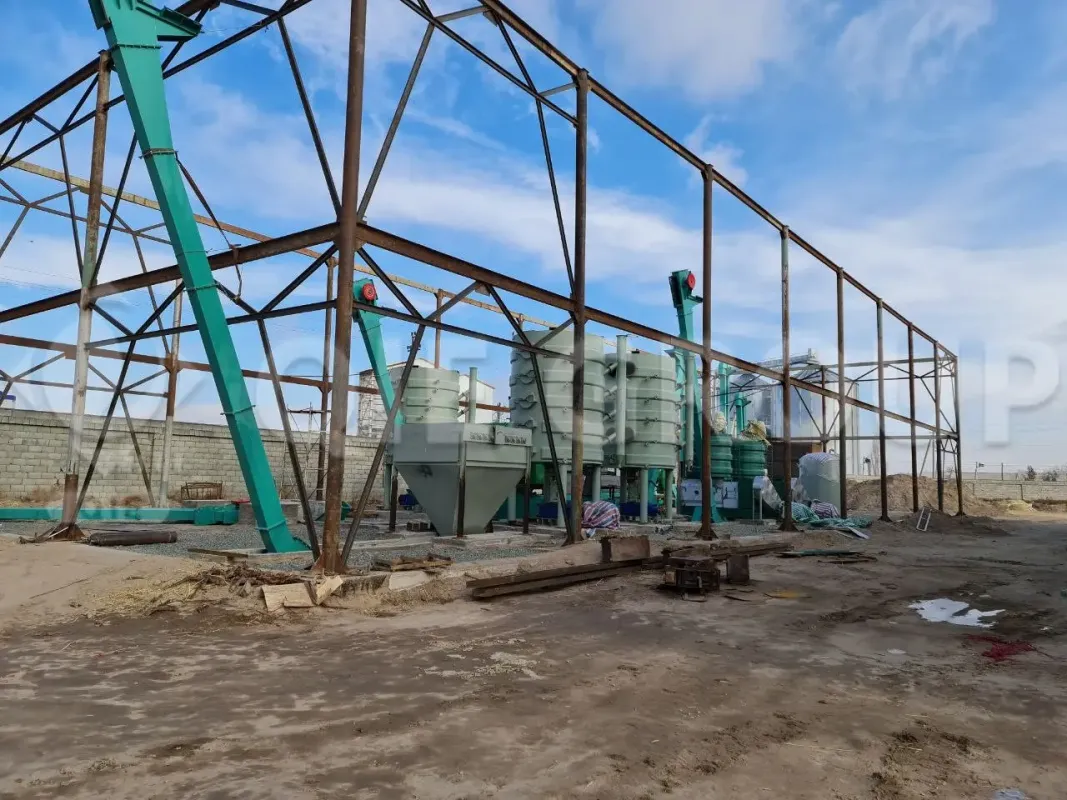
Flaxseed is one of the world's most valuable oilseeds due to its high content of alpha-linolenic acid (ALA, Omega-3 fatty acids), lignans, and natural vitamin E. As global demand for healthy edible oils continues to grow, more investors and oil processors are considering flaxseed oil production.
"Can a screw oil press efficiently extract flaxseed oil? Should you choose cold pressing or hot pressing? How can you maximize oil quality while maintaining a satisfactory oil yield?"
The answer is yes.
A screw oil press is one of the most widely used mechanical extraction methods for flaxseed oil. It can be used for both cold pressing and hot pressing, making it suitable for small commercial operations as well as industrial-scale edible oil plants. For large-capacity factories, screw pressing is often combined with pre-pressing and solvent extraction to maximize overall oil recovery.
This guide explains the complete flaxseed oil extraction process, pretreatment requirements, equipment selection, key operating parameters, and practical methods to improve oil yield while maintaining product quality.
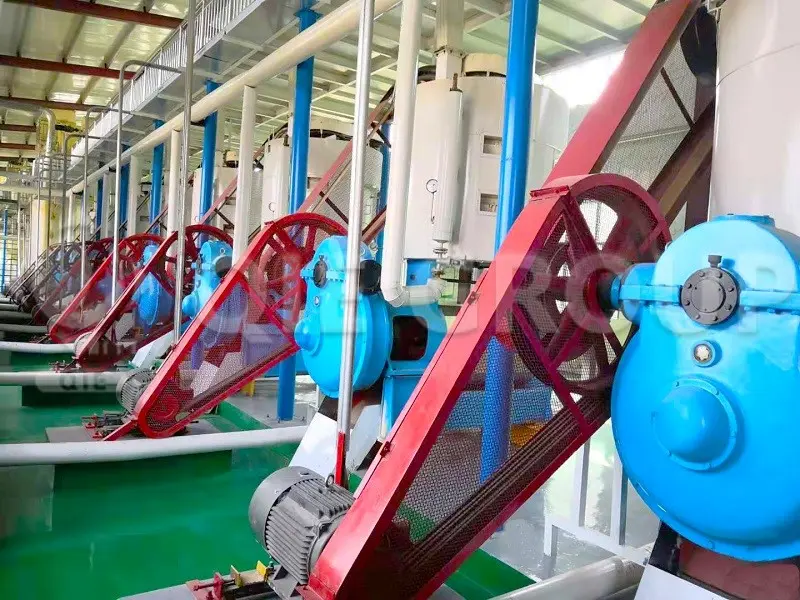
Flaxseed contains approximately 30%–45% oil, making it a medium-to-high oil-content oilseed. Most of the oil is stored inside the cotyledon cells and embryo, allowing it to be efficiently released through mechanical pressing.
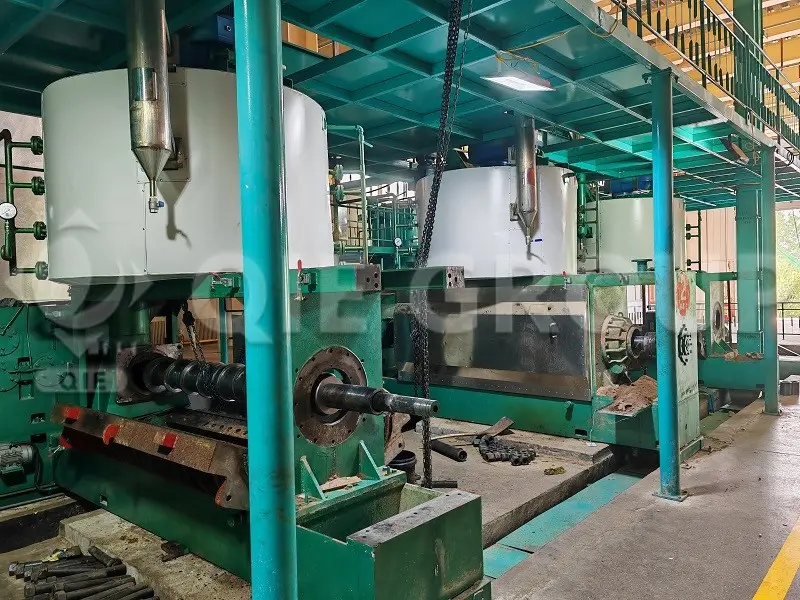
A screw oil press continuously transports the conditioned material through a gradually narrowing pressing chamber. As pressure increases, the flaxseed undergoes compression, shearing, and friction, breaking the cell walls and allowing the oil to flow through the cage bars while the press cake is discharged from the outlet. This mechanical extraction method closely matches the physical characteristics of flaxseed and offers several advantages.
Unlike hydraulic presses, screw oil presses operate continuously, making them suitable for commercial and industrial production with consistent throughput.
The same machine can usually be adjusted for either cold or hot pressing by optimizing conditioning temperature, screw speed, feed rate, and cake thickness.
Under properly controlled cold-pressing conditions, screw pressing helps preserve the natural flavor and retain more heat-sensitive nutrients compared with conventional high-temperature processing.
Compared with solvent extraction plants, screw pressing systems require lower capital investment, smaller installation areas, simpler operation, and no organic solvent handling.
Mechanical pressing cannot remove all the oil from the press cake. Residual oil remains in the cake after pressing, making mechanical extraction less efficient than solvent extraction in terms of total oil recovery. For large industrial edible oil plants where maximizing oil recovery is the primary objective, the industry commonly adopts a pre-pressing followed by solvent extraction process.
The choice between building a mechanical pressing plant or a solvent extraction plant depends primarily on your production capacity, product positioning, and investment budget.
There is no universally "best" extraction method. The optimal process should always be selected based on production objectives rather than equipment preference.
Pretreatment is one of the most important factors affecting oil yield, equipment performance, and final oil quality. Proper preparation allows the screw press to operate more efficiently while reducing wear.
Removes stones, dust, metal fragments, and straw using vibrating screens, destoners, and magnetic separators to prevent machine wear.
Breaking the seed structure increases the surface area and helps release oil more effectively during pressing.
Balances elasticity. Excessive moisture causes material slippage; insufficient moisture makes the seed too hard to extract.
Hot Pressing: Softens material via heating.
Cold Pressing: Maintains minimum thermal exposure to protect nutrients.
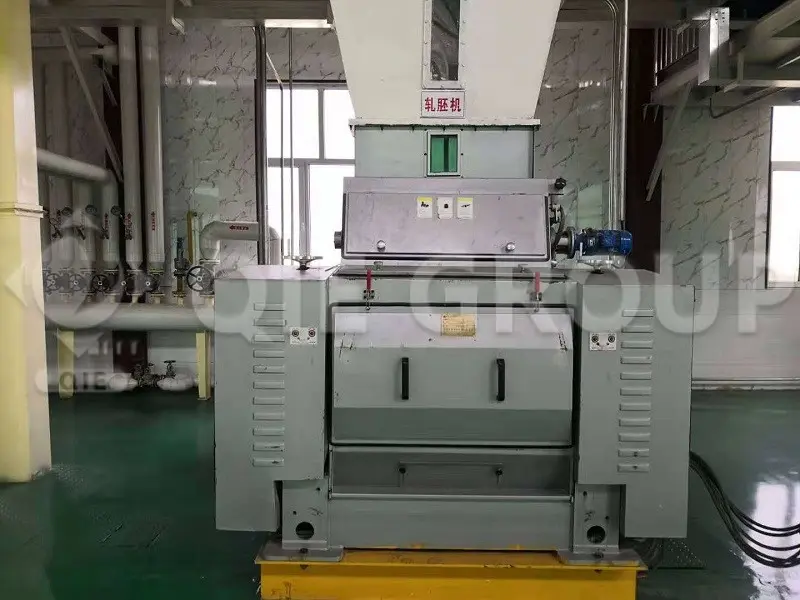
Process Flow: Raw Material Receiving → Cleaning → Cracking/Flaking → Conditioning (Cold/Hot Pressing) → Screw Pressing → Crude Oil Filtration → Optional Refining → Packaging and Storage
Evaluate incoming flaxseed for oil content, moisture, impurity levels, and freshness. High-quality seeds ensure stable pressing performance and prevent rapid equipment wear.
Pass the seeds through vibrating screens, destoners, and magnetic separators. Follow up with cracking or flaking to break the seed coat and maximize oil accessibility.
Cold Pressing Process: Focuses on low-temperature management to preserve the oil's natural flavor, color, and bioactive compounds.
Hot Pressing Process: Uses steam or thermal heating to reduce oil viscosity and promote faster separation, achieving higher raw yield.
Material Feeding: A stable feeding system prevents overloading and pressure fluctuations.
Compression & Release: As space narrows, extreme pressure breaks down the cell walls, expelling crude oil through cage bars.
Cake Formation: The discharge opening regulates cake thickness and controls residual oil retention.
Freshly pressed oil contains fine solid particles (foots). Plate and frame filter presses, leaf filters, or centrifuges are utilized to improve oil clarity and storage stability.
For Premium Cold-Pressed Oil: Not necessarily. Fine filtration, mild degumming, or dewaxing is sufficient to preserve natural characteristics.
For Commercial Edible Oil: Full refining (degumming, deacidification, bleaching, deodorization) is recommended to extend shelf life and remove unwanted odors.
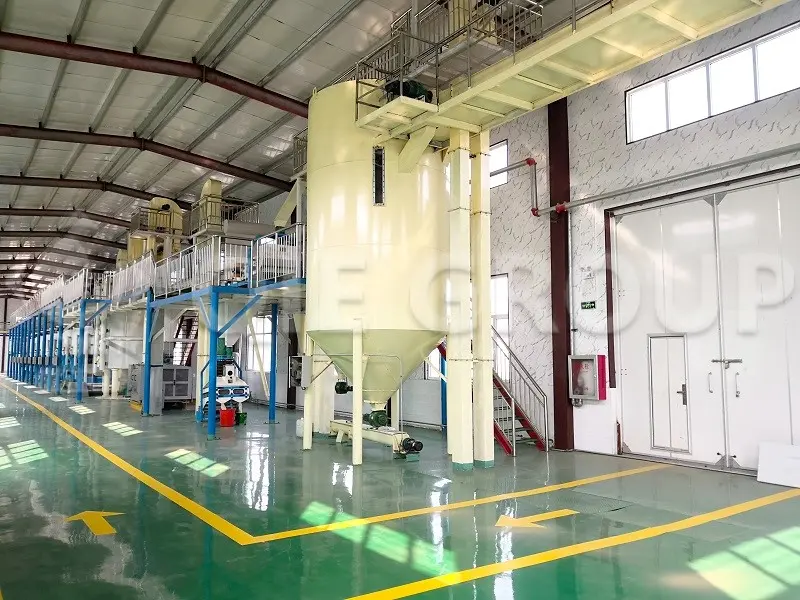
| Comparison Item | Cold-Pressed Flaxseed Oil | Hot-Pressed Flaxseed Oil |
|---|---|---|
| Processing method | Low-temperature conditioning and pressing | Thermal conditioning before pressing |
| Oil yield | Relatively lower | Relatively higher |
| Nutrient preservation | Better retention of natural components | Some heat-sensitive components may be affected |
| Flavor | Mild and natural | Stronger roasted nut flavor |
| Appearance | Usually lighter color | Usually darker color |
| Target market | Premium health food and organic markets | General edible oil market |
Configuration: Seed cleaning system + Screw oil press + Oil filtration system.
Best for local brands, specialty food producers, and premium cold-pressed oil lines.
Configuration: Cleaning + Cracking/Flaking + Conditioning system + Continuous screw press + Auto-filtration + Semi-continuous refining system.
Best for regional edible oil manufacturers requiring steady, daily production volumes.
Configuration: Full automated pretreatment + Continuous screw pressing + Solvent extraction plant + Continuous refining + Auto-filling packaging.
Best for large-scale industrial enterprises looking for maximum oil recovery and minimized costs per ton.
Long-term production performance depends on engineering design, component materials, operating stability, and reliable after-sales support. Evaluate choices using these four core metrics:
Yes. You can use cold pressing with low-temperature conditioning to retain natural nutrients, or choose hot pressing to maximize yield through heating. The choice depends on market target.
Common causes include incorrect moisture content (causing slipping), poor raw seed conditioning, uneven or too fast feeding, and worn pressing parts.
Lower yields often result from poor raw seed quality, improper pre-pressing moisture levels, incorrect screw pressure setups, or component wear.
Yes, most industrial screw presses can process flaxseed, sesame, sunflower, rapeseed, peanuts, and soybeans after adjusting the speed and chamber clearances.
Cold press lines use low-temp processes to secure premium premium oil quality. Hot press lines feature advanced cookers to lower viscosity and reach top industrial extraction speeds.
Not always. High-end oil needs only fine filtration and dewaxing. Mass-market commercial edible oil utilizes full refining to remove odors and extend shelf stability.
Yes, but large plants usually build a hybrid system: Pretreatment → Pre-pressing → Solvent Extraction → Refining to reach maximum efficiency and oil recovery.
Shelf life depends on processing quality and packaging. Because it is highly polyunsaturated, it requires nitrogen-flushed or light-resistant packaging and a cool environment.
If you are planning to invest in a commercial flaxseed oil production project, following these four structured steps will guide your investment choice:
Decide if you are producing premium cold-pressed oil, conventional commercial edible oil, or industrial bulk oil. This dictates your entire machinery lineup.
Base your capacity target on local raw material availability, your target market size, and your startup investment budget.
A comprehensive engineering plan ensures cleaning, flaking, pressing, filtering, refining, and filling are balanced to avoid future modification costs.
Partner with an experienced plant supplier who provides comprehensive engineering drawings, machine customization, on-site installation guides, and long-term spare parts supply.
A screw oil press is a proven and practical solution for flaxseed oil extraction. Successful flaxseed oil production depends on more than just selecting a pressing machine. Raw material quality, pretreatment technology, pressing parameters, filtration methods, refining design, and storage conditions all influence the final oil quality and production efficiency.
With extensive experience in edible oil processing equipment and turnkey engineering solutions, QIE Group provides customized flaxseed oil production solutions, from individual machines to complete processing plants, helping customers build efficient, reliable, and sustainable oil processing facilities.
 180
|
180
|
 High oil yield press
Edible oil pressing equipment
Peanut oil extraction efficiency
Sesame cold press machine
Oil and fat equipment upgrade
Small-scale oil pressing production line
180
|
Grape seed screw press oil press
Oilseed oil extraction process
Vegetable oil processing technology
Oilseed oil market trends
Efficient oil extraction technology
162
|
smart oil pressing technology
low temperature oil expeller
residual oil rate
oil mill automation
oil extraction plant cost
49
|
Mustard seed oil press
Oil processing equipment
Oil press machine solutions
mustard seed oil expeller
high oil yield solution
360
|
Cold-pressed flaxseed oil
QIE Group Cold Press Solutions
Additive-free healthy formula
Flaxseed oil cold press machine
Cold pressing process for flaxseed oil
High oil yield press
Edible oil pressing equipment
Peanut oil extraction efficiency
Sesame cold press machine
Oil and fat equipment upgrade
Small-scale oil pressing production line
180
|
Grape seed screw press oil press
Oilseed oil extraction process
Vegetable oil processing technology
Oilseed oil market trends
Efficient oil extraction technology
162
|
smart oil pressing technology
low temperature oil expeller
residual oil rate
oil mill automation
oil extraction plant cost
49
|
Mustard seed oil press
Oil processing equipment
Oil press machine solutions
mustard seed oil expeller
high oil yield solution
360
|
Cold-pressed flaxseed oil
QIE Group Cold Press Solutions
Additive-free healthy formula
Flaxseed oil cold press machine
Cold pressing process for flaxseed oil