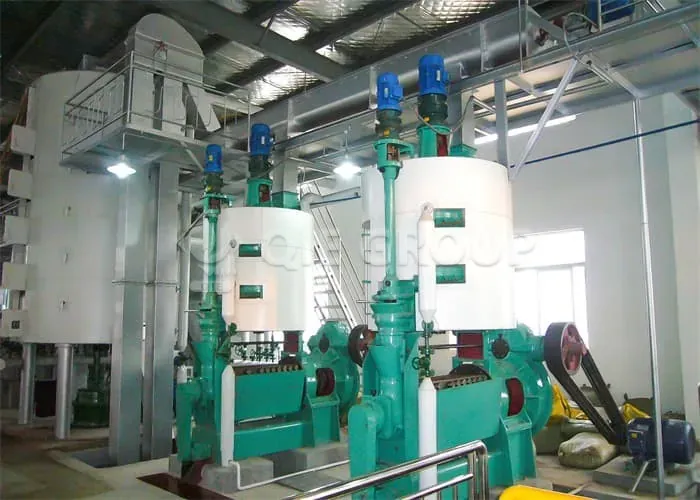
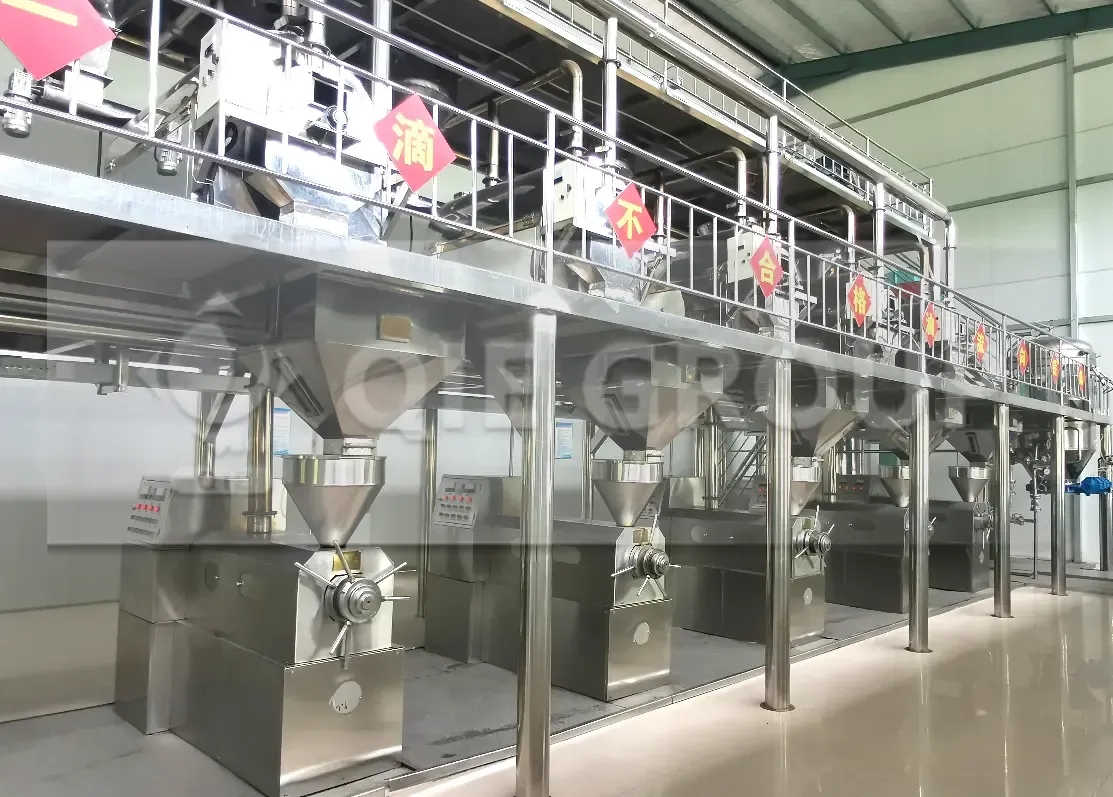
Sunflower seed oil is highly valued for its rich nutrients and distinctive flavor. In oil processing, selecting the right oil press machine directly affects oil quality, yield, and production cost. For food-grade projects, equipment material, safety, and process control are especially critical. This article systematically analyzes the key factors in selecting food-grade sunflower seed oil press machines and shares practical project experience, highlighting QIE Group's global expertise.
💡 Case: A Middle East project initially chose the cheapest press machine. Insufficient pretreatment led to frequent stoppages in the first three months, increasing operational costs by 20% above the budget.
Pursuing the highest single-machine oil yield may cause dark-colored oil, high impurity content, and higher refining costs.
High temperature and pressure can produce off-flavors (e.g., pyrazines), affecting oil aroma.
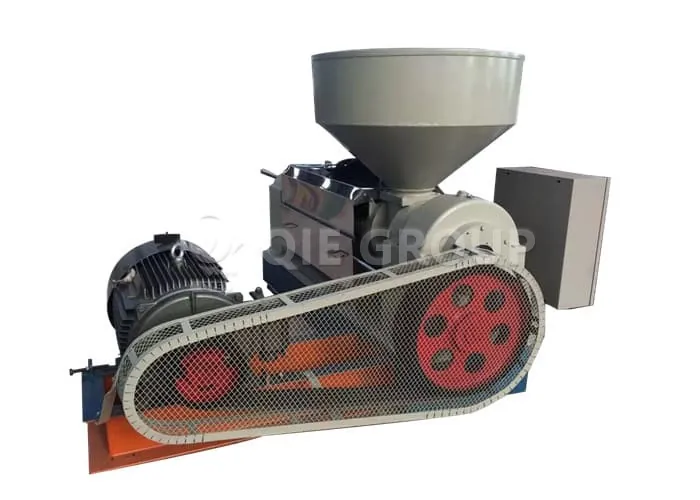
The success of a food-grade sunflower seed oil project depends on coordination between the pressing stage and the overall process chain.
Low-cost focus: Machines may be poorly adaptable, leading to frequent downtime; key components may wear quickly, increasing maintenance costs.
High-yield focus: Excessive pressing increases impurities and wax content, complicating refining; over-processed cake reduces by-product value.
💡 Engineering Tip: Maximum oil yield is not the only goal—balancing oil quality, operational costs, and equipment lifespan is essential. 👉《Cold-pressed vs. hot-pressed edible oil production》
| Risk Type | Potential Consequences |
|---|---|
| Oil Quality | Overheating or over-pressing → dark-colored crude oil, flavor deterioration, difficult to fully refine |
| Impurities & Wax | Reduced refining efficiency, increased chemical consumption, shortened shelf life, possible sedimentation |
| Operating Costs | High failure rate, frequent downtime, costly spare parts; uncontrolled electricity, steam, or residual oil in cake |
| Compliance Risks | Non-compliance with food-grade standards → HACCP/BRCGS certification failure; environmental violations |
| Consideration | Key Indicators | Engineering Explanation | QIE Group Expertise |
|---|---|---|---|
| Product Positioning | Premium cold-pressed/first-pressed oil vs. standard refined oil | Determines process route (hydraulic cold pressing vs. screw hot pressing) | QIE Group provides tailored cold and hot pressing solutions to preserve flavor and ensure stable yield |
| Capacity & Scale | Daily processing volume (tons/day) | Screw oil presses suit large continuous production; hydraulic oil presses suit small/medium or specialty production | QIE Group can customize presses according to capacity and integrate with upstream and downstream units |
| Food Safety | Contact parts 316L stainless steel, surface Ra ≤0.8μm, CIP/SIP compatible | Ensures no heavy metal contamination; complies with HACCP/GMP and food contact regulations | QIE Group equipment meets EU & North America food contact certifications |
| Process Performance | Oil yield, residual oil in cake, energy consumption | Directly affects operational cost and ROI | Provides measured data and tuning schemes to balance yield and energy efficiency |
| Oil Quality | Temperature control, impurity content, color, flavor retention | Determines final product market competitiveness | Optimized temperature and roasting parameters ensure high-end first-pressed oil flavor |
| Automation & Intelligence | Pressure/temperature closed-loop control, auto cake discharge, SCADA interface | Reduces labor, enhances stability | QIE Group offers traceable production systems and remote fault diagnostics |
| Maintenance & Cost | Screw/cage lifespan, spare parts cost, supply availability | Affects total lifecycle cost | Standardized global spare parts + local service training reduce TCO |
| Supplier Capability | Engineering design, installation, quick-response service | Ensures long-term reliable operation | QIE Group has completed sunflower oil projects in 130+ countries, with extensive engineering expertise |
Moisture Adjustment: Hot pressing 7–9%, cold pressing 5–7%, aiding cell wall rupture and oil release.
Hull Removal & Seed Separation: Reduces wax content, increases yield, preserves flavor.
Crushing & Roasting (Hot Pressing): Increases surface area, adjusts temperature and plasticity to improve oil release.
💡 Case: A European client processing high-wax sunflower seeds optimized hull removal and roasting parameters, reducing crude oil impurities by 15% and increasing yield by 3%.
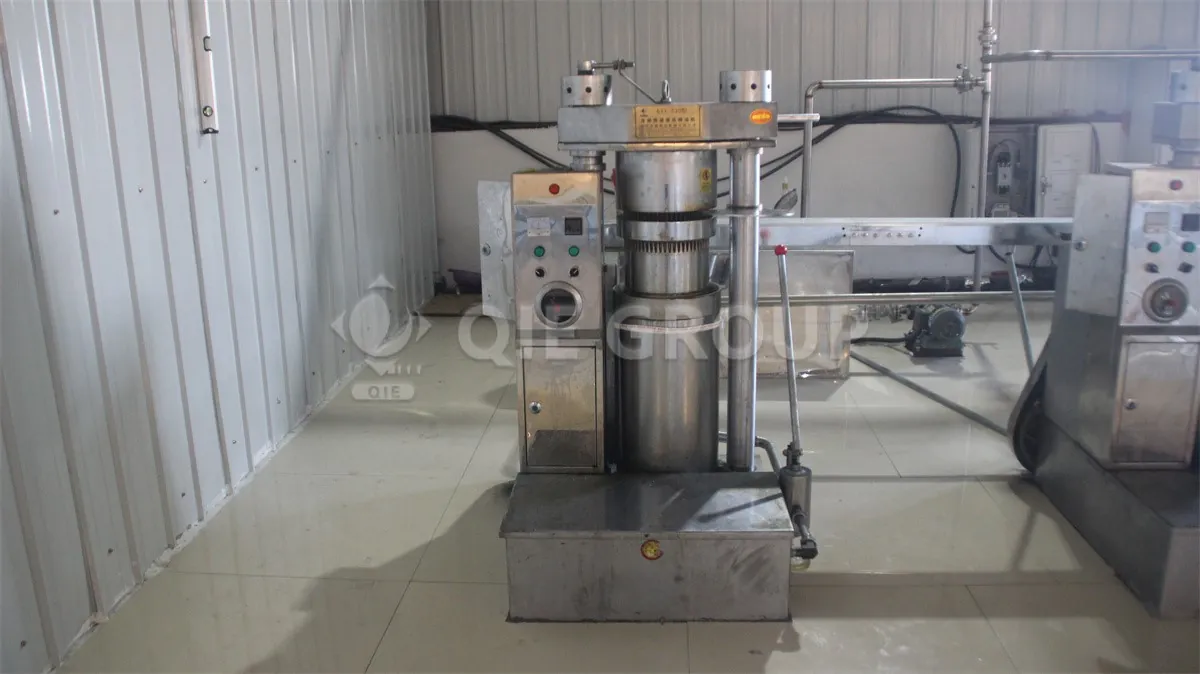
From pretreatment, press parameter control, to refining integration, process integration capabilities are more critical than individual performance.
Overseas experience shows that systems adaptable to raw material variability, compliant with regulations, and easy to maintain, are key for long-term efficiency and product quality.
QIE Group, with 43 years of global project experience, provides complete solutions and engineering support, making it a reliable partner for food-grade sunflower seed oil press machine selection.
 314
|
314
|
 Coconut spiral oil press
Coconut oil production line
Residual oil rate optimization
Equipment Selection Guide
Automated continuous operation
284
|
Palm Oil Press
High efficiency and energy saving equipment
Nigerian oil refinery solutions
Palm fruit processing equipment
Automated pressing system
174
|
Cottonseed pressing
Multi-stage screw oil press
High-fiber oilseeds
Increased oil yield
residual oil content
245
|
rapeseed pressing process
Increased oil yield
Residual oil rate control
Screw oil press
Oil pretreatment
102
|
Peanut oil press improves oil yield
Peanut oil press pretreatment method
Peanut oil press operation techniques
Peanut oil press machine for high-efficiency pressing
Peanut oil press process optimization
Coconut spiral oil press
Coconut oil production line
Residual oil rate optimization
Equipment Selection Guide
Automated continuous operation
284
|
Palm Oil Press
High efficiency and energy saving equipment
Nigerian oil refinery solutions
Palm fruit processing equipment
Automated pressing system
174
|
Cottonseed pressing
Multi-stage screw oil press
High-fiber oilseeds
Increased oil yield
residual oil content
245
|
rapeseed pressing process
Increased oil yield
Residual oil rate control
Screw oil press
Oil pretreatment
102
|
Peanut oil press improves oil yield
Peanut oil press pretreatment method
Peanut oil press operation techniques
Peanut oil press machine for high-efficiency pressing
Peanut oil press process optimization