
Groundnut (peanut) oil pressing is a mechanical process that extracts oil from prepared groundnut kernels through controlled compression. Groundnuts typically contain about 45–55% oil, making them suitable for mechanical pressing.
For larger commercial plants, pre-pressing + solvent extraction may be used when higher overall oil recovery is required. The best process depends on raw material characteristics, production capacity, target oil quality, and investment level.
A typical groundnut oil pressing process is:
For refined edible oil:
For large-scale plants, press cake can be further processed through solvent extraction.
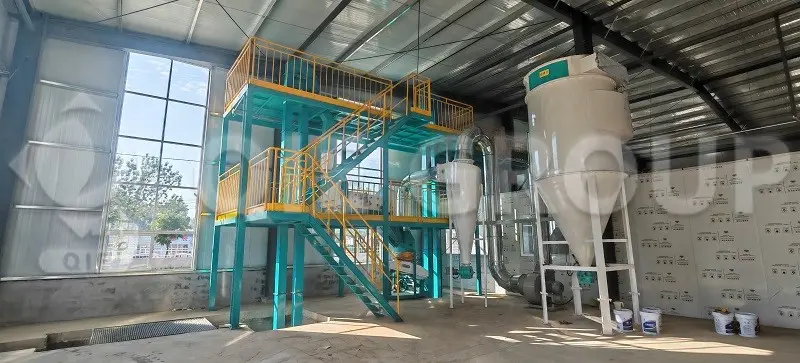
Raw groundnuts may contain soil, stones, dust, plant residues, and metal particles. Cleaning removes these impurities and protects downstream equipment.
Shelling separates the kernels from the outer shells. It is generally recommended for commercial groundnut oil plants because shells contain relatively little oil and add unnecessary material to the processing line.
Crush or flake shelled kernels to improve heat and moisture transfer during conditioning. Uniform particle size also helps stabilize feeding into the oil press.
Conditioning controls the moisture and temperature of the groundnut material before pressing. It can:
No single conditioning temperature suits every groundnut plant. Select parameters based on raw material characteristics, target product, and equipment configuration.
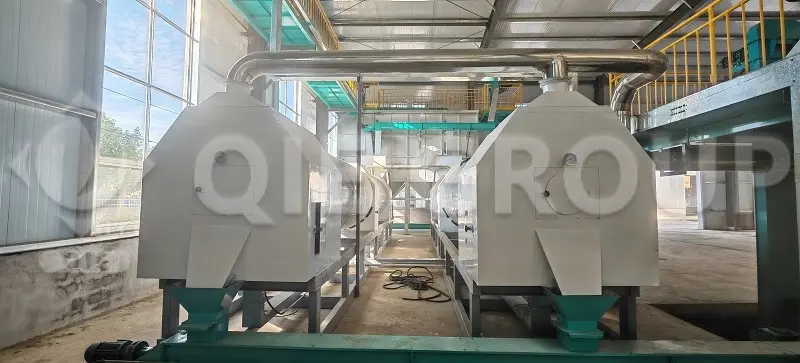
Conditioned groundnuts enter a screw oil press, where a rotating screw gradually compresses the material. Oil passes through the press cage while the remaining solids are discharged as press cake.
For continuous commercial production, screw presses are generally preferred because they support continuous operation, stable throughput, adjustable pressing conditions, and integration with pretreatment equipment.
Hydraulic presses may be considered for small-scale or specialty production where batch operation is acceptable.
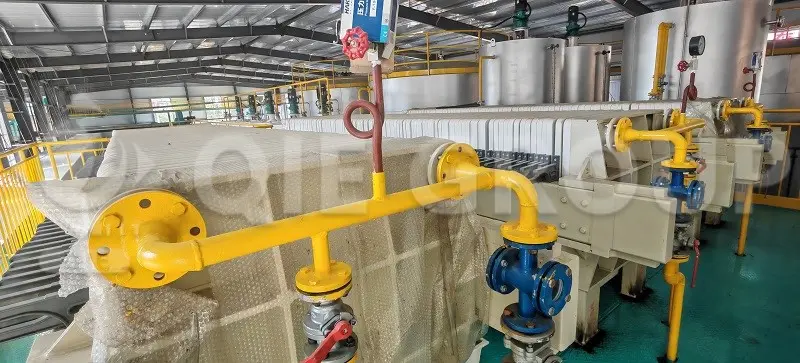
Freshly pressed groundnut oil contains suspended solids and fine particles. A typical arrangement is:
The filtration system depends on the required crude oil quality and whether the oil will be sold after filtration or sent for refining.
Groundnut oil yield varies with oil content, moisture, shelling efficiency, conditioning, press configuration, feed rate, and operating conditions. Therefore, one fixed yield figure should not be applied to every project.
These figures are project-dependent and should be confirmed through raw-material testing and process trials.
The main factors affecting pressing performance include:
In practice, pretreatment and press adjustment are as important as the press itself.

The choice depends mainly on product positioning and extraction requirements.
| Factor | Cold Pressing | Hot Pressing |
|---|---|---|
| Main objective | Preserve specific product characteristics | Improve extraction efficiency |
| Heating | Limited external heating | Controlled conditioning/heating |
| Oil yield | Generally lower | Generally higher |
| Flavor | More natural characteristics | Can develop stronger roasted/nutty notes |
| Application | Small/specialty production | Commercial production |
For premium or specialty groundnut oil, cold pressing may be suitable. For commercial production where throughput and oil recovery are priorities, controlled hot pressing is generally more practical.
For continuous commercial peanut oil production, a screw oil press is generally the preferred choice.
The selection should consider capacity, raw material characteristics, target oil quality, cake requirements, processing temperature, automation, and whether solvent extraction will follow.
A typical mechanical pressing line includes:
| Processing Stage | Main Equipment |
|---|---|
| Cleaning | Cleaner, destoner, magnetic separator |
| Shelling | Groundnut sheller |
| Crushing | Crusher or flaker |
| Conditioning | Cooker/conditioner |
| Pressing | Screw oil press |
| Clarification | Settling tank/screen |
| Filtration | Filter press/vacuum filter |
| Storage | Crude oil storage tank |
The exact configuration should be determined by capacity, product requirements, and the selected process route.
This is an important decision for commercial groundnut oil plants.
Mechanical pressing is suitable when the project prioritizes:
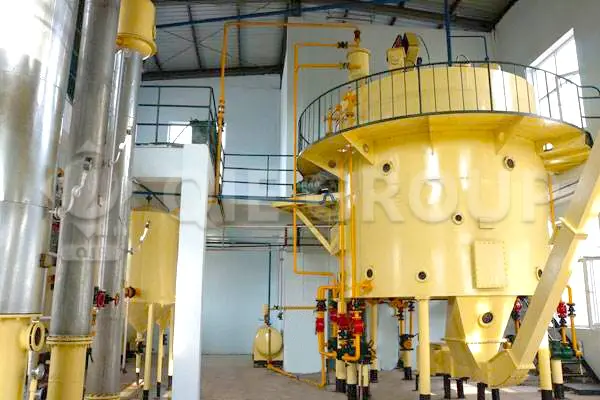
For larger plants seeking higher overall oil recovery, press cake can be sent to solvent extraction:
Under optimized project conditions, the solvent extraction section may achieve:
These are project-dependent figures and should be confirmed according to raw material characteristics and final process design. The main advantage of this combined route is recovering additional oil remaining in the press cake after mechanical pressing.
| Project Objective | Recommended Route |
|---|---|
| Small-scale local production | Cleaning → Pressing → Filtration |
| Premium fragrant oil | Pretreatment → Controlled Pressing → Filtration |
| Commercial refined oil | Pretreatment → Screw Pressing → Filtration → Refining |
| Large-scale maximum oil recovery | Pretreatment → Pre-Pressing → Solvent Extraction → Refining |
The final process should be selected based on capacity, target product, raw material characteristics, required oil recovery, investment, and operating conditions.
Whether refining is required depends on the final product.
For refined edible groundnut oil, the typical route is:
Dewaxing can be added when required by product specifications or low-temperature clarity requirements.
For fragrant groundnut oil, excessive refining may remove desirable aroma compounds, so downstream treatment should focus on preserving the intended flavor characteristics.
There is no single price for a groundnut oil processing plant. Investment depends mainly on:
For an accurate quotation, key details include target capacity, raw oil/moisture content, target oil product, route, and automation preferences.
Check raw material moisture, feed rate, conditioning conditions, and press settings. Variations in groundnut quality can also affect pressing performance.
Excessive heating, unsuitable conditioning, long residence time, or poor raw-material quality can contribute to darker oil. Processing parameters should be adjusted according to the target product.
Possible causes include unsuitable moisture, unstable feeding, incorrect screw configuration, or excessive compression. Material conditions and press settings should be checked together.
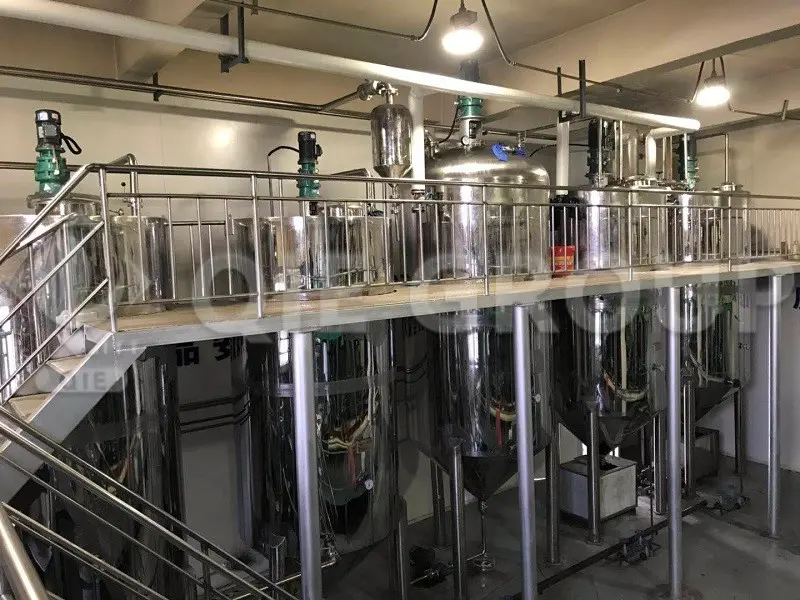
QIE GROUP provides groundnut oil processing equipment and turnkey engineering solutions covering:
Process design is customized according to capacity, raw material characteristics, target oil quality, processing route, and project requirements. For premium fragrant oil, the focus is on controlled pressing and flavor preservation. For large commercial projects, pre-pressing and solvent extraction can be considered when higher overall oil recovery is required.
Not necessarily for every small-scale operation, but shelling is generally recommended for commercial plants because it removes low-oil-content shells before the main extraction process.
Yes. Press cake can be handled as a by-product or further processed depending on its residual oil content, quality, and intended use.
Yes, if the plant is designed for both products. However, the downstream process and operating parameters need to be planned around the different product requirements.
No. It is mainly considered when higher overall oil recovery justifies the additional equipment, safety systems, solvent recovery, and operating complexity.
The best groundnut oil pressing process depends on oil quality, recovery, capacity, investment, and target market.
For small or specialty production, mechanical pressing offers a relatively simple solution. For commercial production, continuous screw pressing provides stable operation and easy integration with pretreatment and refining. For large-scale projects focused on higher oil recovery, pre-pressing + solvent extraction can recover additional oil from press cake.
A successful groundnut oil plant should therefore be designed as an integrated process rather than selecting an oil press based only on machine capacity or price.
Get tailored plant design, yield estimates, and turnkey project planning from QIE GROUP engineers.
 252
|
252
|
 sesame oil processing sesame oil production line sesame oil pressing process why sesame oil aroma varies sesame oil hydraulic pressing technology
372
|
Oil pressing equipment Oil extraction efficiency Edible Oil Processing Return on investment of oil mill Oil yield
184
|
Cottonseed pressing Multi-stage screw oil press High-fiber oilseeds Increased oil yield residual oil content
239
|
rapeseed oil pressing production line high oil yield rapeseed oil pressing process screw oil press turnkey edible oil plant
368
|
tea seed oil extraction machine supplier tea seed oil processing plant camellia oil press machine turnkey tea seed oil refinery edible oil extraction machinery
sesame oil processing sesame oil production line sesame oil pressing process why sesame oil aroma varies sesame oil hydraulic pressing technology
372
|
Oil pressing equipment Oil extraction efficiency Edible Oil Processing Return on investment of oil mill Oil yield
184
|
Cottonseed pressing Multi-stage screw oil press High-fiber oilseeds Increased oil yield residual oil content
239
|
rapeseed oil pressing production line high oil yield rapeseed oil pressing process screw oil press turnkey edible oil plant
368
|
tea seed oil extraction machine supplier tea seed oil processing plant camellia oil press machine turnkey tea seed oil refinery edible oil extraction machinery


