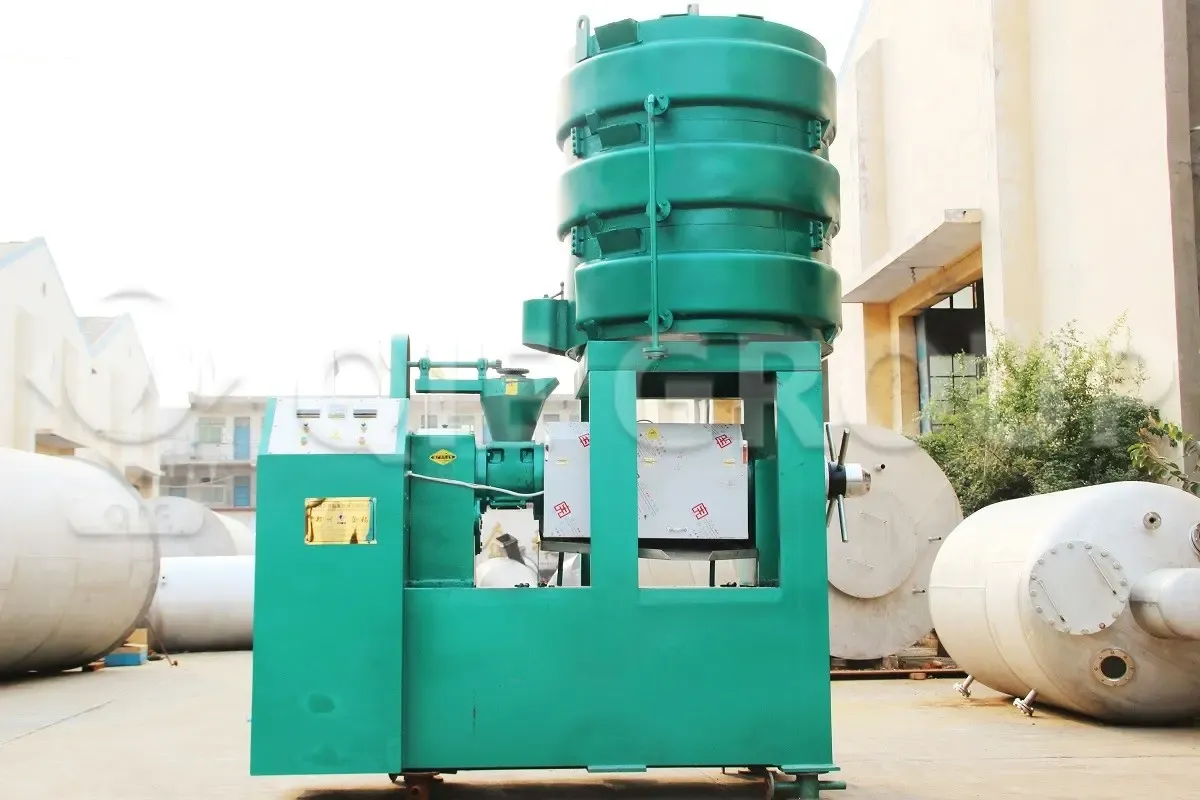
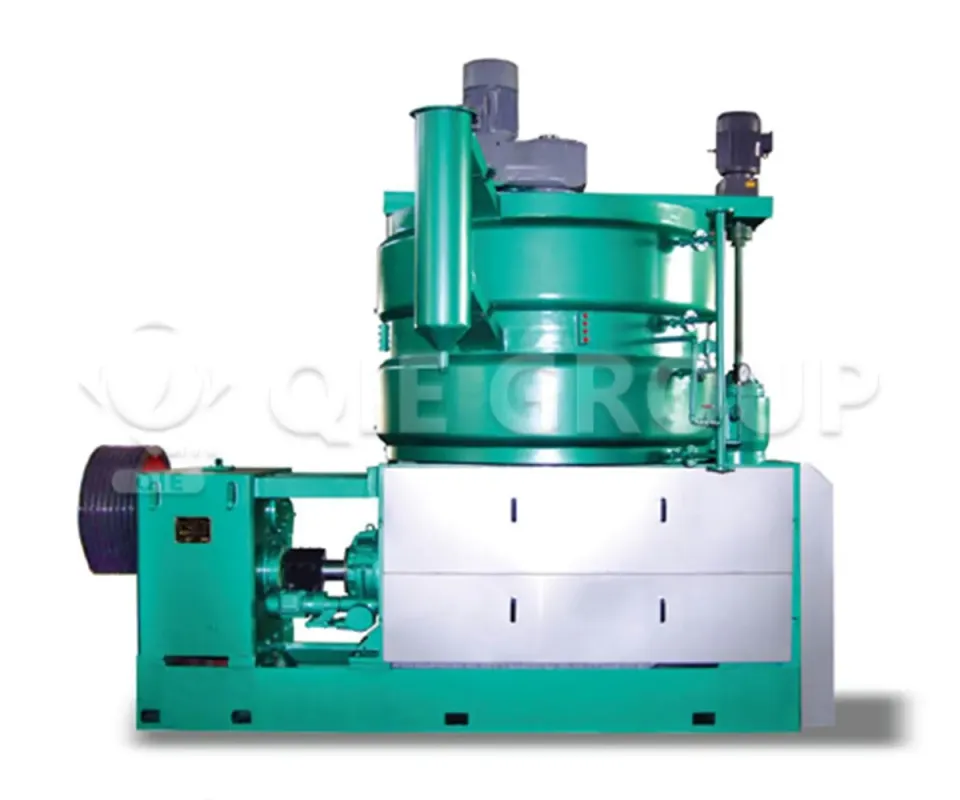
In commercial edible oil production, an oil press is not a standalone machine. It serves as a critical link within the entire vegetable oil processing line, bridging raw material pretreatment with downstream extraction and refining. Its performance directly affects initial oil recovery, oil cake quality, and the operating cost and stability of subsequent processes.
From an engineering perspective, whether an oil press is properly selected becomes evident within the first few months of operation.
Stable oil yield, minimal parameter adjustments, and reasonable refining loads are all determined at the pressing stage.
Engineering Definition:
In commercial edible oil production, an oil press uses continuous mechanical pressing based on screw conveying and progressive pressure buildup to separate pretreated oilseeds into crude oil and oil cake, serving as a key interface between pretreatment and extraction or refining sections.
This article explains—based on real oil mill engineering experience—how oil presses work in commercial production, how they operate continuously, and how they interact with other processing stages, helping investors and producers make informed equipment selection decisions. 👉( Single Screw vs Double Screw Oil Press )
Unlike household or small workshop oil pressing, commercial oil production focuses on long-term operational efficiency, not merely the ability to extract oil.
In practice, commercial oil mills typically require oil presses to meet the following criteria:
High processing capacity: Capable of handling several to hundreds of tons of oilseeds per day
Continuous and stable operation: Suitable for 24-hour uninterrupted production with minimal downtime
Wide raw material adaptability: Stable processing of soybeans, rapeseed, peanuts, sunflower seeds, cottonseed, and more
High oil yield with low residual oil: Press cake residual oil content typically controlled below 6%
Easy system integration: Seamless connection with pretreatment, extraction, and refining sections
For these reasons, screw oil presses have become the most widely adopted and mature solution in commercial oil mills.
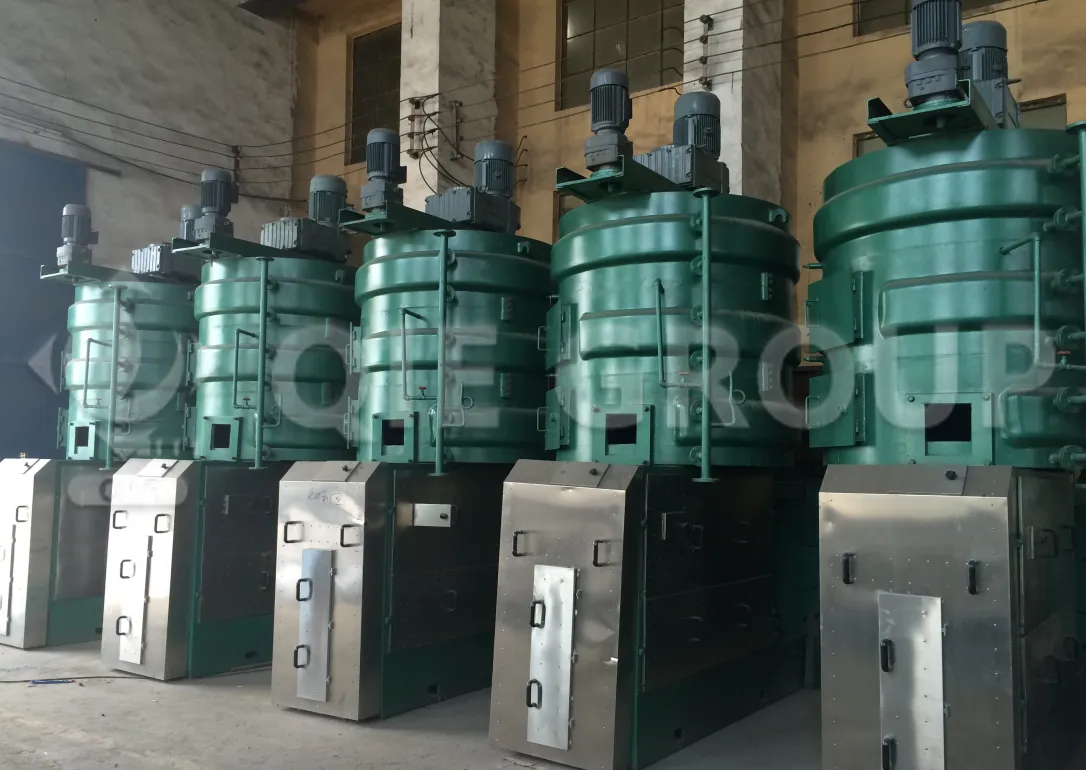
A screw oil press extracts oil through mechanical compression, with its core principle summarized as: screw conveying combined with progressive pressure buildup.
A commercial screw oil press typically consists of:
Frame and feeder: Ensure mechanical stability and uniform, continuous feeding
Gearbox: Transmits power to drive screw rotation
Pressing chamber: Composed of press cage, bars, and cake outlet, where compression occurs
Screw shaft: The key functional component, forming a pressure gradient through changing pitch and depth
Motor and electrical control system: Provide power and operational monitoring
Oil collection and cake discharge system: Separate crude oil and oil cake 👉( Screw oil press vs hydraulic oil press )
Under normal operating conditions, the pressing process follows these steps:
Pretreated oilseeds (cleaned, crushed, flaked, cooked) enter the feeder
The screw shaft rotates, continuously conveying material forward
As screw pitch and chamber volume decrease, mechanical pressure gradually increases
Friction and compression raise material temperature (typically 80–120°C), breaking cell structures
Oil is released through press cage gaps and collected as crude oil
Solid oil cake is discharged continuously for further processing
Commercial oil press process summary:
Pretreatment → Continuous feeding → Screw conveying → Progressive compression → Oil release → Crude oil collection → Cake discharge
This continuous, enclosed, and self-discharging process is well suited for large-scale and long-term edible oil production.
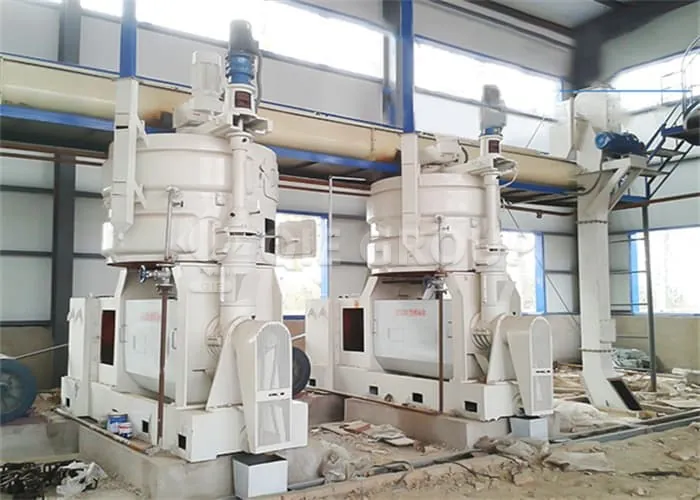
In real oil plants, screw oil presses operate as part of a fully integrated continuous production line and follow strict engineering operation standards.
Parallel installation: Multiple presses operate in parallel to meet capacity demands and ensure system redundancy
Automatic temperature and load control: Modern presses use digital temperature control and current monitoring to adjust operating conditions based on raw material moisture and temperature
Coordination with pretreatment: Cleaning, crushing, flaking, and cooking directly determine pressing efficiency
Residual oil monitoring: Regular oil cake analysis allows optimization of pressing parameters
Thanks to this system-based operating logic, commercial screw oil presses consistently achieve oil recovery rates above 60%, significantly outperforming traditional hydraulic presses.
An oil press is only one stage of the vegetable oil processing line, and its performance depends heavily on upstream and downstream coordination.
Raw materials must undergo proper cleaning, crushing, flaking, and cooking to reach optimal pressing conditions.
For example, insufficient cooking of rapeseed prevents cell wall rupture, leading to poor oil release.
For low-oil-content seeds such as soybeans, pressing alone leaves relatively high residual oil (around 6–8%).
Therefore, commercial oil mills typically adopt a pre-pressing + solvent extraction process:
The oil press removes part of the oil as pre-pressed oil
Press cake is sent to solvent extraction
Final residual oil can be reduced to below 1%
Impurities, phospholipids, and color in crude oil directly affect degumming, neutralization, bleaching, and deodorization loads.Better pressing control reduces refining costs and improves overall plant efficiency.
Engineering summary:
The oil press acts as a bridge within the production line. Stable performance depends on high-quality pretreatment input and efficient refining output.
During project consultations, this question is frequently raised.
From an engineering standpoint, the main factors include:
Equipment design differences: Compression ratio and press cage structure
Material and wear resistance: Screw and cage wear directly impact long-term oil yield
Raw material matching: Different oilseeds require specific screw designs and parameters
Pretreatment quality: Inadequate pretreatment cannot be compensated by higher pressure
Operational control: Unstable feeding and poor temperature control cause yield fluctuations
This is why professional manufacturers such as QIE GROUP provide customized oil press solutions based on raw materials, capacity, and process routes rather than selling generic machines.
With over 40 years of experience in edible oil processing equipment, QIE GROUP designs and delivers oil presses from a complete engineering system perspective.
We provide more than machines—we deliver:
Customized designs based on oilseed characteristics
Stable operation with high oil yield and low energy consumption
Seamless integration with pretreatment, extraction, and refining systems
Full lifecycle support from selection and installation to training
In many projects, oil yield differences are not caused by equipment price, but by whether the engineering solution truly fits the process.
If you are planning to build a new oil plant or upgrade an existing production line, we recommend seeking support from a team with practical engineering experience, starting with raw material characteristics, production capacity targets, and process routes.
QIE GROUP can provide you with systematic solutions, from oil press selection to complete plant construction, helping your edible oil project get off to a solid start and operate efficiently.
Learn more about our oil press equipment now → 147
|
147
|
 Soybean crushing
Residual oil rate optimization
Large oil press
Oil refinery energy-saving upgrade
Screw oil press
174
|
Cottonseed pressing
Multi-stage screw oil press
High-fiber oilseeds
Increased oil yield
residual oil content
425
|
Palm Oil Press
Single screw oil press
Double screw oil press
Oil refinery energy-saving equipment
Oil pressing equipment selection
Palm oil yield
245
|
rapeseed pressing process
Increased oil yield
Residual oil rate control
Screw oil press
Oil pretreatment
102
|
Peanut oil press improves oil yield
Peanut oil press pretreatment method
Peanut oil press operation techniques
Peanut oil press machine for high-efficiency pressing
Peanut oil press process optimization
Soybean crushing
Residual oil rate optimization
Large oil press
Oil refinery energy-saving upgrade
Screw oil press
174
|
Cottonseed pressing
Multi-stage screw oil press
High-fiber oilseeds
Increased oil yield
residual oil content
425
|
Palm Oil Press
Single screw oil press
Double screw oil press
Oil refinery energy-saving equipment
Oil pressing equipment selection
Palm oil yield
245
|
rapeseed pressing process
Increased oil yield
Residual oil rate control
Screw oil press
Oil pretreatment
102
|
Peanut oil press improves oil yield
Peanut oil press pretreatment method
Peanut oil press operation techniques
Peanut oil press machine for high-efficiency pressing
Peanut oil press process optimization