How much oil can be extracted from soybeans by pressing? There is no single fixed answer because results depend on soybean oil content, pressing method, pretreatment, equipment performance, and operating conditions.
Soybeans commonly contain around 18%–20% oil on a moisture-free basis, although the actual oil content varies with soybean variety and growing conditions.
However, mechanical pressing cannot necessarily recover all of this oil. Some oil remains in the solid material after pressing.
The most important distinction is therefore: Soybean oil content tells you how much oil is present in the seed. Pressing recovery tells you how much of that oil is actually recovered.
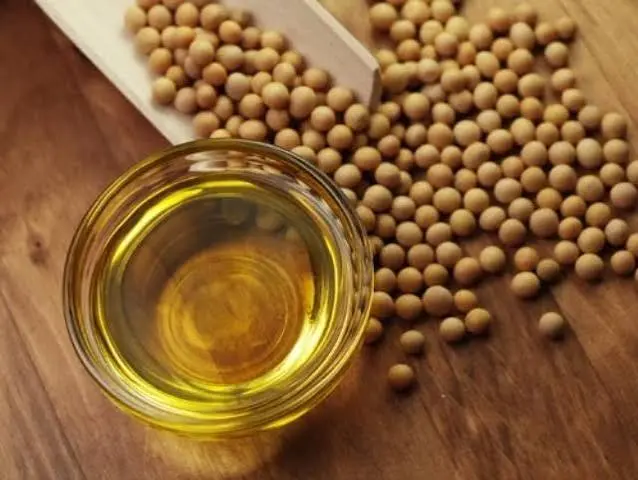
FAO technical information indicates that soybean lipid content is commonly around 18%–20% on a moisture-free basis. The actual value can vary depending on variety and growing conditions.
For example, if a soybean batch contains 20% oil on the stated basis:
These are theoretical oil contents, not guaranteed pressing outputs. The actual amount of oil recovered depends on the extraction process.
These three terms are often confused when estimating soybean oil production.
Oil content is the amount of oil contained in the soybean material.
Oil recovery is the proportion of the oil originally present in the raw material that is recovered by the extraction process.
Recovered oil is the actual amount of oil obtained from the pressing process.
The recovery efficiency must correspond to the specific pressing process. It should not be treated as a universal fixed percentage.
The answer depends on the type of mechanical pressing. A useful way to understand the range is to distinguish between pre-pressing and full pressing.
According to AOCS, pre-pressing systems can typically recover around 65%–75% of the available oil, while full pressing can reach approximately 90% or higher under suitable conditions. These figures describe oil recovery from the oil available in the seed, not the percentage of soybean mass converted directly into oil.
Assume: Soybean input = 1,000 kg | Oil content = 20% | Theoretical oil = 200 kg
Using a reported recovery range of 65%–75%:
A pre-pressing system could theoretically recover about 130–150 kg of oil per ton of soybeans.
If a full-pressing process reaches approximately 90% recovery:
At a hypothetical 90% recovery, 1 ton of soybeans containing 20% oil would correspond to approximately 180 kg of recovered oil.
These calculations are illustrative examples, not guaranteed production figures. Actual oil output must be determined from the specific soybean material and pressing system.
Mechanical pressing is physically limited. During pressing, oil is released from the soybean material, but part of the oil remains associated with the solid fraction. AOCS explains that mechanical de-oiling is limited by physical forces such as intermolecular and capillary forces.
As a result, the press cake still contains residual oil. AOCS reports that full-press cakes commonly contain approximately 5%–8% residual oil, although the actual value depends on the process and material.
Key Operational Takeaways:
Several factors affect the actual recovery obtained from a soybean pressing line.
The higher the oil content of the incoming soybean material, the more oil is potentially available for recovery. However, oil content alone does not determine pressing efficiency. Soybean variety, growing conditions and raw material quality can all influence composition.
Pretreatment prepares the soybean material for effective oil release. Depending on the process, soybean preparation may include:
The specific sequence depends on the selected process route. For example, QIE's soybean processing documentation describes flaking as part of the low-temperature cell-disruption route and specifies a flake thickness of ≤0.3 mm for that process. This value should be understood as a QIE process parameter for the specified extraction route, rather than a universal specification for every soybean mechanical press.
Feed rate, pressure development, screw configuration, material condition, and other operating parameters affect oil release. There is no single temperature or pressure value that should be applied to every soybean pressing plant.
The operating window should be established according to:
Wear of the screw, cage and other pressing components can affect the internal operating conditions of the press. If residual oil in the cake increases, the cause may be related to:
Therefore, troubleshooting should evaluate the entire process rather than changing pressing pressure alone.
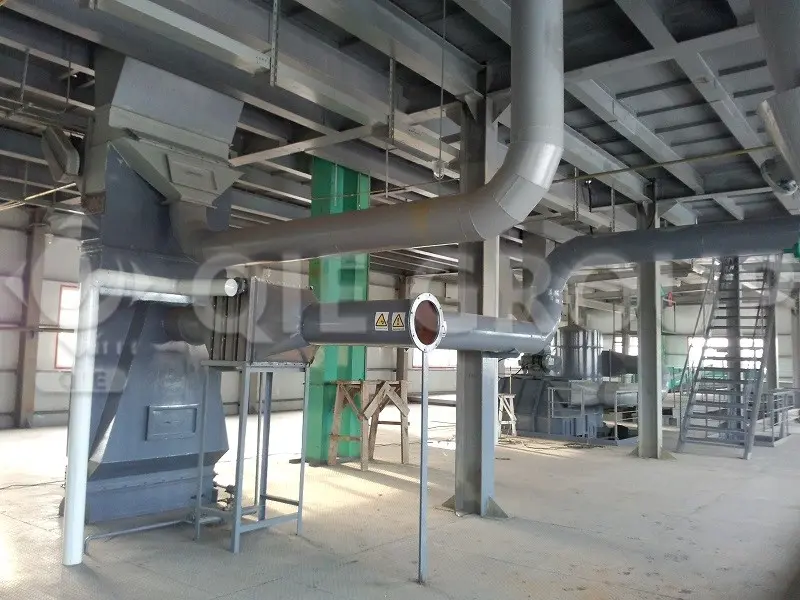
Mechanical pressing and solvent extraction have different operating principles and recovery characteristics.
| Factor | Mechanical Pressing | Solvent Extraction |
|---|---|---|
| Principle | Mechanical separation of oil | Oil dissolution and solvent recovery |
| Solvent | Not required | Required |
| Oil recovery | Physically limited | Generally higher |
| Residual oil | Remains in press cake | Can be reduced substantially |
| Process complexity | Relatively simple | More complex |
| Main consideration | Simplicity, pressing performance and cake quality | High oil recovery and large-scale processing |
For soybean solvent extraction, QIE's documented process includes extraction with n-hexane, followed by miscella evaporation and wet-meal desolventizing.
QIE's documented process targets include:
These figures apply to the QIE solvent extraction process and should not be interpreted as mechanical pressing specifications.
Mechanical pressing may be appropriate when process simplicity and avoiding a solvent system are important. Solvent extraction may be considered when higher oil recovery and lower residual oil in the meal are major objectives.
For some soybean projects, a combination route can be evaluated:
This combination recovers more of the available oil while maintaining the desired meal characteristics.
The appropriate process depends on:
There is therefore no universal answer that mechanical pressing is always better than solvent extraction.
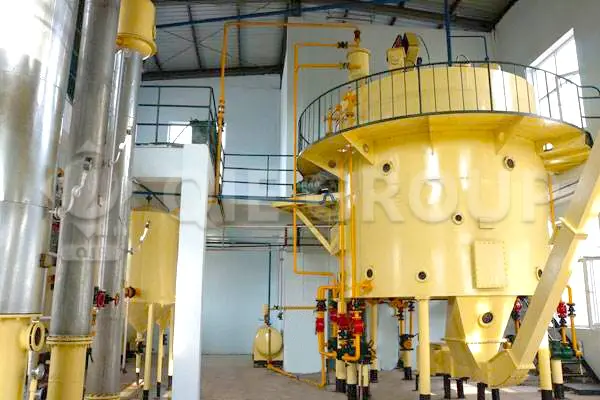
Instead of simply increasing pressing pressure, evaluate the complete process.
Test incoming soybeans for oil content, moisture, impurities, and overall raw material condition.
Ensure that cleaning, conditioning, cracking, and flaking are appropriate for the selected pressing route.
An unstable feed rate can cause fluctuations in press load and oil recovery.
Track recovered oil, cake residual oil, throughput, crude oil quality, energy consumption, and equipment condition.
Cake residual oil is one of the most useful indicators for evaluating whether the press is effectively recovering oil. Do not rely only on theoretical calculations.
The best process is not necessarily the one with the highest instantaneous oil recovery.
QIE does not evaluate a soybean oil project based only on the oil press. Depending on the raw material and production target, the process may include:
Option A: Mechanical Route
Pretreatment → Mechanical Pressing → Filtration
Option B: Comprehensive Extraction & Refining Route
Pretreatment → Pre-pressing → Solvent Extraction → Desolventizing → Crude Oil Processing → Refining
QIE's soybean processing documentation covers cleaning, conditioning, cracking, dehulling, flaking or expansion, extraction, solvent recovery, and desolventizing.
For the refining stage, the documented process can include:
Degumming → Deacidification → Bleaching → Deodorization
The specific process is selected according to crude oil characteristics and the required finished oil quality. The objective is not simply to maximize oil output, but to balance oil recovery, oil quality, meal quality, production capacity, and overall project economics.
There is no universal fixed value. If the soybeans contain 20% oil, 1 ton contains approximately 200 kg of theoretical oil. The amount actually recovered depends on the pressing process and its recovery efficiency.
For example, using a 65%–75% recovery assumption for a pre-pressing process gives approximately 130–150 kg of recovered oil per ton. A full-pressing process can reach approximately 90% or higher recovery under suitable conditions.
Soybeans commonly contain approximately 18%–20% oil on a moisture-free basis, although the actual oil content varies with variety and growing conditions.
No. Oil content refers to the oil present in the soybean, while pressing yield refers to the oil actually recovered by the mechanical process.
Mechanical pressing cannot remove all oil because oil remains associated with the solid material. AOCS reports approximately 5%–8% residual oil in full-press cakes as a common range.
Neither process is universally better. Mechanical pressing is relatively simple and does not require a solvent system. Solvent extraction can achieve higher oil recovery and much lower residual oil in the meal. The appropriate process depends on capacity, investment, recovery requirements, meal specifications, and project conditions.
For a project-specific estimate, the following information is useful:
With these parameters, the expected oil recovery and suitable process configuration can be evaluated more accurately.
The amount of oil that can be extracted from soybeans by pressing depends on how much oil is present in the soybean and how efficiently the selected pressing process can recover it. Soybeans commonly contain around 18%–20% oil on a moisture-free basis. If 1 ton of soybeans contains 20% oil, approximately 200 kg of theoretical oil is available.
However, the actual recovered oil depends on the pressing route. AOCS reports approximately 65%–75% oil recovery for pre-pressing and approximately 90% or higher for full pressing under suitable conditions.
Therefore, there is no single universal answer such as “1 ton of soybeans produces X kg of oil.” A reliable estimate must consider the soybean's measured oil content, the selected process, pretreatment conditions, press performance, and residual oil in the cake.
For projects requiring higher oil recovery, pre-pressing combined with solvent extraction may be considered. QIE can evaluate the appropriate soybean oil processing route according to raw material characteristics, capacity, oil recovery targets, meal requirements, and project conditions.
 494
|
494
|
 peanut oil press machine commercial peanut oil production line peanut oil processing turnkey solutions peanut oil press machine selection guide
246
|
twin screw palm fruit oil press palm oil press machine supplier palm oil extraction efficiency palm oil mill machinery equipment
114
|
pumpkin seed oil manufacturing process pumpkin seed oil extraction machine cold press vs hot press pumpkin seed oil pumpkin seed oil processing plant oilseed dehulling and conditioning
188
|
screw oil press for flaxseed flaxseed oil processing plant flaxseed oil extraction flaxseed oil press cold pressed flaxseed oil hot pressed flaxseed oil
495
|
sesame oil production line sesame oil pressing hydraulic sesame oil press machine sesame seed roasting machine sesame oil filtration sesame oil processing
peanut oil press machine commercial peanut oil production line peanut oil processing turnkey solutions peanut oil press machine selection guide
246
|
twin screw palm fruit oil press palm oil press machine supplier palm oil extraction efficiency palm oil mill machinery equipment
114
|
pumpkin seed oil manufacturing process pumpkin seed oil extraction machine cold press vs hot press pumpkin seed oil pumpkin seed oil processing plant oilseed dehulling and conditioning
188
|
screw oil press for flaxseed flaxseed oil processing plant flaxseed oil extraction flaxseed oil press cold pressed flaxseed oil hot pressed flaxseed oil
495
|
sesame oil production line sesame oil pressing hydraulic sesame oil press machine sesame seed roasting machine sesame oil filtration sesame oil processing