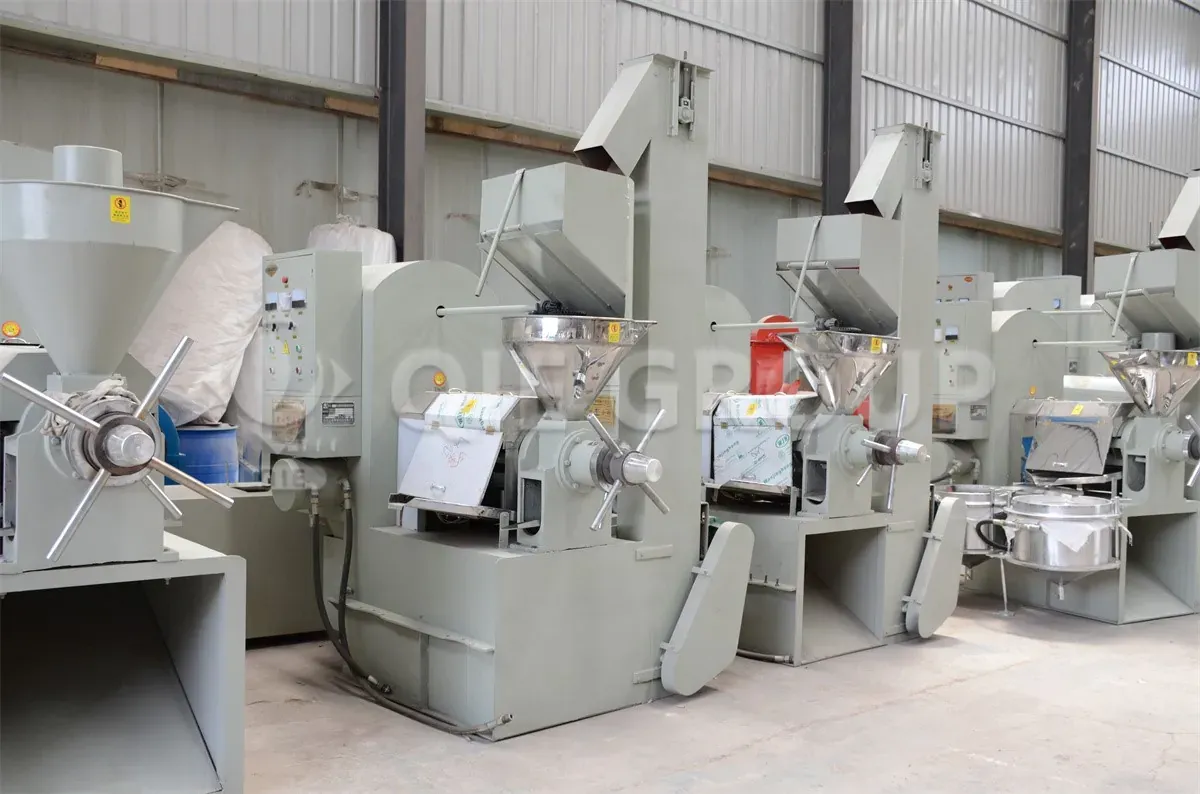
In many edible oil plants, wear of oil press machines is often considered inevitable.Replacing screw shafts and press rings on a regular basis, occasional unplanned shutdowns, and rising maintenance expenses have become almost “normal” in daily operations. But an important question is rarely asked:
Are high wear rates and increasing maintenance costs of oil press machines truly unavoidable?
Based on extensive engineering experience, the answer is no. Abnormal wear in oil press machines is rarely caused by equipment quality alone. In most cases, it is the result of system-level mismatches involving raw materials, pretreatment processes, operating conditions, and equipment design. 👉(What Factors Affect the Service Life and Stability of an Oil Press Machine?)
During on-site audits, plant owners and technical managers often report similar issues:
Screw shafts and press rings need replacement every 3–6 months, with spare parts costs increasing year by year
Unplanned downtime interrupts production schedules and reduces capacity utilization
Despite continuous maintenance, minor failures keep recurring
At first glance, these problems seem to indicate poor equipment durability. However, deeper analysis shows that wear is a symptom, not the root cause.
💡 Key insight: an oil press machine is highly sensitive to operating conditions.When raw materials, pretreatment parameters, operating loads, and machine design are not properly matched, even high-quality equipment will wear rapidly.
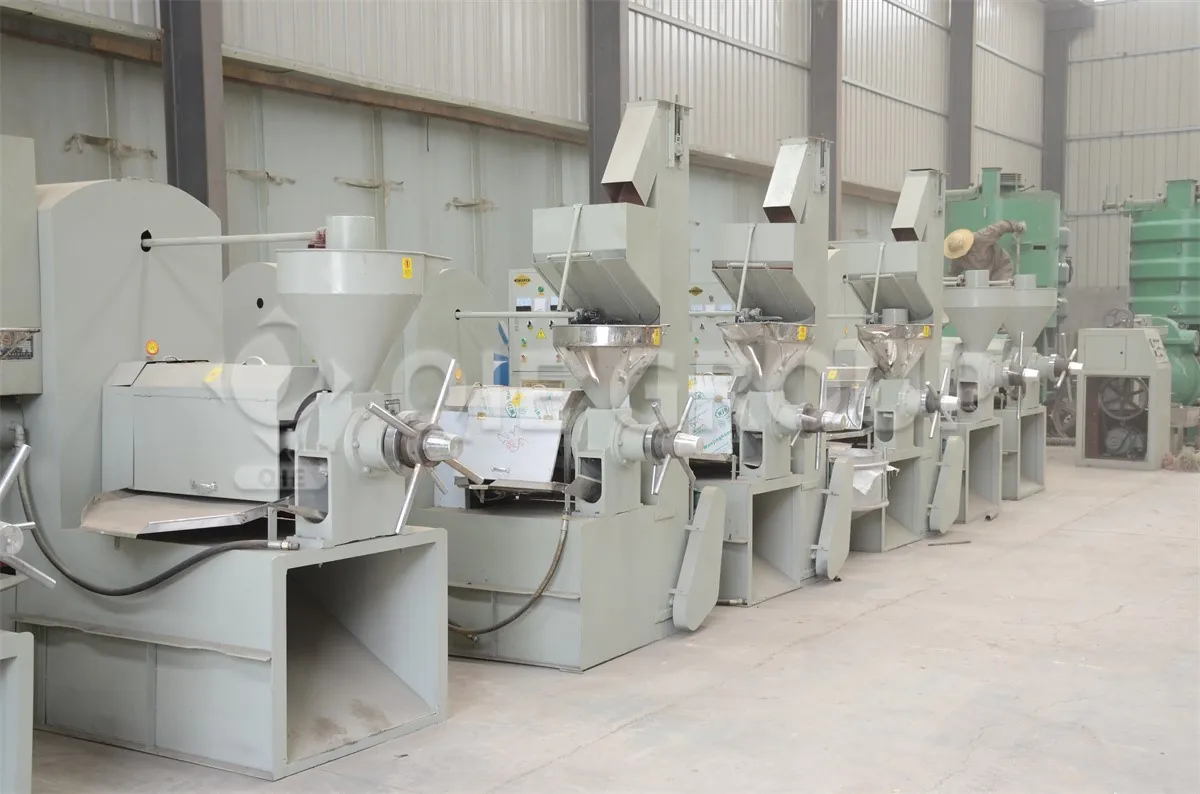
Different oilseeds impose very different mechanical loads on the pressing chamber:
Peanuts and sesame seeds: hard kernels and high oil content cause intense friction under high pressure, accelerating screw surface wear
Cottonseed and tea seed: high fiber content tends to wrap around the screw, creating localized stress concentration
Improper moisture content:
Moisture >12% → sticky meal, easy clogging
Moisture <6% → brittle material, unstable pressure transmission and slip
The most destructive factor is often unremoved impurities. Sand, stones, or metal fragments entering the pressing chamber act as abrasive media between the screw and press rings, causing irreversible surface damage.
💡 In simple terms: poor raw material preparation forces the oil press machine to operate under constant mechanical stress.
In some plants, pretreatment sections are simplified to reduce initial investment, but this often leads to higher long-term costs:
Uneven roasting temperature
→ poor plasticity of material
→ unstable oil discharge
→ pressure fluctuation inside the press
→ uneven load on the screw shaft and accelerated fatigue
Improper crushing size
Too fine: clogging
Too coarse: insufficient pressing
→ increased pressing resistance and bearing temperature
Although these problems occur upstream, they eventually manifest as mechanical wear in the oil press.
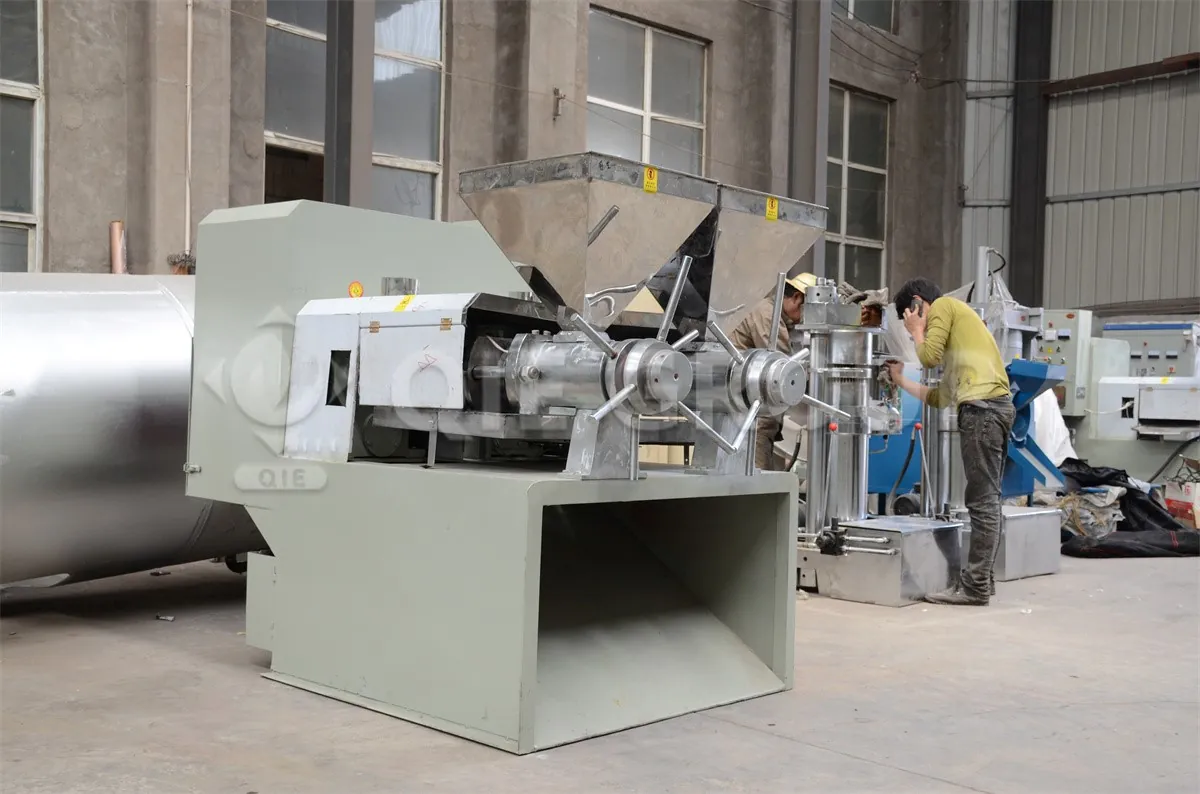
| Component | Wear Pattern | Main Cause |
|---|---|---|
| Screw shaft | Surface spalling, thread wear | Cyclic shear stress + material friction |
| Press chamber / rings | Radial scratches, enlarged clearance | Hard particles causing three-body abrasion |
| Thrust bearing | Pitting, seizure | Excessive axial load + poor lubrication |
When the clearance between the screw and press rings increases beyond approximately 0.3 mm, oil yield drops significantly and residual oil content often rises by 2–3 percentage points.This means losses are not limited to maintenance costs but also include lost oil production.
In pursuit of higher output, some common operating practices quietly shorten equipment life:
Feeding rates exceeding design capacity
→ sustained high internal pressure
→ gradual screw shaft deformation
Lack of temperature control
→ pressing temperature above 120 °C
→ thermal expansion alters clearances and accelerates wear
Cold start at full load
→ brittle metal condition increases early cracking risk
💡 Engineering reality: oil press machines do not perform best under maximum force,but under stable, optimized operating ranges.
Many long-term costs are actually determined during the equipment selection stage:
Low-cost equipment trap
Carbon steel screw shafts may have only one-third the wear resistance of alloy steel, doubling replacement frequency
Non-standard designs
Long spare-part lead times result in extended downtime and higher production losses
Reactive maintenance
“Fix after failure” approaches often cause secondary damage and higher total repair costs
💡 Conclusion: high maintenance costs are not accidental; they reflect weaknesses in design, process integration, and management.
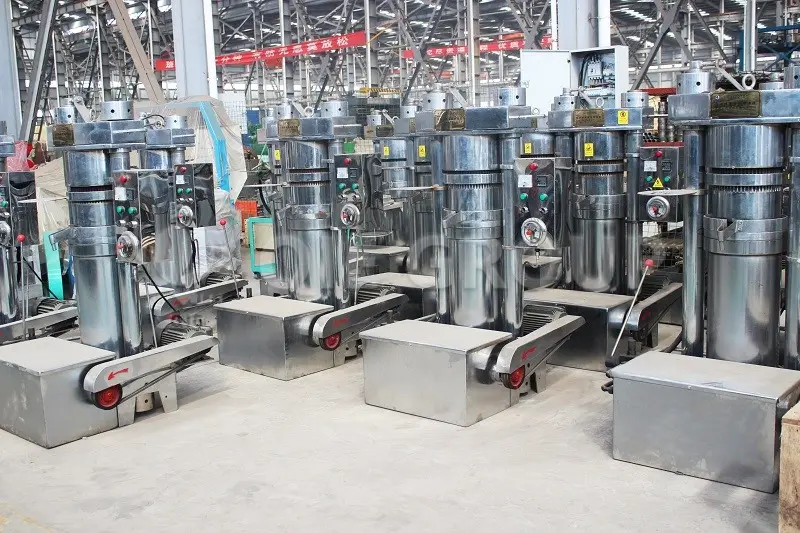
Real cost reduction comes from life-cycle management, not isolated component upgrades.
High-strength, wear-resistant alloy steel screw shafts with carburizing or nitriding treatment
→ surface hardness up to HRC 58+, wear resistance increased by ~3 times
Modular press ring design
→ only worn sections need replacement
Optimized screw pitch and compression ratio based on oilseed characteristics
Integrated automatic lubrication systems to prevent dry friction
Coordinated design of pretreatment and pressing parameters
Proper capacity matching to avoid underloading or overloading
Multi-oilseed adaptability through partial component replacement
💡 Field results show: properly matched production lines can extend the mean time between failures (MTBF) of oil press machines by more than 40%.
A standardized SOP should include:
Preheating to 80–90 °C before start-up
Stable and uniform feeding
Multi-point temperature monitoring
Use of food-grade lubricants with regular inspection
Where possible, intelligent control systems should be applied to monitor temperature, current, and pressure in real time.
| Level | Scope | Frequency |
|---|---|---|
| Daily maintenance | Cleaning, lubrication, inspection | Every shift |
| Periodic inspection | Clearance calibration, part replacement | Every 3 months |
| Major overhaul | Complete inspection, system upgrades | Every 2 years |
Establishing equipment “health records” allows data-driven decisions instead of experience-based part replacement.
As a professional edible oil processing equipment supplier, QIE Group focuses on long-term system stability rather than short-term equipment performance.
🔹 Wear control at the design stage
Precision-machined alloy steel components
Adjustable clearances for different oilseeds and wear stages
Specialized low-speed, high-pressure cold-press designs
🔹 Integrated turnkey solutions
From raw material cleaning and pretreatment to pressing and refining
Coordinated parameters across all sections
Automation and remote diagnostic support
🔹 Long-term service support
Complete spare parts lists and technical drawings
Fast-response supply system
Operator training and maintenance documentation
Our goal is not to sell a single machine, but to help clients build stable, low-maintenance, and sustainable oil production lines.
How often should screw shafts be replaced?
Under proper operating conditions, alloy steel screw shafts typically last 12–24 months, depending on oilseed type and load.
Why do identical machines show very different service lives?
Differences usually come from raw material quality, pretreatment, operating parameters, and maintenance strategy—not from the machine itself.
Does pretreatment really affect oil press wear?
Yes. Inadequate pretreatment almost always translates into mechanical wear during pressing.
🔹 Frequent replacement of screw shafts and press rings
🔹 Increasing maintenance costs with unstable operation
🔹 Planning a new plant or upgrading an existing line but unsure about proper equipment selection
You are welcome to contact the engineering team at QIE Group.Based on your oilseed type, capacity requirements, and site conditions, we can help evaluate the root causes of wear and provide more stable, cost-effective processing solutions.
Learn more about our oil press machines now → 457
|
457
|
 Hydraulic oil press
Oilseed press
Low-temperature cold pressing technology
Peanut oil
Walnut oil
475
|
Peanut Oil Press
Peanut oil press oil output rate
High efficiency screw oil press
Peanut oil processing equipment
Edible oil factory equipment maintenance
Peanut oil processing equipment
455
|
peanut oil press machine
commercial peanut oil production line
peanut oil processing turnkey solutions
peanut oil press machine selection guide
496
|
Low-temperature cold-pressed sesame oil
Vitamin E retention
Unsaturated fatty acids
Hydraulic sesame oil press
Sesame oil nutrition
102
|
Peanut oil press improves oil yield
Peanut oil press pretreatment method
Peanut oil press operation techniques
Peanut oil press machine for high-efficiency pressing
Peanut oil press process optimization
Hydraulic oil press
Oilseed press
Low-temperature cold pressing technology
Peanut oil
Walnut oil
475
|
Peanut Oil Press
Peanut oil press oil output rate
High efficiency screw oil press
Peanut oil processing equipment
Edible oil factory equipment maintenance
Peanut oil processing equipment
455
|
peanut oil press machine
commercial peanut oil production line
peanut oil processing turnkey solutions
peanut oil press machine selection guide
496
|
Low-temperature cold-pressed sesame oil
Vitamin E retention
Unsaturated fatty acids
Hydraulic sesame oil press
Sesame oil nutrition
102
|
Peanut oil press improves oil yield
Peanut oil press pretreatment method
Peanut oil press operation techniques
Peanut oil press machine for high-efficiency pressing
Peanut oil press process optimization