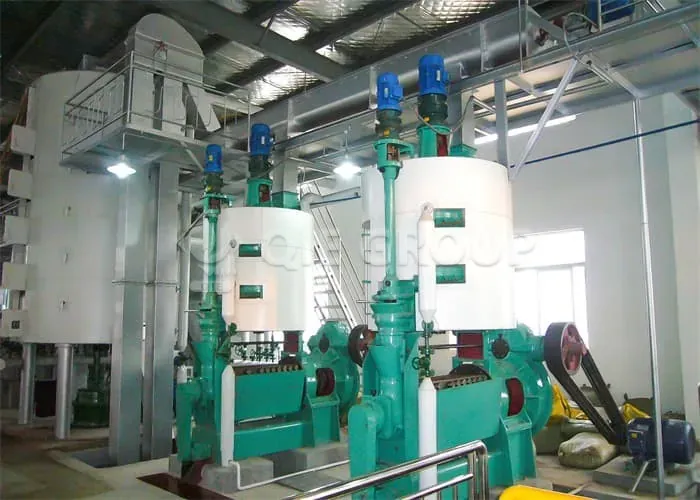
Have you ever faced this situation: cottonseed just arrived at your plant, full of impurities and short fibers that are hard to clean; during pressing, oil yield fluctuates, and the residual oil rate never goes down; or the screw shaft wears out heavily in less than three months, leading to frequent downtime and maintenance?
If you are planning or operating an industrial cottonseed oil production line, these are not minor issues—they are core bottlenecks that directly affect profits.
Remember: a regular oil press ≠ an industrial cottonseed oil expeller.
While small-scale presses may suit a few tons per day, industrial production requires a pressing system specifically designed for the properties of cottonseed, which has high impurity content, tightly bound shells, and fibrous kernels. 👉( Which brand of edible oil pressing equipment is best? )
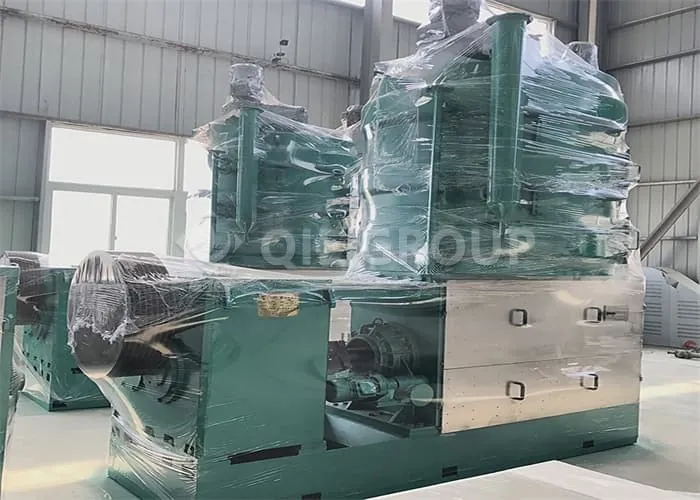
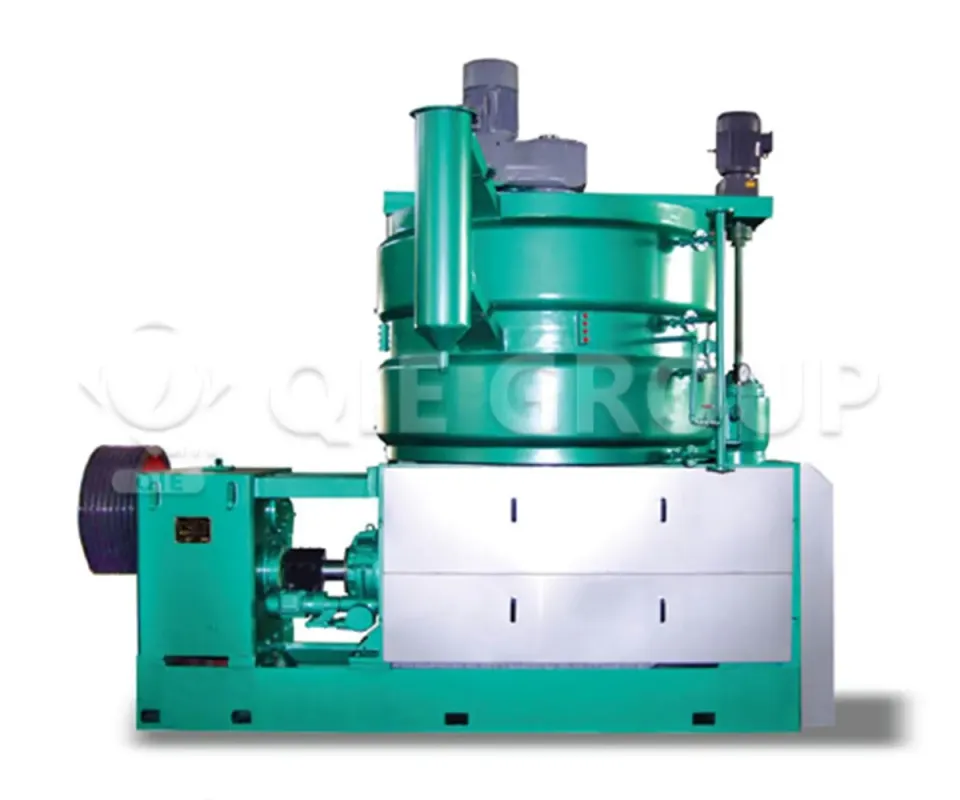
An industrial expeller is not simply a scaled-up home machine. It must provide:
Continuous and stable operation: capable of 24/7 operation for 20TPD, 50TPD, or even 100TPD+ capacity.
High automation integration: connects to PLC systems for real-time monitoring and adjustment of temperature, pressure, and feeding rate.
Structural strength and wear resistance: made of high-strength alloy steel with hardened surfaces to withstand the friction of cottonseed shells.
Process compatibility: can work as a standalone pressing unit or integrate seamlessly with downstream solvent extraction or refining systems, leaving room for future capacity expansion.
In short, a proper industrial cottonseed oil expeller is the heart of the production line—stable, efficient, and durable, supporting the rhythm of the entire plant.
Cottonseed's physical characteristics impose special requirements:
Hard shells tightly adhered to kernels, requiring shelling and kernel-shell separation pre-treatment.
High short fiber and impurity content, which can easily block feed inlets and pressing chambers.
Dense kernel structure, making temperature and pressure control crucial for oil yield.
Industrial expeller key features address these challenges:
Progressive compression ratio + segmented cage ensures cottonseed kernels gradually release oil, preventing “early residue, late oil shortage” issues.
Pressing chamber lined with high-chrome alloy wear-resistant steel; screw shaft surface strengthened by laser cladding, increasing lifespan 3x.
Reduces downtime and maintenance costs.
Multi-point temperature sensors + hydraulic backpressure adjustment keep pressing chambers within the optimal oil extraction temperature (90–110°C).
Prevents overheating or under-extraction, ensuring consistent oil quality.
Shelling, softening, flaking, and roasting directly affect material plasticity and flow.
Expeller design matches upstream equipment for uniform feeding, avoiding interruptions or blockages.
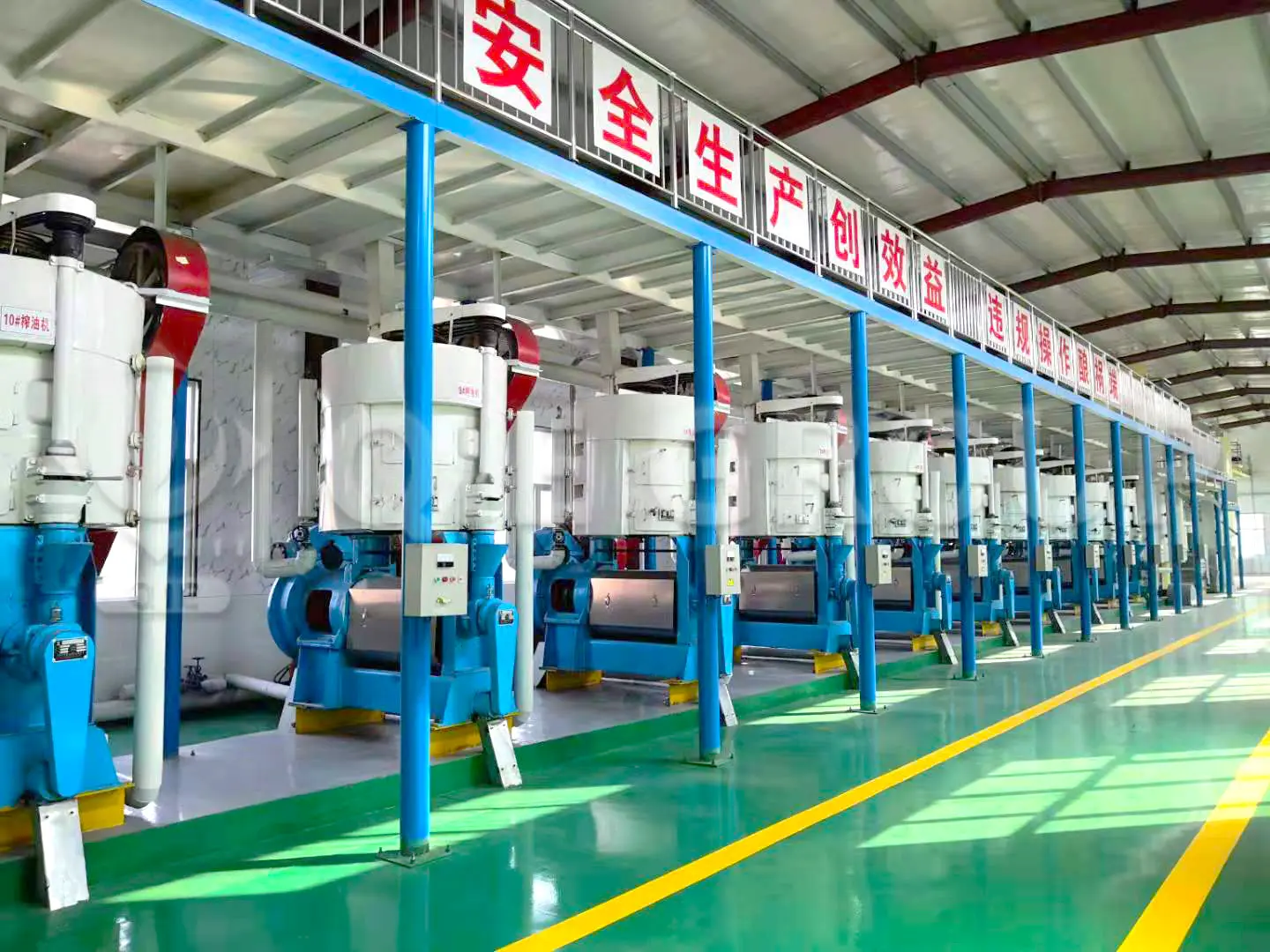
Many clients assume “buying a press equals producing oil,” but pressing is only the beginning:
Cottonseed contains short fibers, sand, and stones, requiring air separation, magnetic separation, de-linting, shelling, and kernel-shell separation.
Recommended equipment: roller sheller for uniform crushing and low kernel-in-shell content, improving downstream separation.
Pressing + Refining
Suitable for small-scale plants or limited investment.
Crude oil filtered and sent to refining, including degumming, neutralization, decolorization, and deodorization, removing toxic gossypol to meet food-grade standards.
Pre-Press + Solvent Extraction
Suitable for plants with daily processing above 30 tons.
Pressing extracts ~70% of oil, then cake goes to solvent extraction, reducing residual oil below 0.8% for higher overall yield.
This is the mainstream choice for large cottonseed oil plants.
💡 Tip: Choosing the expeller also means selecting the entire process route. Oil quality, crude oil clarity, and cake shape directly affect downstream refining or extraction efficiency.
Before placing an order, consider:
Raw material status: shelled or unshelled? Stable supply?
Daily processing capacity: starting at 20TPD or aiming for 100TPD+?
Investment priorities: maximize oil yield or minimize upfront cost?
Process expansion: future upgrade to pre-press + solvent extraction?
End-use of oil: self-use, wholesale, or retail supermarket sales? Refining required?
These factors determine expeller size, pre-treatment system configuration, and process route. 👉( How to choose oil press equipment? )
With years of experience in edible oil engineering, QIE Group understands every detail from design to commissioning. We provide:
Custom industrial cottonseed oil expellers tailored to capacity, raw material characteristics, and process route.
Turnkey production lines covering pre-treatment, pressing, optional solvent extraction, and refining—full EPC services.
On-site installation and commissioning support to ensure stable operation from day one.
💡 We don’t sell generic machines; we provide practical solutions based on your raw materials, capacity, and market goals.
Q1: How often should a cottonseed oil expeller be maintained?
A: Screw shafts and cages typically require inspection every 6–12 months, depending on raw material impurities and operating conditions.
Q2: How much does pre-treatment affect oil yield?
A: Significantly. Shelling, softening, and flaking directly impact kernel oil release during pressing.
Q3: Is pre-press + solvent extraction suitable for small plants?
A: Generally recommended for plants with daily processing above 30TPD. Smaller plants may start with pressing + refining to reduce upfront investment.
If you are planning a cottonseed oil project, please provide:
Raw material quality (oil content, impurities)
Target daily capacity
Desired finished oil standard
We will provide a preliminary equipment configuration and process flow diagram—free of charge, with no sales pressure. Our goal is not to sell a machine, but to help your cottonseed oil plant operate efficiently and reliably.
Please contact QIE Group for cottonseed oil pressing solutions → 169
|
169
|
 Large screw oil press
Energy saving in peanut oil plants
Processing of high oil content raw materials
Low residual oil technology
Application of oil pressing equipment
246
|
How to improve the oil output rate of the press
Optimizing the oil yield of edible oil press
How to improve the oil yield of oil press
Oil press maintenance
Methods for improving oil yield in edible oil factories
Oil press oil output rate
314
|
Coconut spiral oil press
Coconut oil production line
Residual oil rate optimization
Equipment Selection Guide
Automated continuous operation
155
|
Grape seed screw press oil press
Oilseed oil extraction process
Vegetable oil processing technology
Oilseed oil market trends
Efficient oil extraction technology
102
|
Peanut oil press improves oil yield
Peanut oil press pretreatment method
Peanut oil press operation techniques
Peanut oil press machine for high-efficiency pressing
Peanut oil press process optimization
Large screw oil press
Energy saving in peanut oil plants
Processing of high oil content raw materials
Low residual oil technology
Application of oil pressing equipment
246
|
How to improve the oil output rate of the press
Optimizing the oil yield of edible oil press
How to improve the oil yield of oil press
Oil press maintenance
Methods for improving oil yield in edible oil factories
Oil press oil output rate
314
|
Coconut spiral oil press
Coconut oil production line
Residual oil rate optimization
Equipment Selection Guide
Automated continuous operation
155
|
Grape seed screw press oil press
Oilseed oil extraction process
Vegetable oil processing technology
Oilseed oil market trends
Efficient oil extraction technology
102
|
Peanut oil press improves oil yield
Peanut oil press pretreatment method
Peanut oil press operation techniques
Peanut oil press machine for high-efficiency pressing
Peanut oil press process optimization