
Maize germ oil pressing is a physical oil extraction process that uses mechanical pressure to separate crude maize germ oil from pretreated and conditioned maize germ. Maize germ typically contains 30%–40% oil. During pressing, the cellular structure of the germ is disrupted, allowing the oil to be released and separated from the solid material.
Maize germ is an important by-product of maize processing, such as corn starch and corn flour production. Unlike solvent extraction, mechanical pressing is a physical method of oil extraction. For industrial projects, the oil recovery efficiency, crude oil quality, and operating stability of a properly designed maize germ oil pressing line depend directly on every stage, from raw material pretreatment to final pressing.
The maize germ oil pressing process usually includes the following core steps. The actual process flow can be adjusted according to the raw material condition and project capacity:
Process Purpose: Remove foreign materials such as sand, stones, metal particles, maize hulls, and incompletely separated maize fragments from the maize germ.
Importance: Impurities can affect oil purity, accelerate equipment wear, and may even cause feeding problems, blockages, or damage to the screw press.
Common Equipment: Vibrating cleaning screens, permanent magnet drums/magnetic separators, and air aspiration and destoning machines.
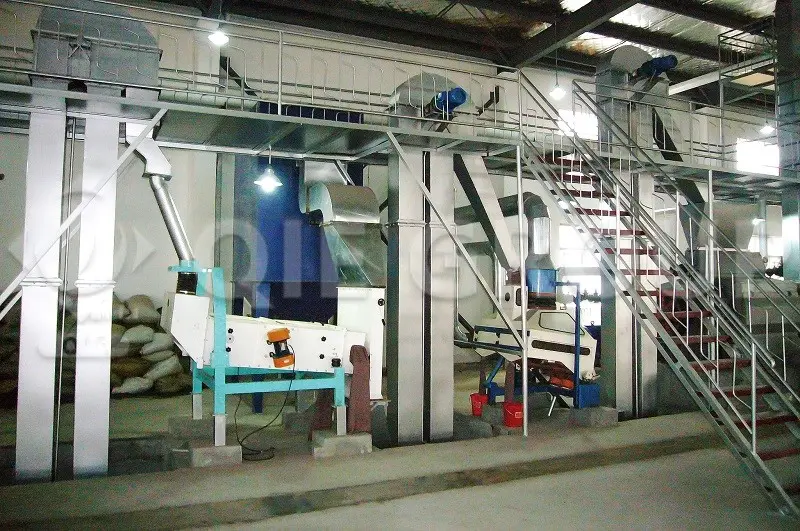
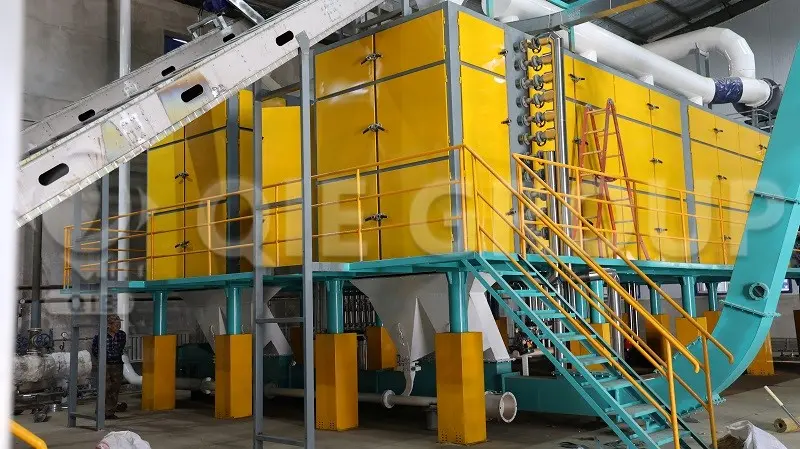
Process Purpose: Maize germ separated during wet-process starch production may initially contain 40%–50% moisture. It must be dried promptly to reduce the moisture content to approximately 8%–10%.
Importance: High-moisture germ is highly susceptible to mold and deterioration, which can cause the acid value to rise rapidly. Excessive moisture also makes subsequent flaking and pressing difficult.
Process Purpose: Conditioning adjusts the moisture content and temperature of the maize germ. The conditioning temperature is typically controlled at approximately 60°C–80°C to increase the toughness and plasticity of the material. At the same time, crushing breaks up large particles and improves material uniformity.
Process Function: Proper conditioning and crushing help prevent excessive powder formation during flaking, ensure better flake quality, and promote more uniform heat transfer.
Process Purpose: A flaking machine changes the physical structure of maize germ, increases its surface area, and partially disrupts the cellular structure.
Process Effect: The conditioned germ is rolled into uniform flakes with a thickness of approximately 0.3–0.5 mm, which promotes heat transfer and oil release and improves cooking efficiency and pressing performance.
Core Function: Steam heating and agitation are used to condition the maize germ. This process helps denature and coagulate proteins, disrupt remaining cellular structures, and reduce oil viscosity to improve oil flow and release.
*Note: Actual process parameters should be dynamically adjusted according to the initial moisture content of the raw material, equipment model, and on-site process conditions.
Working Principle: After cooking, the conditioned material enters an industrial screw oil press, where a rotating screw shaft continuously conveys the material through the press chamber. As the available space gradually decreases, high mechanical pressure is generated to force the oil out of the material.
Performance Indicator: The residual oil content of the full-press cake can typically be controlled at approximately 6%–8%.
Advantages and Limitations: Mechanical pressing has a relatively short process flow, comparatively low investment requirements, and produces crude oil with a characteristic flavor. However, full pressing alone cannot reduce the residual oil content of the cake to the very low levels achievable through solvent extraction.
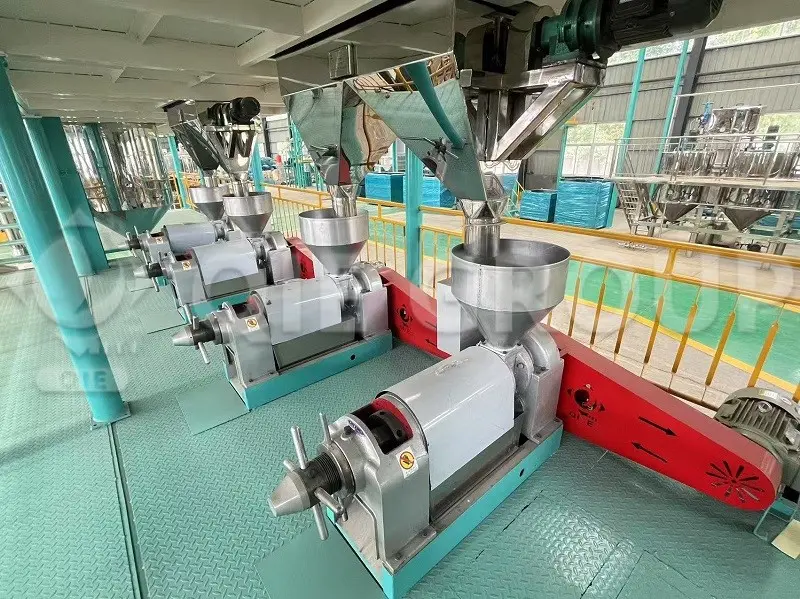
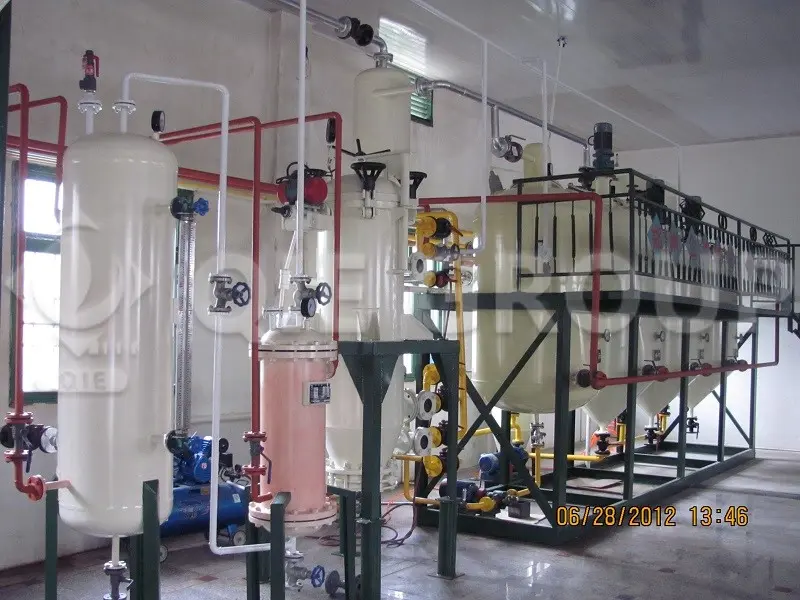
Post-Press Treatment: Crude oil discharged from the screw press contains suspended solid particles such as cake fines and fibers, as well as a small amount of moisture. It needs to be treated through settling tanks and filtration equipment, such as plate-and-frame filter presses and vibrating self-cleaning filters, to remove impurities and obtain clarified crude maize germ oil.
Storage Requirements: Crude oil should be stored in closed storage tanks, with temperature controlled and exposure to oxygen minimized. It can then enter the refining section, where processes such as degumming, deacidification, bleaching, deodorization, and dewaxing are carried out before it becomes edible-grade maize germ oil.
| Process Section | Equipment Type | Key Technical Features |
|---|---|---|
| Cleaning | Vibrating screen, rotary screen, high-intensity magnetic separator | Multi-stage screening + permanent/electromagnetic dual-mode magnetic separation for efficient impurity removal |
| Drying / Conditioning | Tube bundle dryer, vertical conditioner | Controlled moisture removal and temperature adjustment to improve germ toughness and prevent excessive powder formation |
| Crushing / Flaking | Corrugated roll crusher, double-roll flaker | Special roll surface design for uniform 0.3–0.5 mm flakes |
| Cooking | Vertical multi-layer cooking kettle | Precise temperature and moisture control to promote oil aggregation and reduce energy consumption |
| Pressing | Industrial screw oil press (full pressing/pre-pressing) | Variable-frequency speed control + intelligent pressure feedback for stable and controllable residual oil levels |
| Oil Treatment | Plate-and-frame filter press, vibrating leaf filter | Filtration precision of ≤10 μm for effective separation of suspended solid particles |
During project planning, selecting the appropriate oil extraction technology is one of the key decisions.
| Comparison Item | Mechanical Pressing (Full Pressing) | Solvent Extraction | Pre-pressing + Extraction |
|---|---|---|---|
| Basic Principle | Uses physical mechanical force to extract oil | Uses a chemical solvent such as n-hexane to extract oil | First presses out most of the oil, then extracts the residual oil from the press cake using solvent |
| Process Complexity | Relatively low, with a short process flow, fewer systems, and simpler maintenance | High, including extraction, evaporation, stripping, solvent recovery, and other systems | Comprehensive system combining pretreatment, pressing, and extraction sections |
| Residual Oil in Cake/Meal | Typically around 6%–8% | Typically can be controlled below 1.0% | Final meal residual oil can be controlled below 1.0% |
| Recommended Capacity (TPD) | <100 TPD (small/medium scale) | Not suitable for direct solvent extraction of high-oil-content germ | >100 TPD (large-scale industrial) |
| Investment & Safety | Lower investment; no special explosion-proof requirements | Higher investment; requires explosion-proof design and solvent recovery | Highest overall investment, with greater economic benefits at large scale |
For maize germ processing projects with a capacity of more than 100 TPD, the pre-pressing + solvent extraction process is generally recommended.
Capacity is generally based on raw material processing capacity (TPD) rather than finished oil output.
If the final product is intended to be refined edible maize germ oil, the crude oil obtained through pressing generally requires further refining.
Determine germ source (starch plant or external), moisture (dry/wet), and annual volume.
Evaluate full pressing vs. pre-pressing + solvent extraction based on target TPD.
Assess electricity, steam supply, water drainage, and compressed air availability.
Plan material flow, dust control, noise reduction, and explosion-proof systems.
QIE GROUP provides complete turnkey EPC solutions based on each customer's specific requirements rather than individual machines.
From preliminary feasibility assessment and process design to equipment manufacturing, installation, commissioning, and staff training, QIE GROUP is committed to delivering efficient and reliable processing lines.
Contact QIE GROUP today to consult with our Senior Oil Processing Engineers and receive a customized technical proposal and budget estimate tailored to your TPD requirements.
 262
|
262
|
 food-grade sunflower seed oil press machine sunflower oil press oil press selection screw hot press hydraulic cold press
85
|
soybean oil press screw oil press for soybean hydraulic oil press soybean oil extraction machine soybean pretreatment equipment soybean oil processing plant EPC
168
|
Oil Press Machine Edible Oil Production Screw Oil Press Maintenance Cost Oil Extraction Equipment
220
|
soybean oil press cake residual oil soybean press cake residual oil soybean press cake residual oil in soybean press cake soybean oil pressing soybean pressing problems
128
|
rice bran oil pre-pressing stabilization screw press design extraction plant engineering oilseed pre-treatment
food-grade sunflower seed oil press machine sunflower oil press oil press selection screw hot press hydraulic cold press
85
|
soybean oil press screw oil press for soybean hydraulic oil press soybean oil extraction machine soybean pretreatment equipment soybean oil processing plant EPC
168
|
Oil Press Machine Edible Oil Production Screw Oil Press Maintenance Cost Oil Extraction Equipment
220
|
soybean oil press cake residual oil soybean press cake residual oil soybean press cake residual oil in soybean press cake soybean oil pressing soybean pressing problems
128
|
rice bran oil pre-pressing stabilization screw press design extraction plant engineering oilseed pre-treatment


