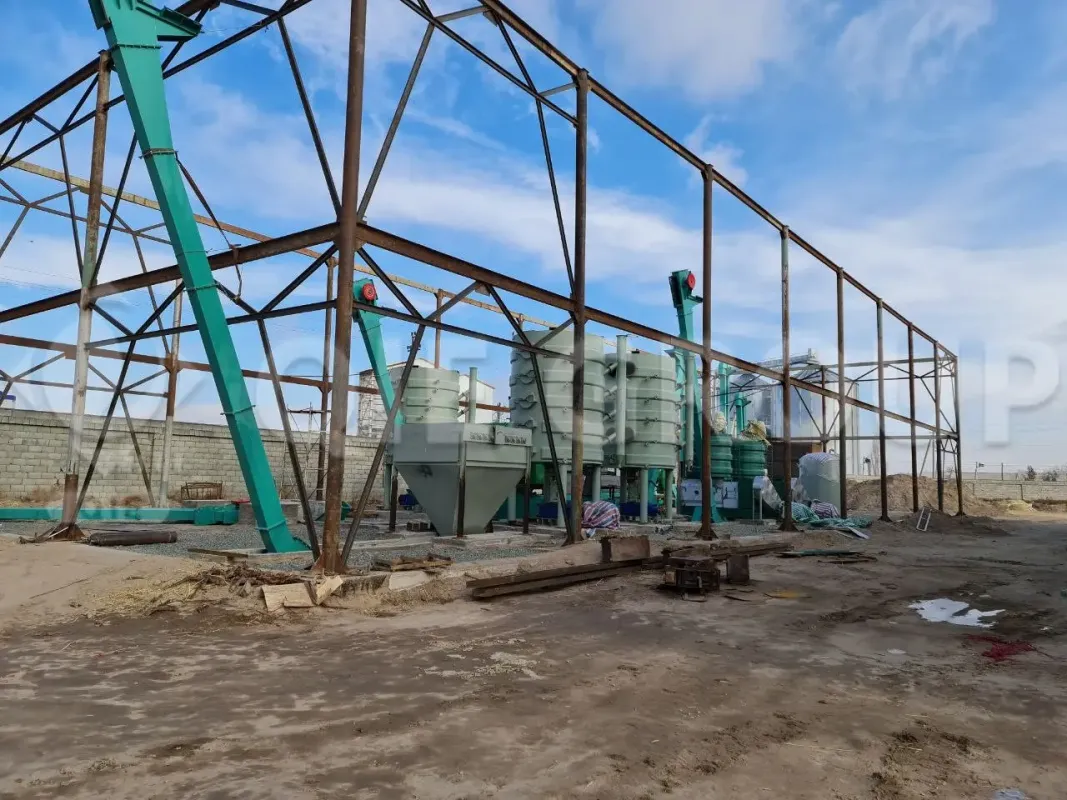
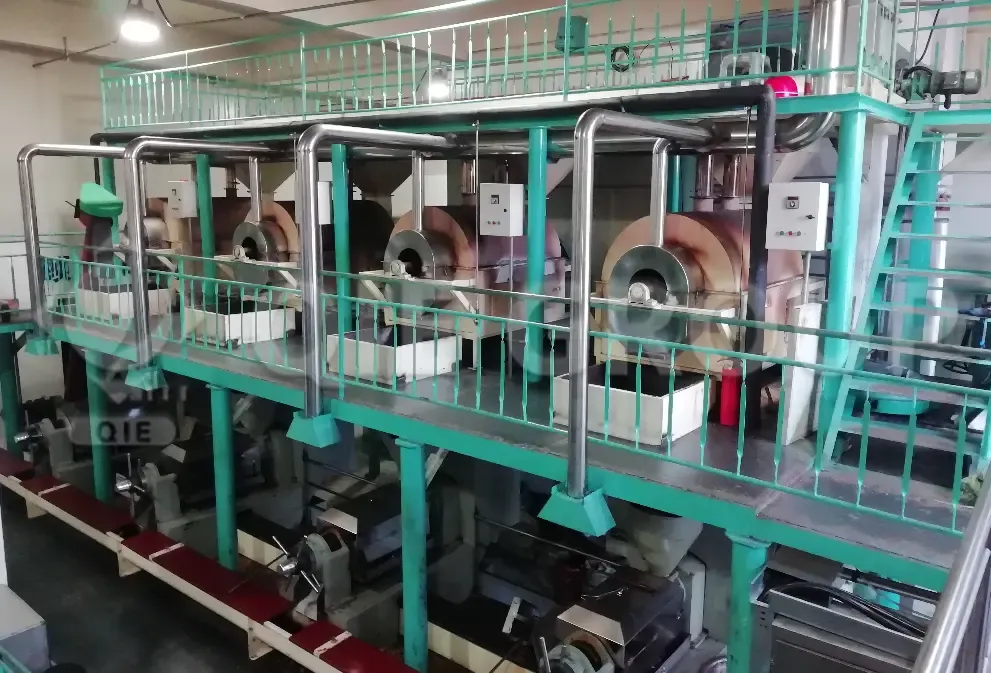
Are you planning to build a new edible oil processing plant? Facing a wide variety of oil press models on the market and complex capacity calculations, do you feel confused?
What capacity should a new plant choose? Is a smaller capacity more profitable? Why do many oil mills have extremely low utilization rates after construction? How do you determine the equipment model based on raw material supply? How does the level of automation affect the return on investment (ROI)?
These questions directly relate to your initial investment amount, post-launch operational efficiency, and the long-term survival of your factory. Based on QIE GROUP’s more than 40 years of oil engineering and EPC turnkey project experience, this guide will provide you with a scientific framework for oil press capacity selection, helping you avoid high-frequency investment traps and ensuring your oil mill takes a highly profitable path from day one of production.
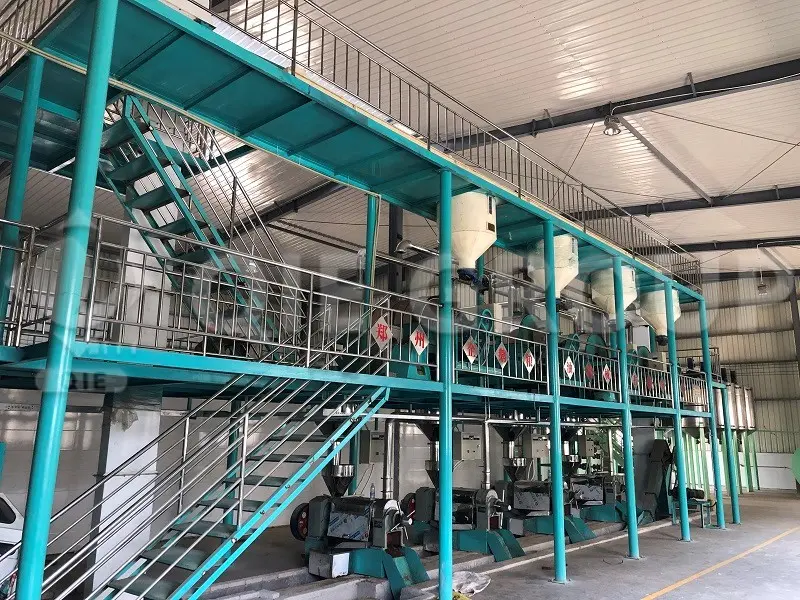
When building a new edible oil processing plant, the capacity selection of the oil press machine/expeller and its supporting production line is the core decision. Making the wrong choice can lead to idle equipment and high fixed asset depreciation costs at best, or a broken capital chain at worst.
Different investment backgrounds and market positionings determine which track you should enter:
| Capacity Scale | Applicable Customer Groups | Typical Application Scenarios | Investment & Operational Characteristics |
|---|---|---|---|
| Small Scale (<50 TPD) | Startups, independent farmers, traditional workshops upgrading | Single local raw material processing (e.g., specific specialty oils), local retail, or catering supply | Low initial investment, quick equipment startup, extreme operational flexibility, but lacks economies of scale. |
| Medium Scale (50-200 TPD) | Small and medium oil enterprises, regional agricultural processors, overseas small and medium investors | Multi-variety raw material compatibility (e.g., alternating soybean and rapeseed processing), regional brand building | Investment and energy consumption reach the optimal balance point; strong risk resistance; suitable for building mid-end market brands. |
| Large Scale (>200 TPD) | Large-scale agricultural groups, large food industrial enterprises, export-oriented factories | Industrial-grade, group-level production, usually utilizing "pre-pressing + solvent extraction" and "fully continuous refining" processes | Huge initial investment, high requirements for a professional technical team, highly reliant on economies of scale to lower unit costs. |
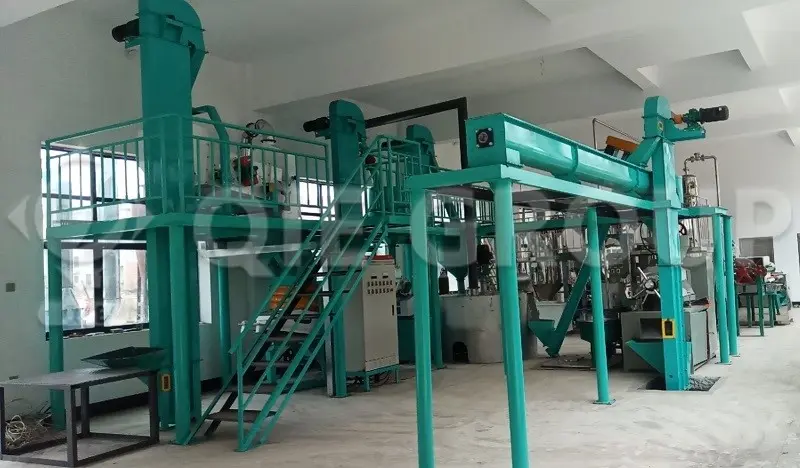
The physical characteristics, oil content, and organizational structure differences of various oilseed crops directly determine the process route design and oil press model selection of the oil plant. The following is the core technical indicator matrix summarized by the QIE GROUP engineering team: 👉(Complete Guide to Peanut Oil Pressing Production Line)
| Oilseeds | Average Oil Content | Recommended Process | Residual Oil in Cake | Power Per Ton | Best Fit Range |
|---|---|---|---|---|---|
| Soybean | 18% - 22% | Direct Extraction / Extruding Extraction | ≤ 0.5% (Solvent Extraction) | 28 - 35 kWh | ≥ 100 TPD |
| Peanut | 45% - 55% | Rich-Flavor Pressed Or Pre-pressing + Solvent Extraction | 6%-8% (Rich-Flavor Pressed) / ≤ 0.8% (Solvent Extraction) | 35 - 45 kWh | 30 - 300+ TPD |
| Rapeseed | 38% - 45% | Pre-pressing + Solvent Extraction | ≤ 0.5% (Solvent Extraction) | 40 - 50 kWh | 50 - 500+TPD |
| Rice Bran | 16% - 20% | Extruding + Direct Solvent Extraction | ≤ 0.5% (Solvent Extraction) | 32 - 40 kWh | ≥ 60+ TPD |
| Oil Palm Fruit | 20% - 23% (EFB) | Sterilization + Threshing + Twin-screw Press | N/A (Fiber ≤ 5-6%) | ≤ 25 kWh | 1 - 120 TPH |
When planning a factory layout, you cannot simply divide the annual target output by 365 days. To ensure stable production, the standard industrial capacity calculation model is:
Capacity Required (TPD) = Annual Target Output of Crude Oil (Tons) / [Operational Days × Oil Content (%) × Pressing Efficiency (%)]
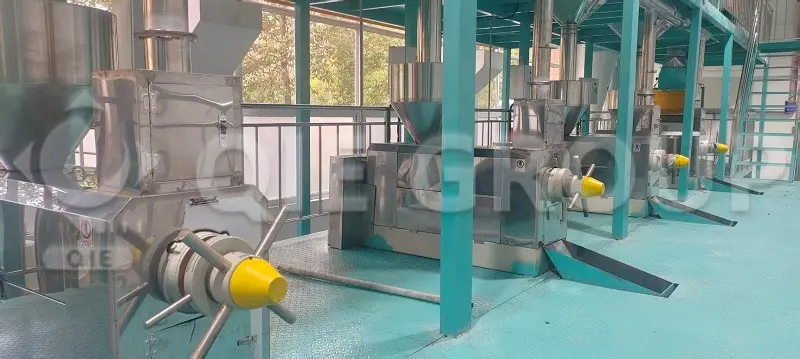
To maximize your capital utilization efficiency, QIE GROUP classifies oil mill construction into the following four types of turnkey configuration solutions according to local infrastructure conditions worldwide:
Engineering Conversion Benefit: This solution is a golden choice for international investors. QIE GROUP can provide a free 3D workshop piping layout diagram and a full set of equipment foundation load drawings for this option.
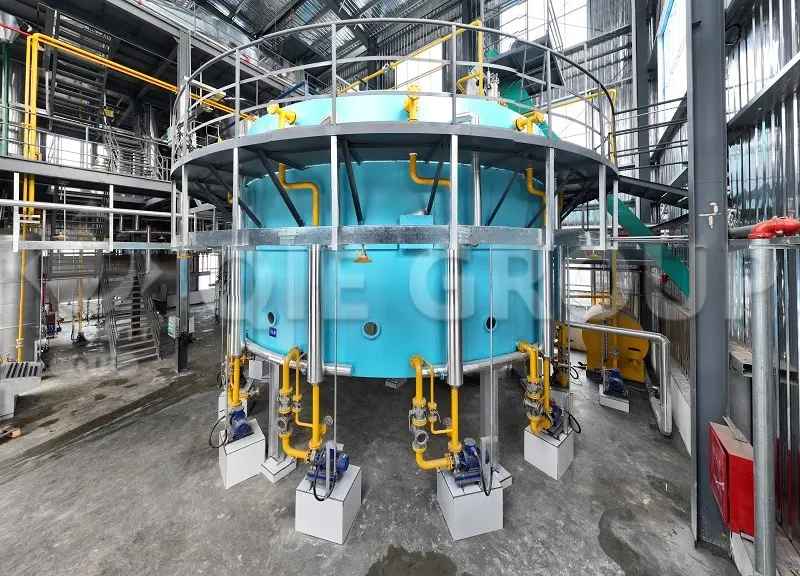
In the field of oil processing, buying equipment is only the first step; scientifically combining equipment into a smoothly operating factory is the core of profitability. Relying on 43 years of deep accumulation, QIE GROUP uses customized EPC turnkey services that "reject a one-size-fits-all approach" to help you completely eliminate the following 3 major pitfalls of mill construction:
Pitfall 1: Blindly pursuing large capacity, resulting in idle equipment
Phenomenon: Many investors overestimate the constant annual supply of local raw materials, resulting in a plant that can only operate for 2 months a year after construction.
Our Engineering Solution: Our project engineers will assist you in investigating the actual planting density, harvest period, and competitor distribution of oilseed crops within a 150 km radius. We advocate for a modular design of "one-time planning, phased implementation": phase one deploys a medium-capacity pressing line first, but the factory space, main piping interfaces, and transformer power capacity are completely reserved for phase two, ensuring future expansion only requires adding equipment without rebuilding the workshop.
Pitfall 2: Ignoring local environment and power conditions, leading to losses upon launch
Phenomenon: Electricity prices in some regions are expensive and unstable. Directly copying a conventional design leads to huge electricity expenses, and even jams equipment due to power outages.
Our Engineering Solution: For regions with unstable power grids or high electricity prices like Africa and Central Asia, we designs an "Energy Adaptive System" for customers. For boiler selection, we support utilizing the oil mill's own byproducts (such as peanut shells, palm fiber, and extracted meal) as biomass fuel to generate steam for cooking and refining deodorization, which can directly reduce comprehensive energy consumption per ton of oil by 30%–50%. At the same time, the control system can be equipped with low-power inverters linked with diesel generator sets to prevent financial losses caused by sudden grid outages.
Pitfall 3: Purchasing fragmented equipment from workshop-style vendors, causing disconnects between after-sales and process
Phenomenon: Finding company A for cleaning, buying from company B for pressing, and purchasing from company C for refining results in pipes that don't connect during installation, uncoordinated processes, and endless buck-passing.
Our Engineering Solution: QIE GROUP provides true EPC Turnkey Engineering (Engineering, Procurement, and Construction):
Q1: Is a small capacity (e.g., 10-20 TPD) more likely to be profitable?
A: This depends on your "market radius" and "product positioning."
The advantage of small capacity is small initial startup capital and strong risk resistance, but it also has downsides: due to the lack of economies of scale, its labor cost and power consumption per ton of oil are higher than those of large production lines.
• Small capacity wins on "specialty": If you are processing local high-value, flavor-focused raw materials (such as cold-pressed peanut oil, pure fragrant sesame oil), targeting a high-end, fresh, additive-free local market, and can digest the high-priced oil cake yourself (as high-quality feed), small capacity can still achieve very high profit margins.
• Large and medium capacities win on "efficiency": If you are processing common soybeans or bulk rapeseed and following generic catering or industrial oil channels, you need at least a capacity of above 50 TPD to obtain considerable net profit through economies of scale within the industry's slim margins.
Q2: Why do large oil production lines often fall into losses more easily?
A: Large production lines usually do not lose on "technology," but on the "supply chain and financial leverage."
• High raw material capital occupation: A 300 TPD soybean oil plant handles 300 tons of raw materials daily. During harvest season, to guarantee 3 months of production, the factory needs to advance huge sums of money at one time for raw material inventory reserves. Once market prices fluctuate drastically, raw materials hoarded at high prices and crashing finished oil prices will instantly create a price inversion.
• Huge downtime costs: The daily depreciation costs, labor expenses, and energy consumption for boiler heat retention of large equipment are fixed. Once production stops due to supply chain disruption or power failure, the net loss per day can be as high as thousands or even tens of thousands of dollars. Therefore, "adaptation is best," and you should never blindly pursue large capacity beyond your raw material control capability and cash flow safety margin.
Q3: Is an automated control system (PLC) worth the investment in a new plant?
A: Highly worth it, but a "ladder-style automation" is recommended for small and medium oil mills.
Automation is not just for "reducing a few workers"; its core value in the oil industry lies in two points:
1. Absolute consistency in product quality: The cooking temperature during the pressing process (usually between 105–110°C) and the moisture content entering the press have a huge impact on the oil yield. Manual operations are highly susceptible to fatigue and empiricism, while the automated system adjusts steam valves in real-time through sensors to ensure raw materials are in the best pressing state, effectively avoiding human operational errors.
2. Explosion-proof safe production: Especially for oil mills containing solvent extraction sections (using solvents like n-hexane), automated pneumatic valves and explosion-proof control systems are the only protective barrier to ensure that major safety accidents do not occur in the factory. For 20–50 TPD customers with a limited budget, QIE GROUP recommends utilizing local automation digital displays in critical pretreatment and pressing sections, while refining and packaging adopt semi-automation, thereby exchanging the lowest cost for optimal efficiency.
Q4: Does the oil refinery plant need to be built simultaneously with the pressing workshop?
A: We strongly recommend continuous overall planning, even if constructed in phases.
The oil directly squeezed out by the oil press is called "crude oil," which contains a large amount of colloidal impurities (phospholipids), free fatty acids, pigments, and odor substances. Except for a very few specific flavored oils (such as traditional strong-flavor peanut oil passing through multi-stage filtration) that can be sold as Second-grade oil, bulk soybean oil, rapeseed oil, and palm oil must undergo refining to meet food safety standards and enter supermarket shelves.
• If you do not plan refining simultaneously, crude oil will be extremely difficult to store long-term (the acid value will quickly rise and deteriorate), and you will be forced to package and sell crude oil at low prices to large refineries, thereby losing the excess profits of deep processing finished oil.
For a new oil mill, the most perfect success model is to make the establishment of the factory perfectly match your local raw material purchasing radius, investment budget safety margin, technical process route, and automation level simultaneously.
If you are preparing to plan a new edible oil processing plant, or are hesitating about choosing what capacity of oil press machine, QIE GROUP can provide you with a free customized feasibility engineering solution.
Ready to Start Your Edible Oil Project Wisely?
Get a Customized EPC Turnkey Quote 493
|
493
|
 oil press working principle
screw oil press
commercial oil press
edible oil production process
vegetable oil processing equipment
175
|
Cottonseed pressing
Multi-stage screw oil press
High-fiber oilseeds
Increased oil yield
residual oil content
456
|
rapeseed oil pressing production line
Rapeseed oil processing equipment
Pressing process
Edible oil production line design
Edible oil processing technology
515
|
Low-temperature cold-pressed sesame oil
Vitamin E retention
Unsaturated fatty acids
Hydraulic sesame oil press
Sesame oil nutrition
121
|
Peanut oil press improves oil yield
Peanut oil press pretreatment method
Peanut oil press operation techniques
Peanut oil press machine for high-efficiency pressing
Peanut oil press process optimization
oil press working principle
screw oil press
commercial oil press
edible oil production process
vegetable oil processing equipment
175
|
Cottonseed pressing
Multi-stage screw oil press
High-fiber oilseeds
Increased oil yield
residual oil content
456
|
rapeseed oil pressing production line
Rapeseed oil processing equipment
Pressing process
Edible oil production line design
Edible oil processing technology
515
|
Low-temperature cold-pressed sesame oil
Vitamin E retention
Unsaturated fatty acids
Hydraulic sesame oil press
Sesame oil nutrition
121
|
Peanut oil press improves oil yield
Peanut oil press pretreatment method
Peanut oil press operation techniques
Peanut oil press machine for high-efficiency pressing
Peanut oil press process optimization