Palm Kernel Oil is a high-value raw material in food and oleochemical industries, rich in lauric acid and prized for its unique melting properties. With global demand steadily rising, choosing an efficient, reliable, and safe palm kernel oil production line is key to maximizing profitability. QIE Group delivers turnkey solutions from kernel pre-treatment to refined oil, combining advanced pressing, solvent extraction, and automation technologies.
A complete industrial PKO production line is a complex system. Core process steps include:
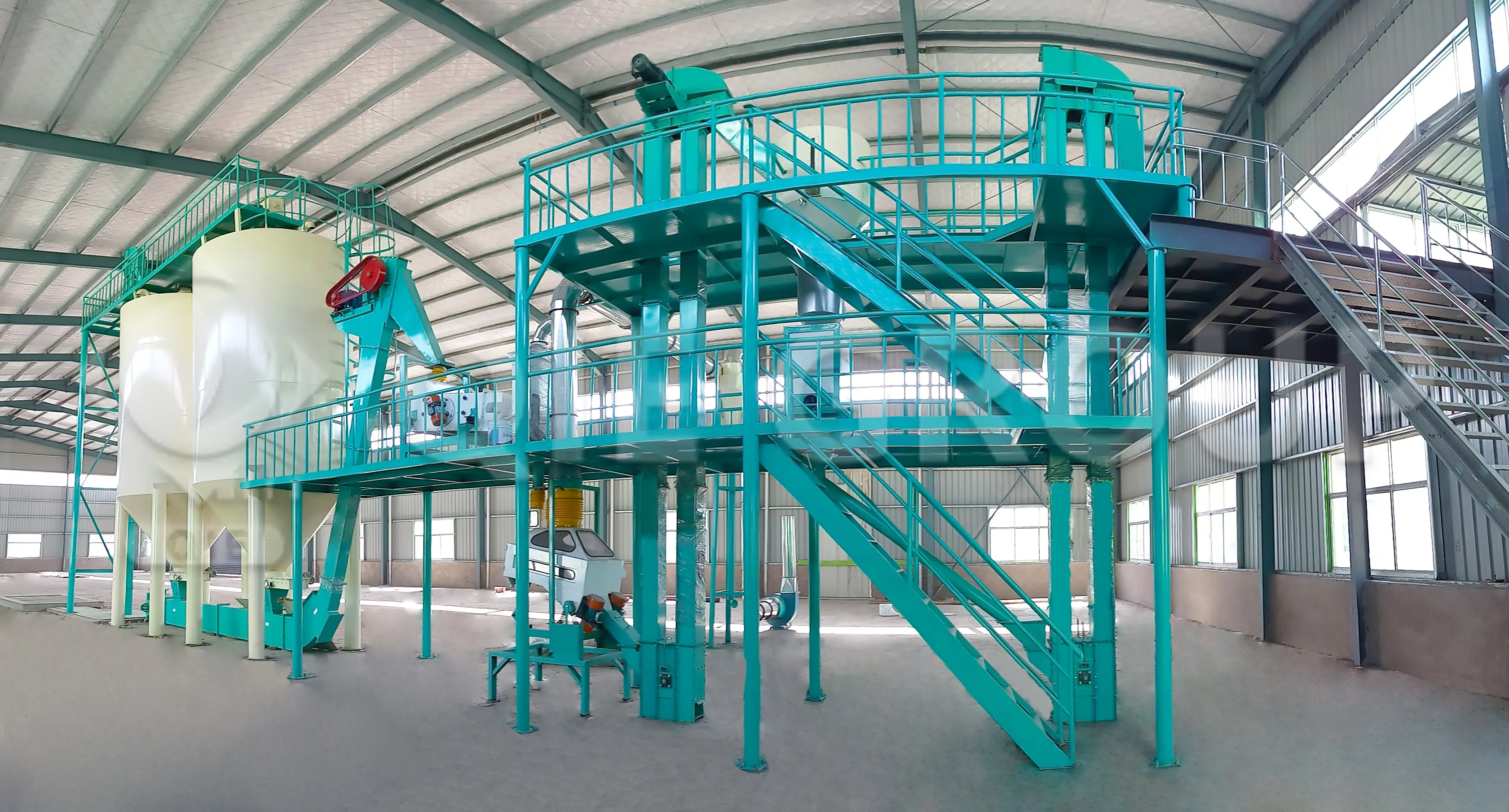
Palm kernels, typically by-products from palm oil extraction, are received, weighed, and temporarily stored.
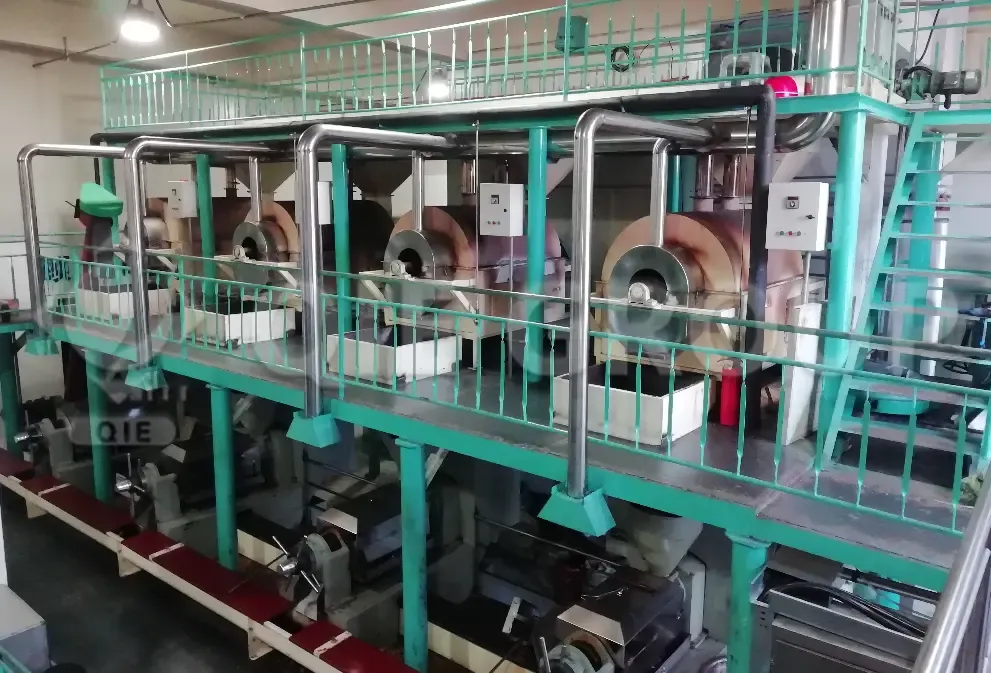
Process: Cleaning → Crushing → Conditioning & Cooking
Purpose: Remove impurities, reduce kernel size, adjust moisture and temperature to optimize oil release for pressing or solvent extraction.
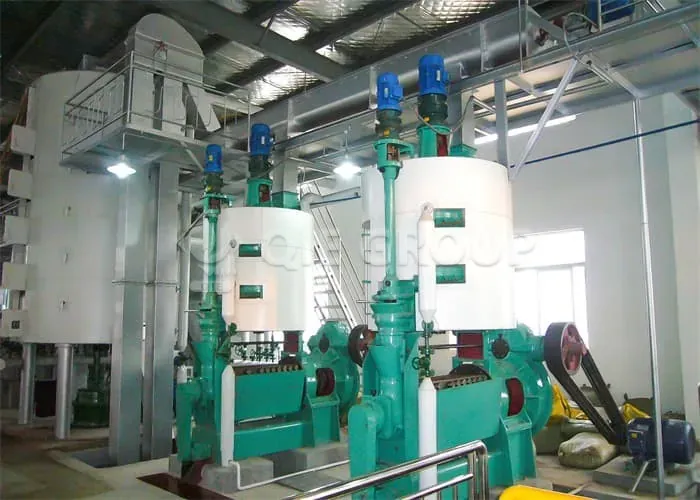
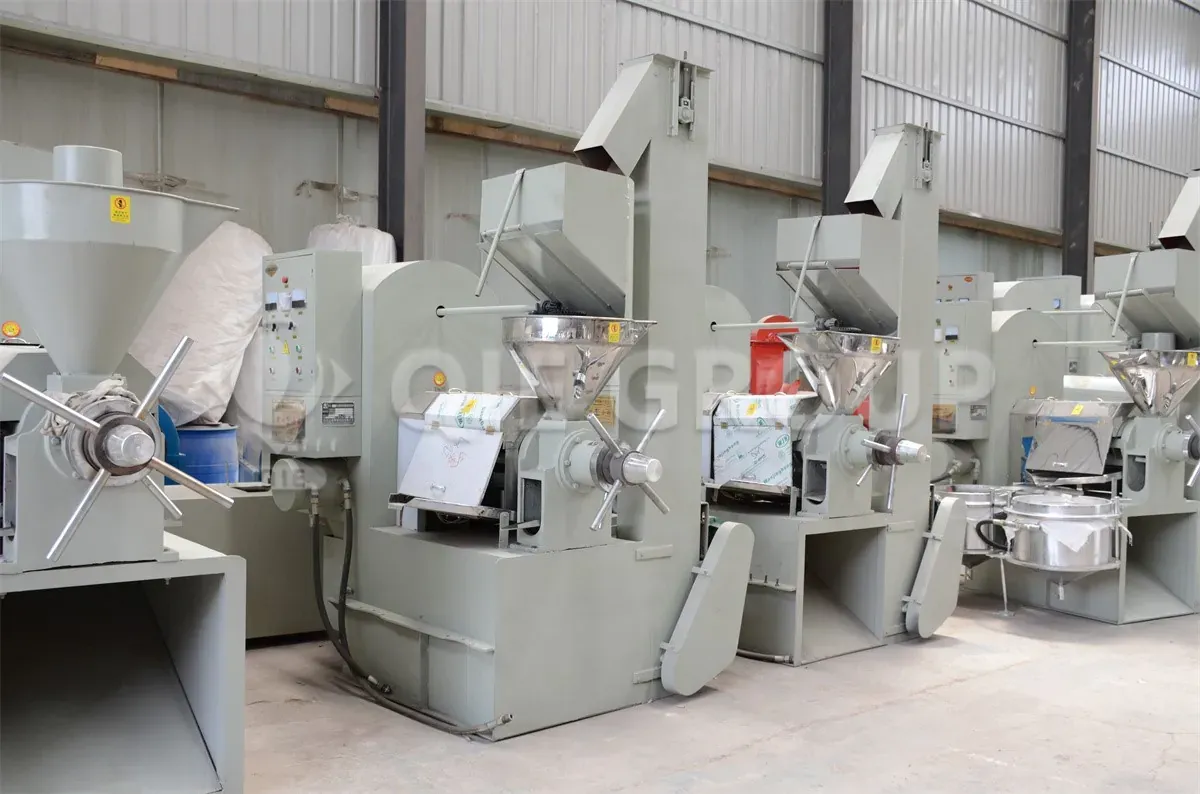
Mechanical Pressing: Pre-treated kernels are pressed with screw oil presses, producing crude palm kernel oil and press cake.
Solvent Extraction: Press cakes undergo solvent extraction (commonly with hexane) to produce miscella and extracted meal, followed by solvent recovery.
Lines can be “press-only” or “pre-press + solvent extraction” depending on plant scale and efficiency goals.
Crude oil is filtered and settled to remove large solid impurities before storage.
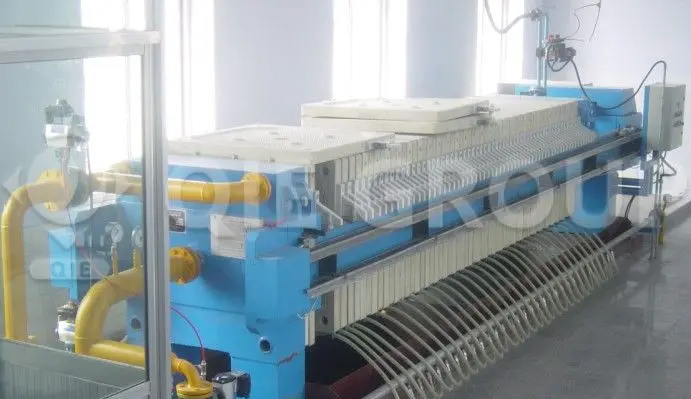
Process: Degumming → Deacidification → Bleaching → Deodorization → Refined PKO
Purpose: Remove phospholipids, free fatty acids, pigments, and odors to improve safety, stability, and sensory quality.
Refined oil is stored under appropriate conditions before packaging or shipment.
Press cakes or extracted meals are cooled, crushed, and packed as feed or for other uses.
Pre-treatment determines pressing and extraction efficiency.
Efficient pre-treatment is critical for high oil recovery and line profitability.
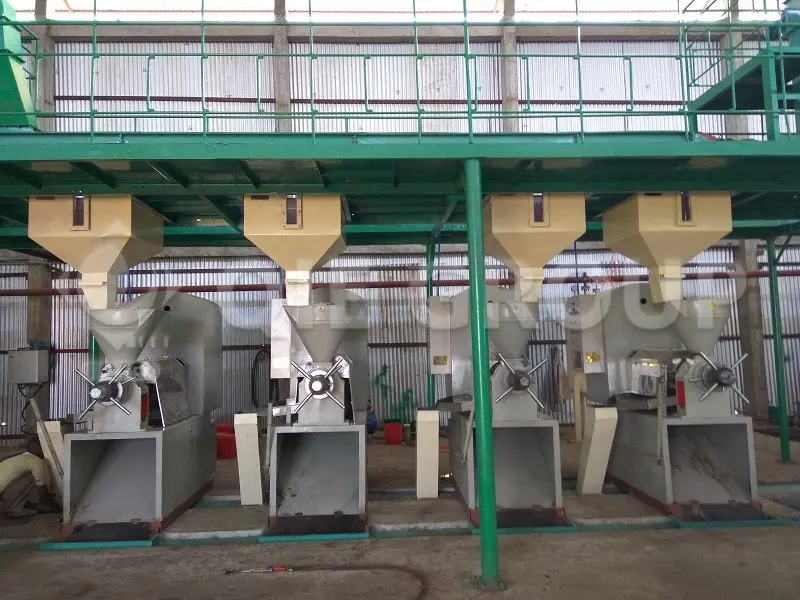
Screw presses are the preferred equipment for mechanical extraction.
Pre-treated kernels are continuously fed into the press chamber, where mechanical pressure and frictional heat release oil from cells, forming press cake.
Adjust chamber pressure, temperature, feed moisture, and screw design to achieve 12–18% residual oil in press cake.
Screw press, feeder, crude oil collection tank, filtration system, cake crusher, conveyors
Pressing is simple, cost-effective, and suitable for small or medium plants producing crude oil.
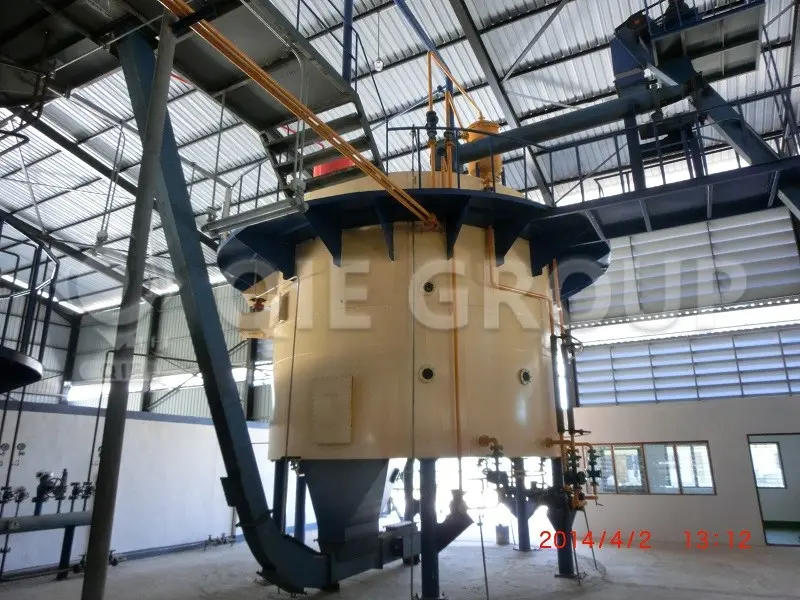
For medium and large plants, press cake residual oil is high (12–18%). Solvent extraction reduces it to <1%, maximizing overall oil yield.
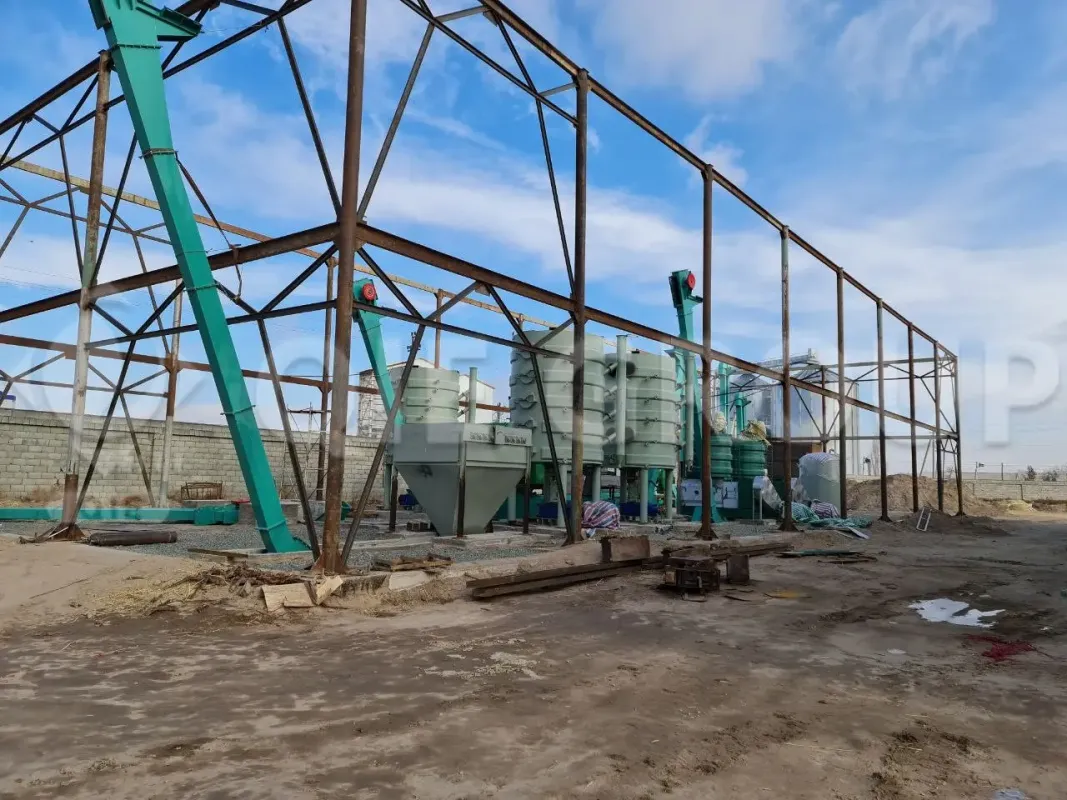
Flat-rotor extractor, DTDC desolventizer, miscella evaporator, stripping tower, condensers, tail gas recovery systems
Solvent extraction significantly improves total oil recovery and is essential for maximizing economic efficiency in large-scale plants.
Crude oil contains phospholipids, free fatty acids, pigments, odors, and trace metals. Refining produces RBD PKO suitable for food or industrial use.
Refining requires precise control of temperature, vacuum, and steam flow. Modern plants often use continuous or semi-continuous designs for efficiency.
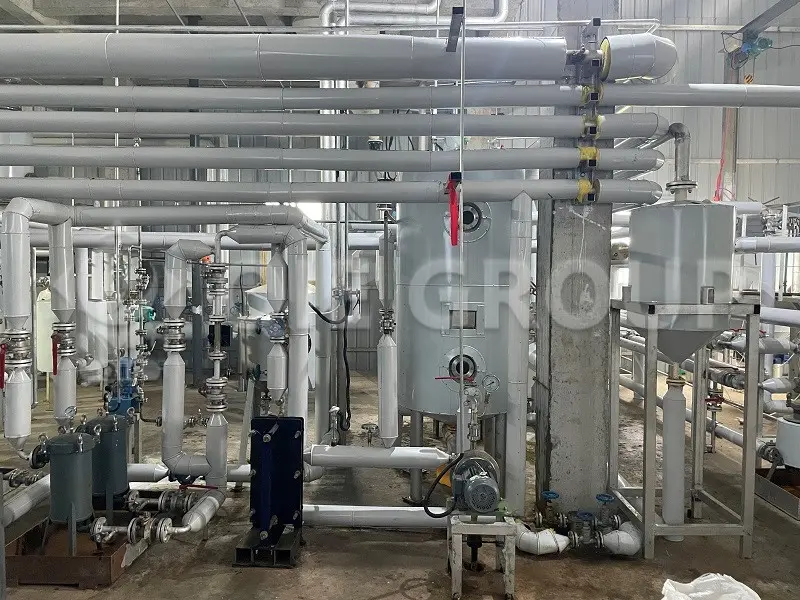
| Scale | Process | Application |
|---|---|---|
| Small (30–100 TPD) | Press only | Low investment, moderate residual oil |
| Medium (100–300 TPD) | Pre-treatment + Pressing | Stable crude oil production, press cake usable as feed |
| Large (300+ TPD) | Pre-press + Solvent Extraction + Refining | >95% total oil recovery, maximal economic benefit |
Palm Kernel Cake (PKC): High-protein animal feed
Palm Kernel Shells: Biomass fuel
Fatty Acid Distillates: Oleochemicals, soap, surfactants
QIE Group offers turnkey PKO production solutions:
Advantages: Experienced process engineering, reliable equipment, enhanced safety via automation, scalable solutions for all plant sizes.
Q1: Physical vs Chemical Refining?
A: Physical refining is eco-friendly, low-loss, suitable for high-FFA oils. Chemical refining handles oil quality fluctuations but produces wastewater.
Q2: Press-only or Pre-press + Solvent Extraction?
A: Press-only is suitable for small/medium plants. Pre-press + solvent extraction maximizes yield (>95%) and minimizes residual oil (<1%) for large plants.
Q3: How to control solvent consumption?
A: Efficient extractor, DTDC desolventizing, high-efficiency evaporation and condensation, and proper sealing keep solvent consumption <1.5 kg/ton.
Q4: How does automation impact ROI?
A: Stabilizes process, increases yield, reduces energy and labor costs, minimizes downtime, and enhances safety.
Establishing an efficient, reliable, and safe palm kernel oil production line represents a strategic choice for seizing global market opportunities.
From meticulous pretreatment, high-efficiency pressing, and deep extraction to final refining and purification, the scientific design and precise control of every stage directly impact overall oil recovery rates, product quality, production costs, and operational safety.
QIE Group is dedicated to providing global clients with customized palm kernel oil production line solutions, empowering oil processing enterprises to gain a competitive edge in a highly contested market.
Contact our engineers for detailed process layouts, equipment lists, and implementation advice
 362
|
362
|
 cold & hot press machine
integrated oil press
edible oil production line
cold pressed oil
screw oil press machine
hydraulic oil press
433
|
Sunflower seed pressing energy consumption optimization
Energy-saving solutions for large screw oil presses
Pressing chamber configuration techniques
Effect of moisture content on oil yield
Energy-saving renovation of edible oil plants
207
|
rapeseed oil pressing production line
high oil yield
rapeseed oil pressing process
screw oil press
turnkey edible oil plant
140
|
sunflower seed oil press machine
sunflower oil pressing line
sunflower oil extraction machine,
edible oil press machine
sunflower oil press machine
279
|
Ethiopian sesame oil machine
Cold pressed sesame oil equipment
High oil yield press
African sesame oil processing
Automated oil extraction
cold & hot press machine
integrated oil press
edible oil production line
cold pressed oil
screw oil press machine
hydraulic oil press
433
|
Sunflower seed pressing energy consumption optimization
Energy-saving solutions for large screw oil presses
Pressing chamber configuration techniques
Effect of moisture content on oil yield
Energy-saving renovation of edible oil plants
207
|
rapeseed oil pressing production line
high oil yield
rapeseed oil pressing process
screw oil press
turnkey edible oil plant
140
|
sunflower seed oil press machine
sunflower oil pressing line
sunflower oil extraction machine,
edible oil press machine
sunflower oil press machine
279
|
Ethiopian sesame oil machine
Cold pressed sesame oil equipment
High oil yield press
African sesame oil processing
Automated oil extraction