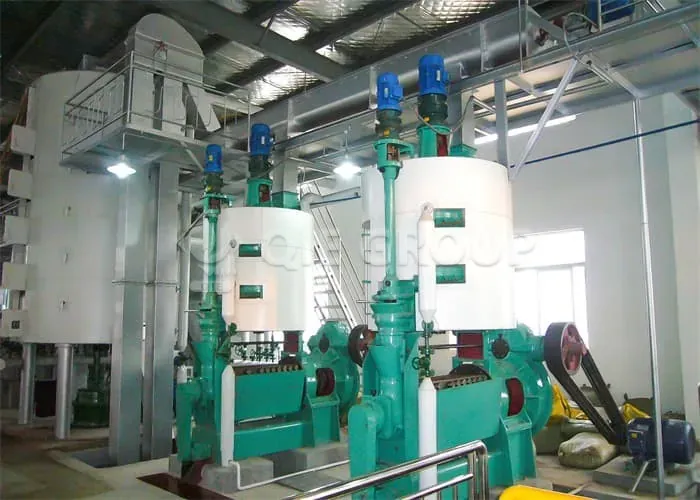
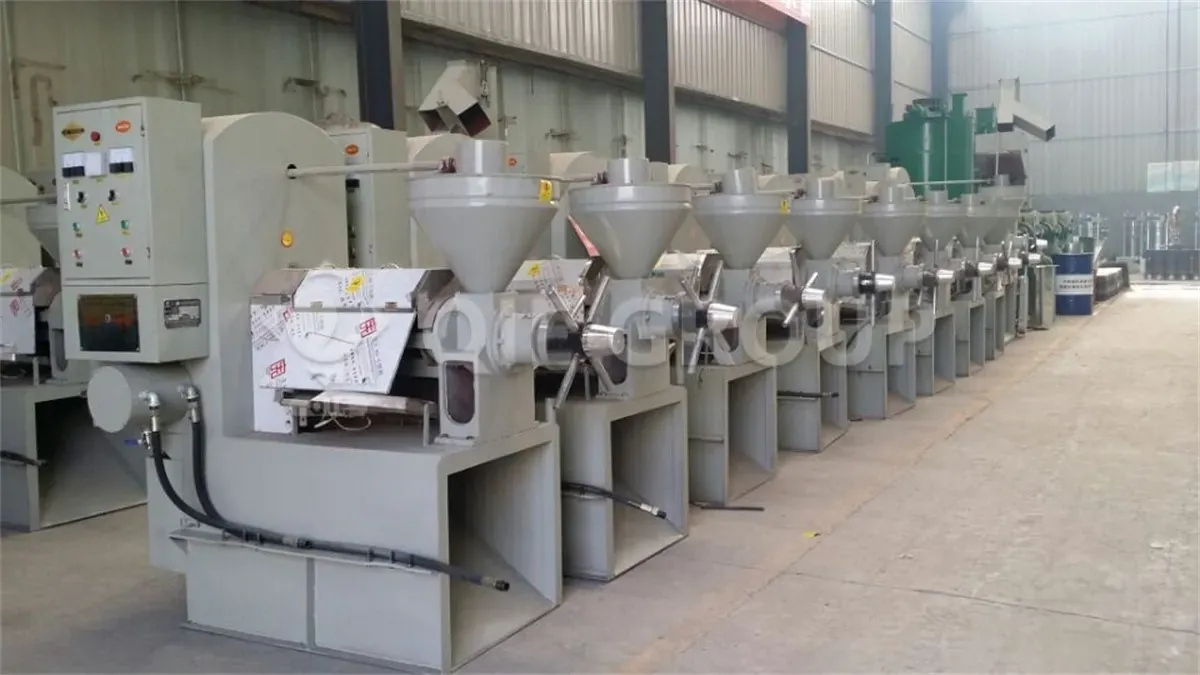
In today's edible oil market, peanut oil remains a premium product due to its rich aroma and nutritional value. For oil mills, a production line that consistently delivers high oil yield, stable performance, and controlled operating costs is the key to profit. The gap between plants is not the size of equipment, but how well the process, parameters, and integration are managed.
As an engineer involved in peanut oil press design and complete plant planning, I've learned one thing clearly:
💡 High oil yield is not “squeezed out” by force — it's engineered through structure, temperature control, conditioning, and system coordination.
This article focuses on real industrial practice rather than textbook theory.
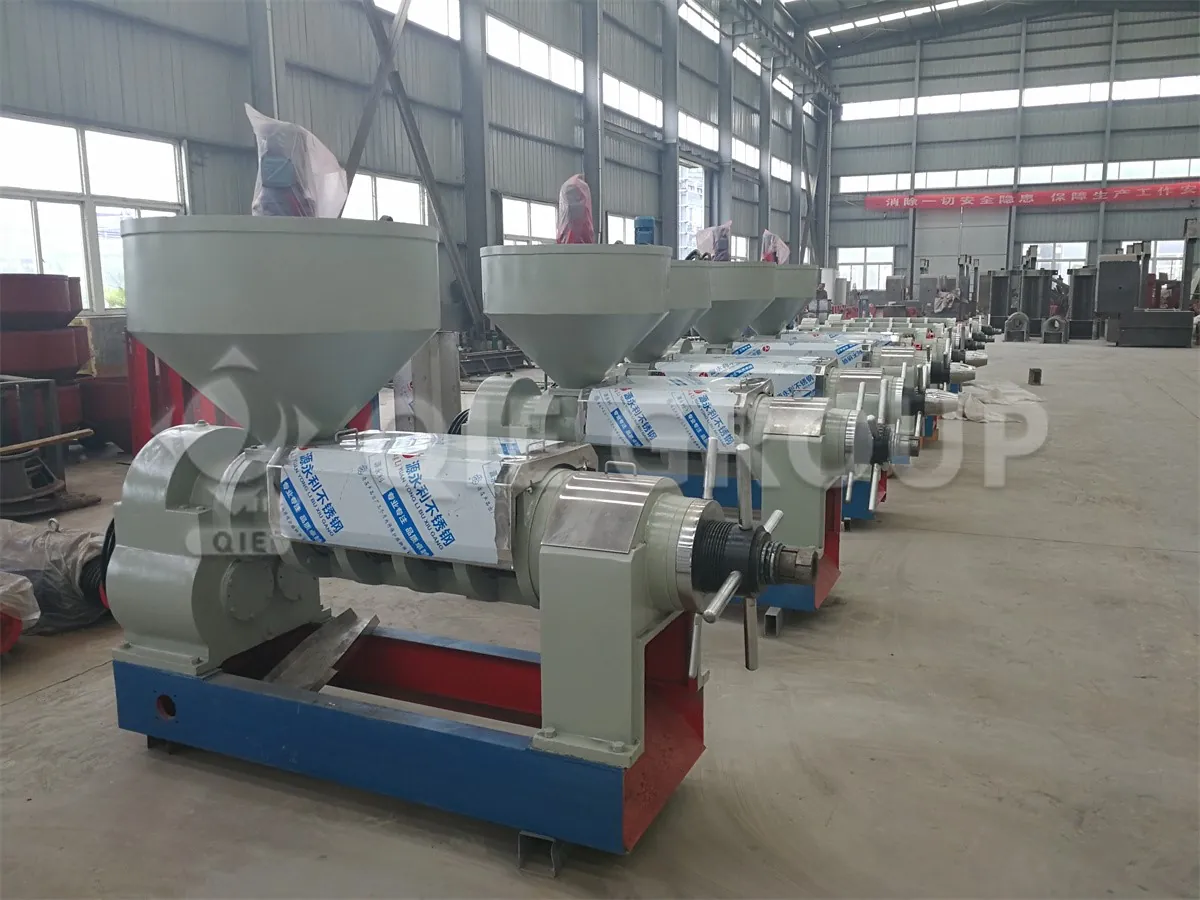
Modern commercial lines use screw oil press machines. The performance depends not only on pressure, but on the pressure curve inside the pressing chamber:
Feeding section: establishes material flow
Pressing zone: gradual compression, rising pressure
Cake discharge zone: defines final compression ratio and residual oil level
In continuous production, one rule shows up repeatedly:
💡 If pressure fluctuates or rises too fast, the issue is usually moisture and conditioning — not the machine itself.
This is why structural design and temperature control determine how much oil can actually be released.
Peanuts contain high oil and protein, so the press must be tuned for gradual compression:
Variable pitch + multi-stage compression
Increasing root diameter + progressive screw angle
Designed to prevent slipping, cavity blockage, or uneven pressing
A simple adjustment of screw parameters can often raise oil yield by 1–2%, without increasing temperature or mechanical load.
Pretreatment is not optional — it defines the maximum possible oil yield.
| Process | Objective | Recommended Range |
|---|---|---|
| Dehulling & grading | Reduce shell absorption | ≤5% hull content |
| Crushing / flaking | Shorten oil release path | 0.3–0.4mm thickness |
| Cooking / softening | Improve plasticity & flow | 90–150°C, 5–7% moisture |
💡 Even the best press cannot deliver high yield if raw material is under-conditioned.
| Method | Features | Suitable for |
|---|---|---|
| Hot Pressing | Higher oil yield, stronger aroma | Commercial high-capacity production |
| Cold Pressing | Higher nutrition retention, lower yield | Small boutique/retail production |
For industrial profitability, hot pressing + pre-press extraction is the optimal route.
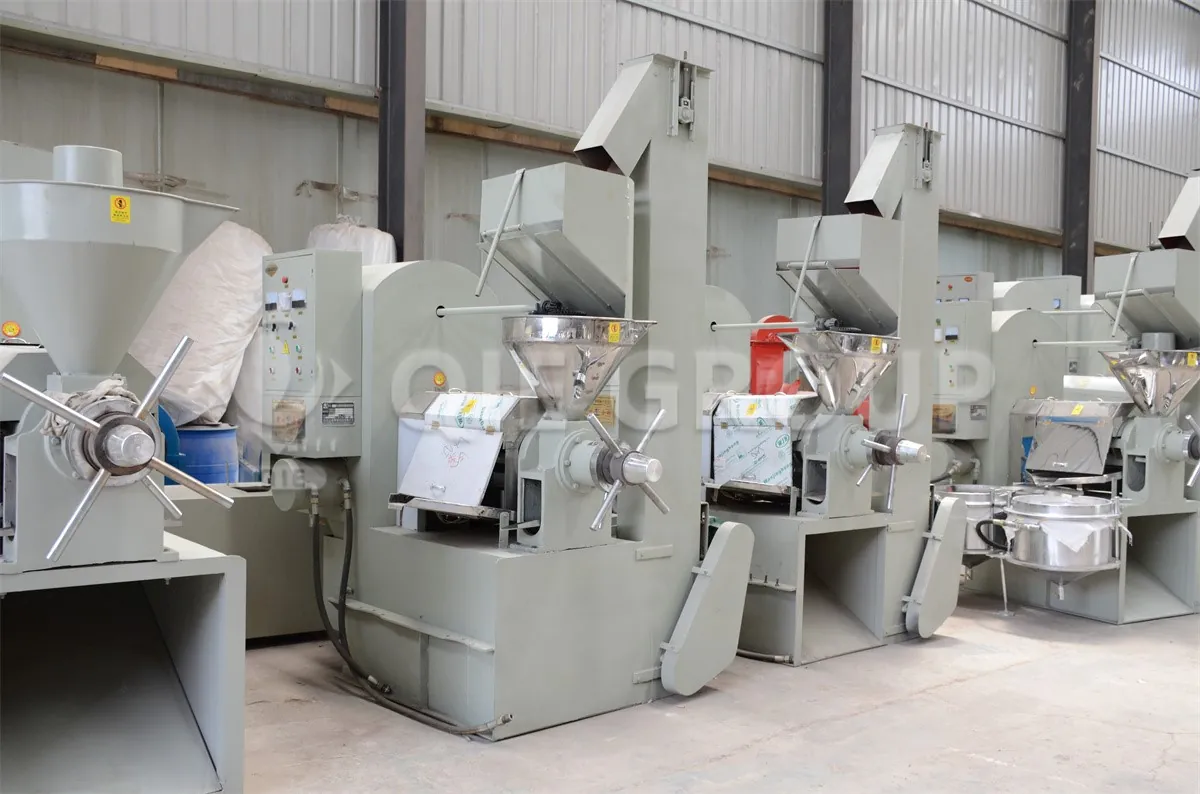
Pure mechanical pressing leaves residual oil. Commercial factories typically combine:
Pre-press (extracts ~60% oil)
Solvent extraction (reduce residual oil to ≤0.8%)
Refining line (neutralization, bleaching & deodorizing to meet national standards)
In simple terms:
💡 Pressing sets the baseline, extraction maximizes recovery, refining defines the selling price.
| Daily Capacity | Recommended Process | Equipment Configuration |
|---|---|---|
| 10–30 TPD | Full pressing | Screw press + filter + batch refining |
| 50–100 TPD | Pre-press + extraction | Pre-press + rotary extractor + semi-continuous refining |
| 100–300+ TPD | Pre-press + extraction + full refining | Press line + loop extractor + fully continuous refining |
For long-term planning, leave room for expansion to avoid second investment and relocation costs.
💡 We do not just sell machines. We deliver lines that generate profit.
Customized press structure based on peanut variety & oil content
Integrated production lines (pretreatment → pressing → extraction → refining)
Energy-saving systems with VFD, heat recovery, and PLC control
Turnkey service: layout, installation, commissioning, training & after-sales
QIE GROUP has supported projects from 10TPD to 3000TPD, and all operating indicators meet commercial production standards.
What is your target daily processing capacity?
Are you producing crude oil, Grade 1 refined oil, or packaged retail oil?
Will this be an initial investment or a scalable long-term plant?
With these three points, we can design a matching process and investment range.
If you're planning to build or upgrade a peanut oil plant, we can provide a free initial layout + equipment list + process proposal.
➡️ Share capacity + product target, and we'll tailor a configuration.
➡️ Or contact the QIE GROUP engineering team for a full quotation & plant plan.
Let every peanut deliver maximum commercial value.
 175
|
175
|
 High oil yield press
Edible oil pressing equipment
Peanut oil extraction efficiency
Sesame cold press machine
Oil and fat equipment upgrade
Small-scale oil pressing production line
147
|
Soybean crushing
Residual oil rate optimization
Large oil press
Oil refinery energy-saving upgrade
Screw oil press
270
|
Cold pressed walnut oil equipment
Hydraulic oil press
High-efficiency oil press
Food grade stainless steel press
Small factory oil pressing solution
356
|
Mustard oil press
Edible oil processing equipment
Cold pressed mustard oil
Grease Machinery
Mustard seed oil press
Mustard oil processing technology
155
|
Grape seed screw press oil press
Oilseed oil extraction process
Vegetable oil processing technology
Oilseed oil market trends
Efficient oil extraction technology
High oil yield press
Edible oil pressing equipment
Peanut oil extraction efficiency
Sesame cold press machine
Oil and fat equipment upgrade
Small-scale oil pressing production line
147
|
Soybean crushing
Residual oil rate optimization
Large oil press
Oil refinery energy-saving upgrade
Screw oil press
270
|
Cold pressed walnut oil equipment
Hydraulic oil press
High-efficiency oil press
Food grade stainless steel press
Small factory oil pressing solution
356
|
Mustard oil press
Edible oil processing equipment
Cold pressed mustard oil
Grease Machinery
Mustard seed oil press
Mustard oil processing technology
155
|
Grape seed screw press oil press
Oilseed oil extraction process
Vegetable oil processing technology
Oilseed oil market trends
Efficient oil extraction technology