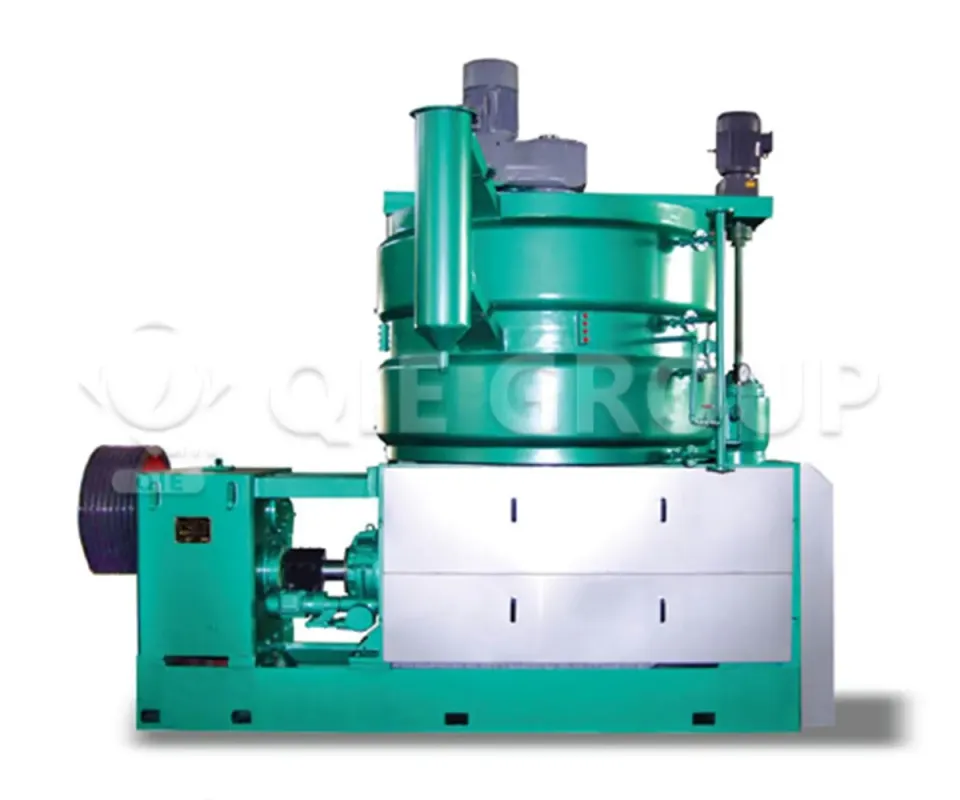
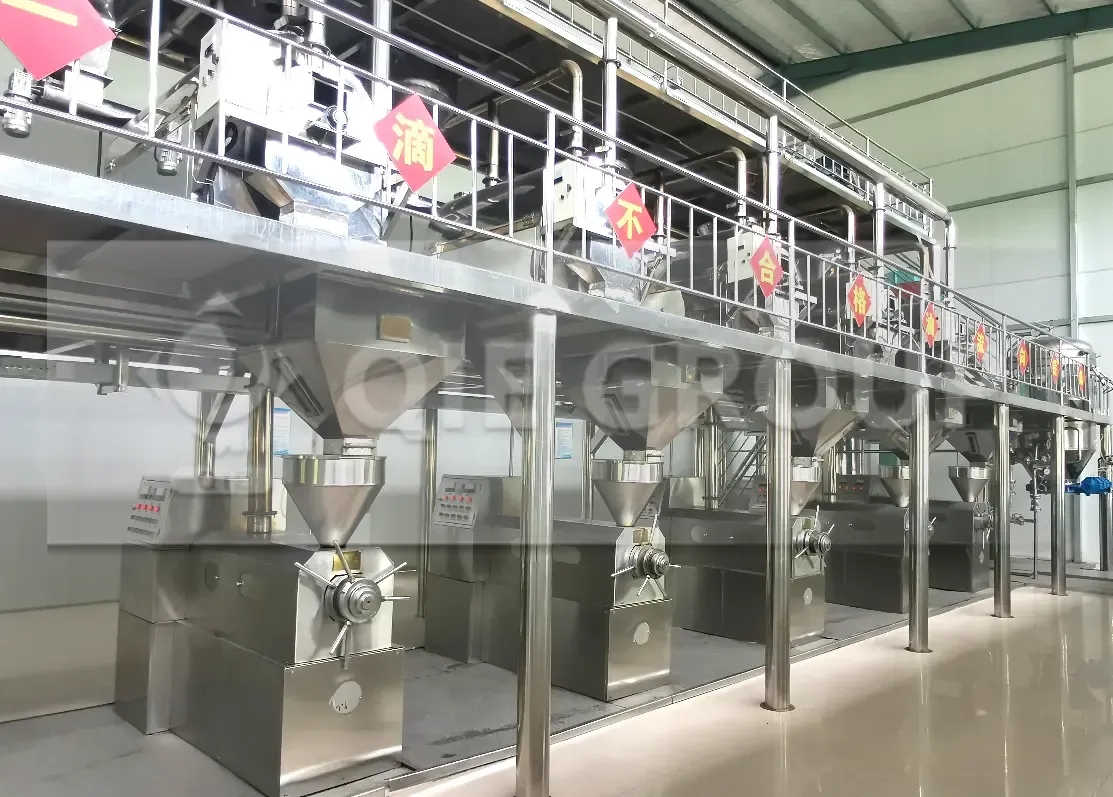
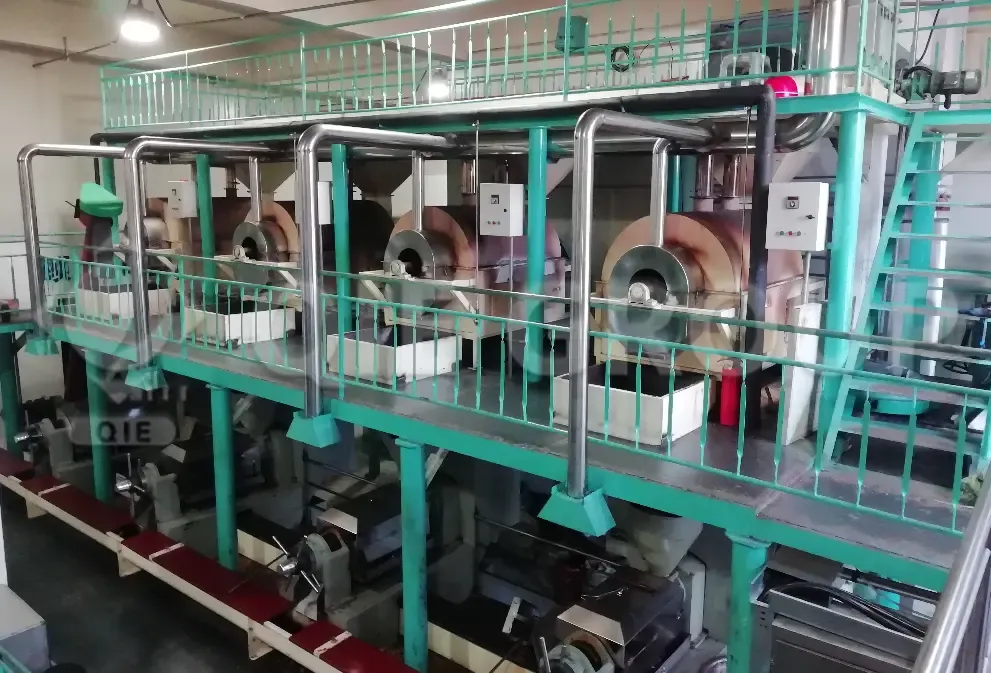
A peanut oil pressing production line is a complete system that continuously converts peanut raw materials into crude oil or finished oil through processes such as cleaning, shelling, crushing, steaming, roasting, pressing, and filtering.
This guide provides investors and oil mill managers with a complete reference from process and equipment selection to investment decisions, allowing you to avoid pitfalls and reach production capacity quickly when building a peanut oil production line.
Global consumption of edible vegetable oils has continued to grow over the past few years. Peanut oil, as a flavorful and high-value-added oil, maintains stable demand in the following markets: household retail, catering channels, and food processing enterprises.
Investors' focus:
👉 Therefore, when choosing a project, we should not only consider "whether it can be done", but also "how to do it safely and economically".
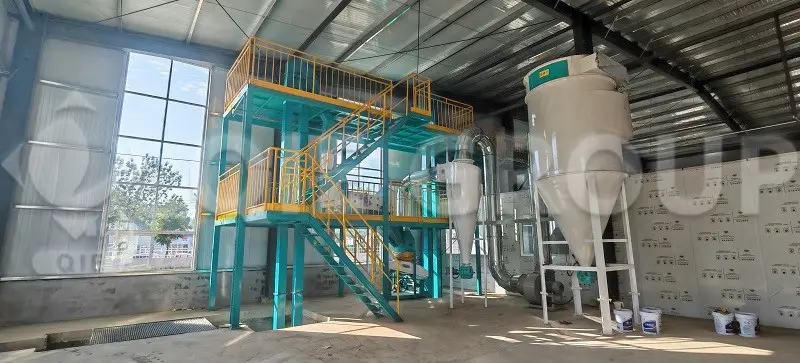
Pressing is often the preferred process in peanut oil processing for the following reasons:
In practical applications, a common approach is pretreatment + pressing + filtration; large-scale projects can be expanded to include: pre-pressing → secondary pressing → solvent extraction → refining 👉 ( peanut oil pressing vs. solvent extraction processes )
The oil yield depends not only on the oil press, but also on the overall process. The following are the key steps and detailed parameters:
Cleaning primarily removes impurities such as stones, metal, mud, straw, and dust from the raw materials. While it may seem like just pretreatment, it directly impacts the lifespan of downstream equipment and the quality of the oil.
Excessive impurities can cause three types of problems:
Experience reference:
Before peanuts in their shells can be pressed for oil, they usually need to be shelled first. Peanut shells themselves have very low oil content. If they are not separated sufficiently, they will dilute the oil content of the oilseeds and will also absorb oil and heat, ultimately reducing the pressing efficiency.
Engineering experience:
👉 High shelling efficiency can increase oil yield, and the separated peanut shells can be used as feed or fuel.
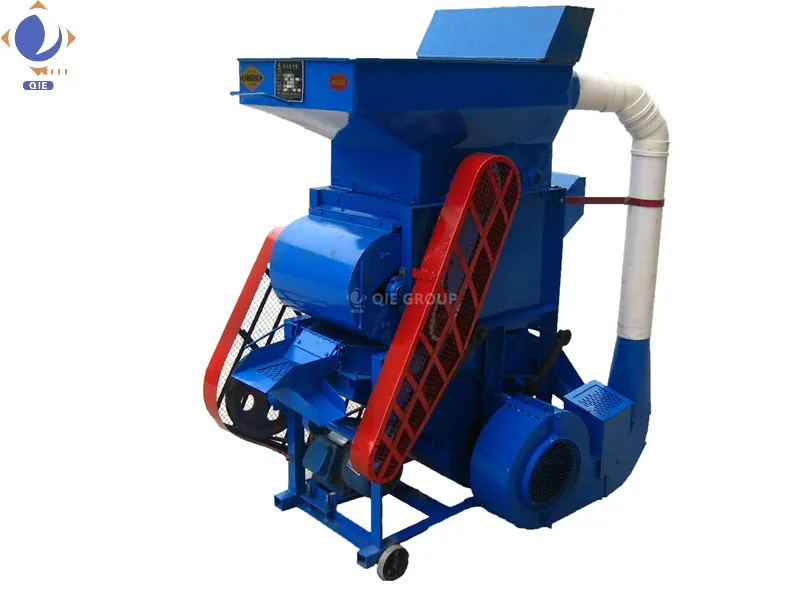
The purpose of crushing is to create a granular structure suitable for steaming, roasting, and pressing peanuts. If the kernels are too large, they will not heat evenly; if they are too small, they will easily form a paste, which will affect oil extraction during pressing.
Parameters and experience:
👉 Good crushing can improve the uniformity of steaming and frying and the stability of screw press feeding.
Steaming and roasting are among the processes in peanut pressing that have the greatest impact on oil yield. Simply put, it's about making the oil, which is originally "difficult to squeeze out," into a state where it's "easier to flow out."
Key parameters: Temperature: 90–150℃; Moisture content at press: 1.5%–3%
Precautions:
👉 Engineering experience: The number of steaming/frying layers, steam utilization rate, and heat preservation performance directly affect the stability of oil output.
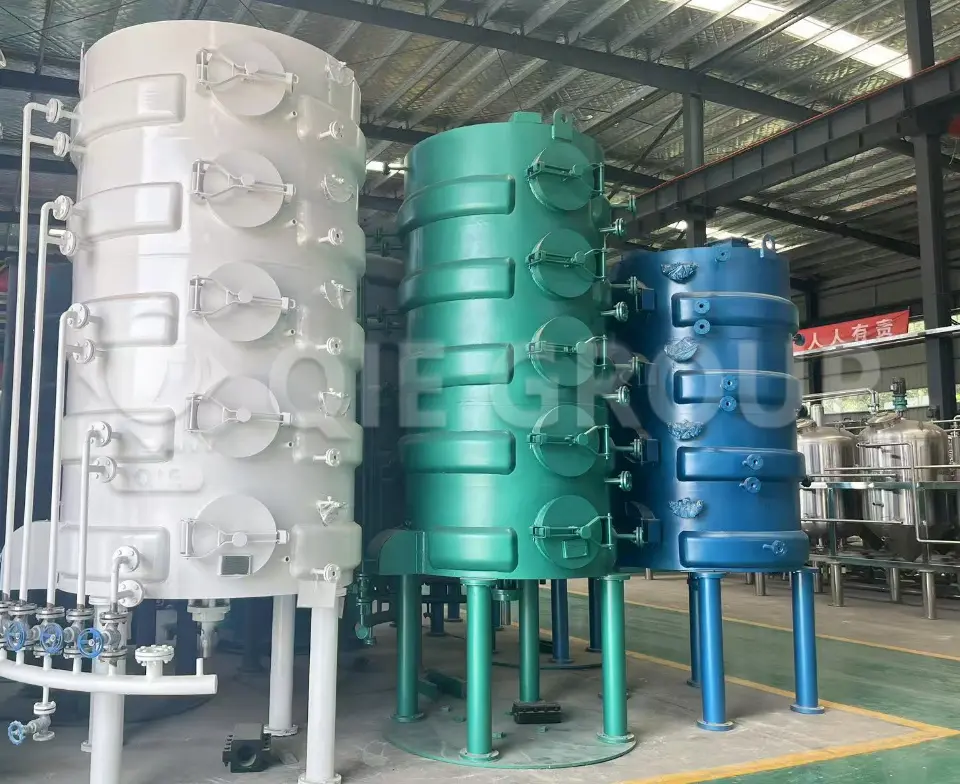
The pressing process is usually completed using a screw oil press . The pre-treated peanut material is continuously pushed, squeezed, and rubbed inside the pressing chamber, and the oil flows out from the gaps, while the cake is discharged at the end.
Parameter reference:
Optional combinations:
Operational experience:
Freshly pressed crude oil contains suspended impurities, fine powder, and some colloidal substances, requiring sedimentation and filtration. The filtration effect not only affects the appearance of the finished product but also relates to the oil's storage stability and subsequent refining load.
Common solutions include plate and frame filters, leaf filters, and matching oil residue recovery systems.
In practical engineering, selecting appropriate filtration equipment can significantly reduce oil loss. For medium-sized and larger production lines, the amount of oil saved in this way adds up to a considerable sum over a year.
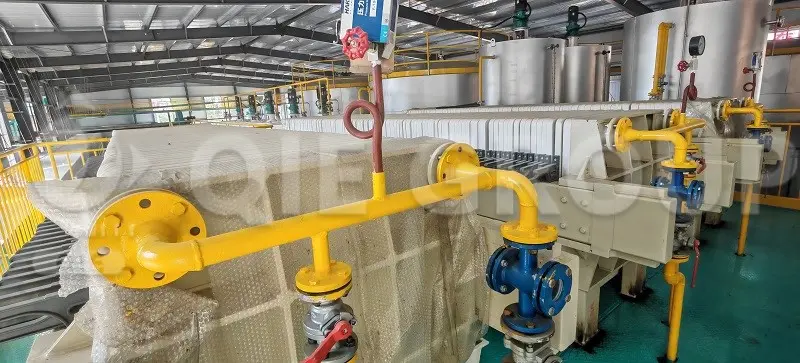
A mature peanut oil extraction system actually involves the collaborative work of multiple core devices. Equipment selection should not only focus on the price of a single unit, but also on the compatibility of the entire production line, the ease of maintenance, the availability of spare parts, and long-term energy consumption.
| equipment | Main function | Key points for selection | Common precautions |
|---|---|---|---|
| Cleaning screen | Remove large and small impurities and dust | Screen structure, throughput, dust collection interface | High-impurity raw materials require enhanced magnetic separation and destoning. |
| shelling machine | Kernel separation | Dehulling rate, breakage rate, and air separation effect | Large fluctuations in the moisture content of raw materials can affect dehulling efficiency. |
| crusher | Controlling particle size facilitates steaming, roasting, and pressing. | Adjustable roller gap, uniform particle size | Uniformity is more important than being too fine. |
| Steamer | Adjusting water and temperature improves pressability | Number of layers, steam utilization rate, thermal insulation performance | Unstable temperature control will directly affect the oil yield. |
| Screw oil press | Continuous pressing for oil extraction | Press chamber structure, processing capacity, and wear part life | We must look at stable production levels, not just peak output. |
| Filtration equipment | Oil purification | Filtration accuracy, cleaning efficiency, oil loss control | Improper configuration will increase oiling and labor costs. |
Complex raw materials → allow for adjustments in cleaning, dehulling, steaming, and roasting processes; stable raw materials → allow for focused optimization of pressing efficiency, filtration precision, and automated control.
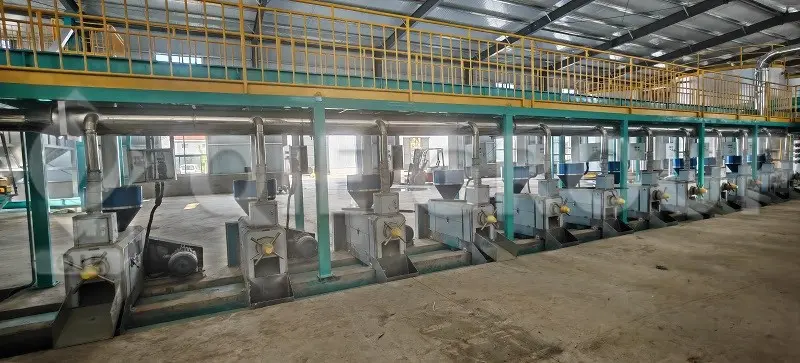
Below are some of the more common size ranges in the market.
| scale | Common production capacity | Applicable Scenarios | Features |
|---|---|---|---|
| small | 10–100 TPD | Local processing plants, cooperatives, and regional brand startups | Investment is relatively controllable, and the layout is flexible, making it suitable for testing the market. |
| medium | 100–500 TPD | Mature oil refineries, regional supply chain projects, OEM support | There is a good balance between efficiency and investment, and there is great potential for automation. |
| industrialization | 500+ TPD | Large-scale oil and fat groups, export-oriented factories, and integrated oil and fat production bases | It places greater emphasis on continuous operation, energy consumption optimization, and automatic control. |
👉 Key factors for choosing scale: raw material supply, market size, return on investment (ROI), and infrastructure support.
Improving peanut oil yield cannot be achieved by simply adjusting the pressure of the oil press. The truly effective method usually comes from the simultaneous optimization of raw material management, pretreatment control, and equipment status.
Raw material control: Select peanut kernels with high maturity, full kernels, low mold, and appropriate moisture content (8-9%).
Optimized pretreatment: thorough cleaning and dehulling; uniform particle size; precise control of moisture, temperature, and time during steaming and frying. This can increase overall oil yield by 1–3%.
Pressing parameter control: Temperature, pressure, screw speed, and cake thickness need to be adjusted according to the raw material; high moisture content during the rainy season → parameter adjustment, otherwise both oil yield and cake quality will decrease. 👉( What to do if the peanut oil press has low output? )
Equipment performance and maintenance: Wear and tear on the screw press, press bars, bearings, heating and transmission systems leads to increased residual oil; regular maintenance and data recording are more reliable than emergency repairs.
👉 Continuous monitoring of production data and the formation of an improvement loop can effectively increase peanut oil yield.
The budget for investing in a peanut oil pressing production line can vary significantly. Even for projects with the same capacity of 50 TPD, different configurations can result in substantial differences in total investment. The core reason is that equipment is only one part of the cost; the engineering system is the key factor determining the overall budget.
👉 Many projects exceed their budgets not because of the oil press, but because of the civil engineering and utilities.
For companies planning to build peanut oil projects, a truly valuable supplier is not just someone who provides a peanut oil press machine, but someone who can integrate raw materials, processes, equipment, utilities, and installation and commissioning. QIE Group, as a turnkey supplier for edible oil processing projects, has long been involved in oil projects of varying sizes and has accumulated systematic engineering experience in processing oilseeds such as peanuts, rapeseed, soybeans, and sunflower seeds.
Brand and Experience
We offer: customized process design, complete line equipment supply, installation and commissioning support, energy-saving optimization solutions, and full turnkey project management.
Unlike stand-alone suppliers, we help you integrate the entire chain of raw materials, processes, equipment, utilities, and commissioning to ensure the project reaches full production capacity smoothly.
Q1: What is the typical oil yield of a peanut oil pressing production line?
A1: Using the screw pressing method, high-quality peanut kernels (oil content 45–55%) can achieve a crude oil yield of 38–42% and a residual oil content of 6–8% after steaming, roasting, and pressing. Optimizing the steaming, roasting, and pressing parameters can further improve this by 1–2%.
Q2: What is the approximate investment cost for a small-scale peanut oil production line?
A2: Small production lines (10–50 TPD) require an equipment investment of approximately $50,000–$150,000 USD, varying depending on the level of automation, equipment brand, and additional processes. Medium and large production lines require higher investments but have lower unit production costs.
Q3: Is there a difference between using peanuts in their shells and peanut kernels?
A3: Peanuts in their shells require additional shelling equipment, which increases the equipment load; peanut kernels can be directly crushed and steamed, resulting in a higher oil yield, purer oil, and simpler operation.
Q4: What kind of support does QIE GROUP provide?
A4: We provide a full range of services including customized design, equipment procurement, installation and commissioning, personnel training, and turnkey projects. We can also provide capacity planning, investment budgeting, and process optimization suggestions.
Investing in or upgrading a peanut oil pressing production line requires consideration of:
Recommendation: Gain a deep understanding of the core processes, scientifically assess conditions, and select experienced partners.
Whether you're looking at a small pressing line, a medium-sized peanut oil processing plant, or an industrial groundnut oil production line, a customized assessment that considers raw materials, capacity, and budget is often more valuable than simply comparing prices.
Consulting on peanut oil pressing production line solutions 365
|
365
|
 flaxseed oil extraction process
cold pressing flaxseed oil
hot pressing flaxseed oil
flaxseed solvent extraction
147
|
Soybean crushing
Residual oil rate optimization
Large oil press
Oil refinery energy-saving upgrade
Screw oil press
113
|
rice bran oil pre-pressing
stabilization
screw press design
extraction plant engineering
oilseed pre-treatment
169
|
soybean oil press machine
soybean oil processing plant
edible oil processing equipment
soybean pre-pressing
pre-pressing and solvent extraction
114
|
rapeseed oil pressing
rapeseed oil pressing challenges
rapeseed oil pressing process
rapeseed oil pretreatment
rapeseed oil processing plant engineering
flaxseed oil extraction process
cold pressing flaxseed oil
hot pressing flaxseed oil
flaxseed solvent extraction
147
|
Soybean crushing
Residual oil rate optimization
Large oil press
Oil refinery energy-saving upgrade
Screw oil press
113
|
rice bran oil pre-pressing
stabilization
screw press design
extraction plant engineering
oilseed pre-treatment
169
|
soybean oil press machine
soybean oil processing plant
edible oil processing equipment
soybean pre-pressing
pre-pressing and solvent extraction
114
|
rapeseed oil pressing
rapeseed oil pressing challenges
rapeseed oil pressing process
rapeseed oil pretreatment
rapeseed oil processing plant engineering