
In rapeseed oil projects, why can two plants processing the same raw material with similar equipment configurations show a 3–5% difference in actual oil yield?
Under the dual pressure of growing global edible oil demand and volatile raw material costs, the profitability of a rapeseed oil pressing line increasingly depends on one decisive indicator: high oil yield. An improvement of just 1% in oil yield often translates into a substantial reduction in raw material cost per ton of oil and a clear competitive advantage over the plant's entire operating life.
Based on QIE GROUP's engineering experience from hundreds of turnkey edible oil plants delivered worldwide, and combined with long-term industrial operation data and on-site commissioning insights, this article provides a practical, engineering-oriented guide to achieving consistently high oil yield in rapeseed oil pressing lines.
One conclusion has been repeatedly validated in real projects:
💡 Without stable raw material quality control, long-term high oil yield is almost impossible—regardless of how advanced the press is. 👉(Rapeseed Oil Pressing Challenges and Practical Solutions)
Oil content varies significantly among rapeseed varieties, typically ranging from 35% to 48%. Selecting high-oil, low-impurity, and low-glucosinolate (double-low) rapeseed not only improves pressing efficiency but also reduces downstream refining load.
In multiple industrial projects, we observed that when incoming oil content fluctuates by more than 2%, maintaining stable cake residual oil becomes increasingly difficult, even with unchanged process settings.
Well-matured and properly stored fresh rapeseed exhibits a more stable oil structure and lower FFA levels, which is favorable for both oil recovery and final oil quality. Immature or aged seeds typically show lower theoretical oil content and amplify process instability during cooking and pressing.
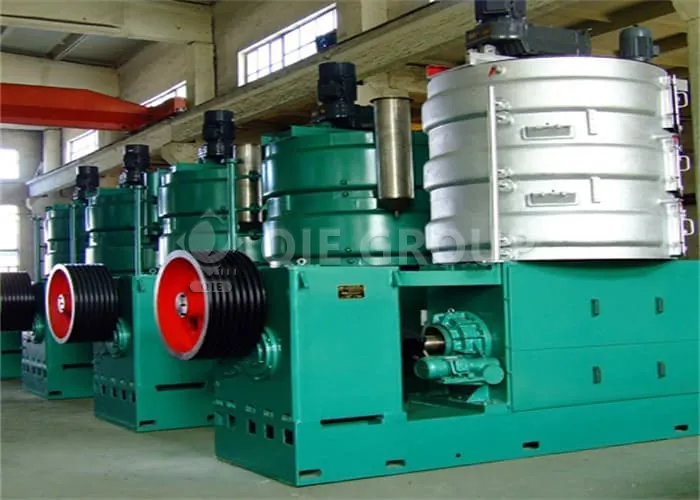
In industrial pressing, moisture often has a more direct impact on oil yield than press model selection.
Excessive moisture (>9%): Difficult crushing and flaking, agglomeration during cooking, insufficient protein denaturation, and higher residual oil in cake;
Insufficient moisture (<6%): Increased brittleness, excessive fines, uneven flakes, and reduced pressing efficiency.
In most industrial conditions, stabilizing flake moisture at around 5% before pressing is a key prerequisite for high oil yield (fine-tuning is required based on equipment and operating conditions).
💡 Engineering takeaway: High oil yield does not start at the press—it starts with systematic control of moisture and oil content in raw material management.
The engineering objective of pre-treatment is not complexity, but to produce material with loose structure, well-disrupted cell walls, and uniform moisture and temperature distribution.
Multi-stage cleaning screens, destoners, and magnetic separators protect equipment and directly influence oil cleanliness and long-term operational stability.
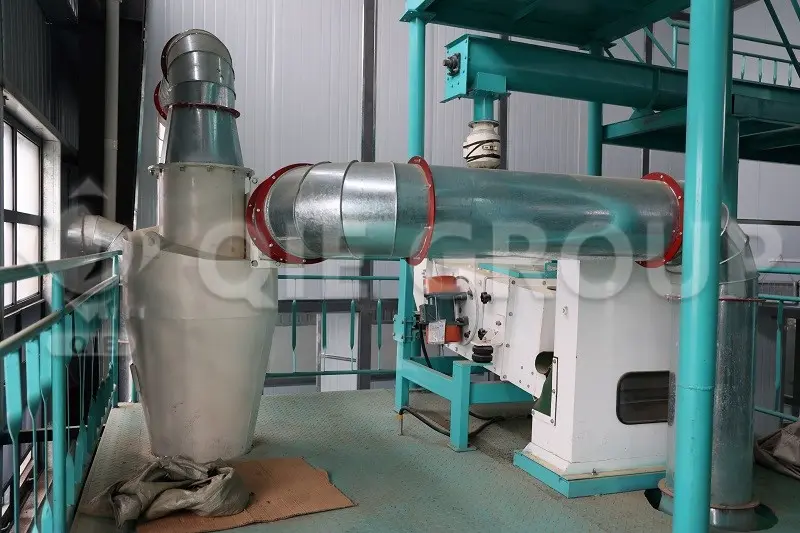
Crushing: Toothed roller crushers help control fines and ensure uniform particle size for subsequent flaking;
Conditioning/softening: Coordinated control of moisture and temperature improves material plasticity and prevents excessive fines generation.
Flake thickness is typically controlled within 0.3–0.5 mm, balancing increased surface area with structural integrity. Uneven flaking is a common on-site cause of elevated cake residual oil.
From an engineering perspective, cooking applies controlled heat and moisture to promote protein denaturation, oil coalescence, and improved oil flowability.
Typical industrial parameter ranges:
Temperature: 100–120°C
Retention time: 30–60 minutes
Final moisture: 5%
In practice, process stability over time is more critical than any single setpoint.
💡 Engineering takeaway: Both under-cooking and over-cooking increase residual oil; the real challenge lies in maintaining consistency during long-term operation.
The screw oil press is the core oil recovery device, but over-aggressive pressing often leads to choking, higher energy consumption, and accelerated wear rather than sustainable yield improvement.
A properly designed compression ratio ensures the material experiences gradually increasing, stable pressure inside the press. Screw pitch, root diameter profile, and cage slot design must be optimized as a system to minimize residual oil.
Maintaining press barrel temperature at approximately 100–120°C helps reduce oil viscosity and promote discharge. Large-capacity presses are typically equipped with external cooling systems to prevent localized overheating and oil quality deterioration.
Cake thickness: Commonly controlled within 5–10 mm;
Feeding stability: Continuous, uniform feeding is essential for stable pressure and consistent oil recovery.
💡 Engineering takeaway: High oil yield is achieved through stable operation—not short-term maximum compression.
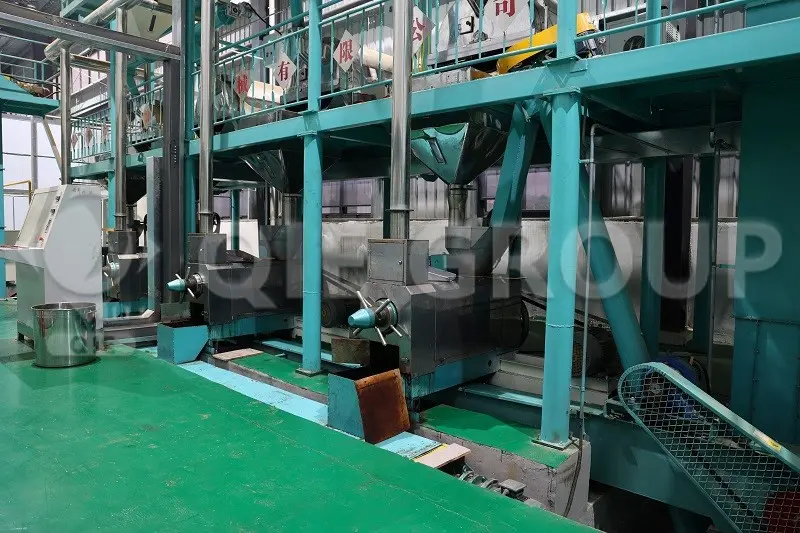
For projects targeting maximum oil recovery or operating as pre-pressing systems, two-stage or multi-stage pressing can be applied. Properly designed systems can reduce cake residual oil to 5–8%, though energy consumption and CAPEX must be evaluated.
In pre-pressing–solvent extraction processes, the quality of pre-pressed cake directly affects extractor performance. Industrial practice typically controls pre-press cake residual oil within 12–18% to balance structure and extraction efficiency.
By combining online temperature, flow, and residual oil monitoring with production data analysis, key parameters can be continuously optimized to achieve sustained yield improvement.
High-efficiency oil presses, stable pretreatment equipment, and reliable automation systems are essential for long-term high oil yield performance.
Centralized control, automated material handling, and lean plant layouts reduce human error and overall operating costs.
Through heat recovery, high-efficiency motors with VFD control, and dust/VOC management systems, high oil yield can be achieved alongside sustainable plant operation.
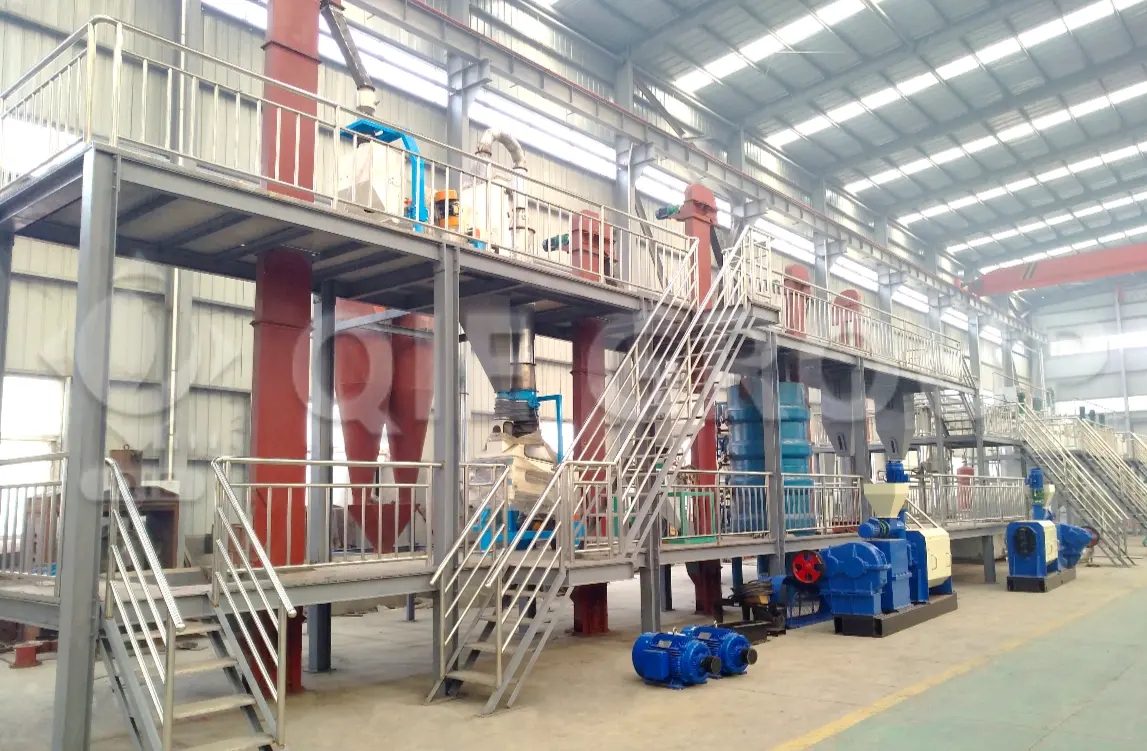
As an engineering-focused solution provider, QIE GROUP delivers customized process packages, deep equipment integration, and advanced automation systems to ensure stable, high-efficiency rapeseed oil pressing under varying raw material conditions.
Across multiple 100–3000 TPD industrial projects, QIE GROUP–supplied lines have consistently achieved design oil yield targets and stable cake residual oil performance under long-term operation.
In an edible oil industry with tightening margins, high oil yield is no longer a single technical indicator—it is a decisive factor influencing payback period, operating cost, and long-term competitiveness.
Choosing QIE GROUP means selecting not just a rapeseed oil pressing line, but a globally proven, engineering-validated high oil yield solution designed for sustainable profitability.
Share your target capacity, seed profile, and product requirements. QIE Group can propose a turnkey configuration focused on high oil yield, stable quality, efficient oil fats recovery, and scalable factory automation.
Request a Turnkey Rapeseed Oil Pressing Line Solution from QIE Group
 397
|
397
|
 Low temperature oil press
Twin-screw oil pressing equipment
High efficiency oil yield
Oil processing equipment
Cold Pressed
441
|
Construction of large-scale pressing plants
Edible oil pressing equipment
Pressing production line installation
Edible oil processing equipment
Screw oil press installation
Cooking oil equipment manufacturers
279
|
sunflower seed oil press machine
screw oil press
edible oil plant equipment
high-efficiency oil press
sunflower oil production line
175
|
Cottonseed pressing
Multi-stage screw oil press
High-fiber oilseeds
Increased oil yield
residual oil content
275
|
Ethiopian sesame oil machine
Cold pressed sesame oil equipment
High oil yield press
African sesame oil processing
Automated oil extraction
Low temperature oil press
Twin-screw oil pressing equipment
High efficiency oil yield
Oil processing equipment
Cold Pressed
441
|
Construction of large-scale pressing plants
Edible oil pressing equipment
Pressing production line installation
Edible oil processing equipment
Screw oil press installation
Cooking oil equipment manufacturers
279
|
sunflower seed oil press machine
screw oil press
edible oil plant equipment
high-efficiency oil press
sunflower oil production line
175
|
Cottonseed pressing
Multi-stage screw oil press
High-fiber oilseeds
Increased oil yield
residual oil content
275
|
Ethiopian sesame oil machine
Cold pressed sesame oil equipment
High oil yield press
African sesame oil processing
Automated oil extraction


