
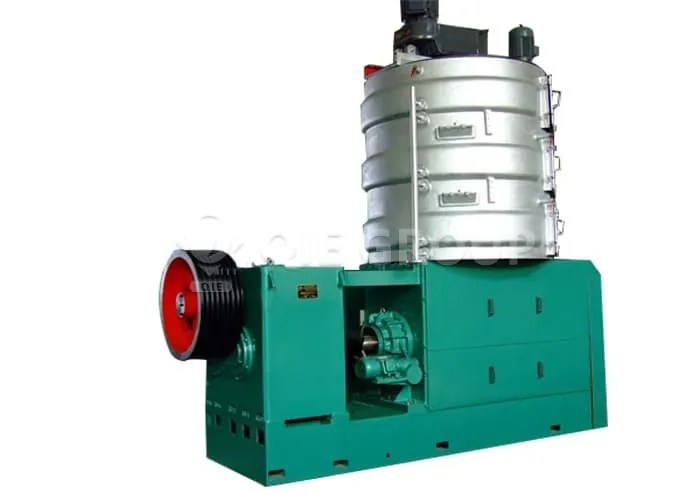
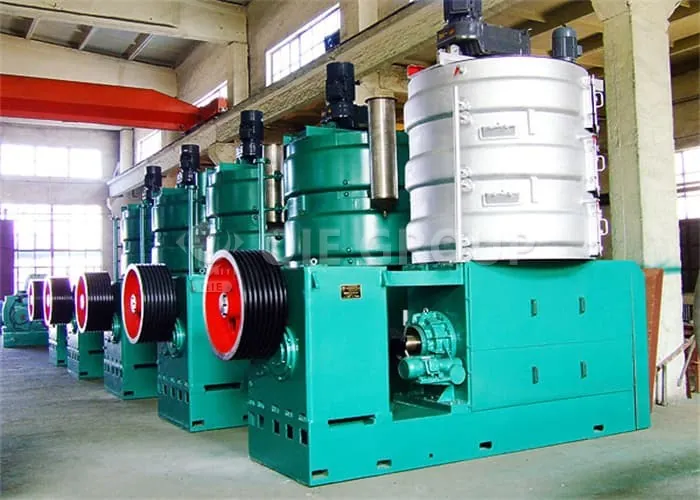
Against the backdrop of increasingly stringent environmental and high-efficiency production requirements in the global vegetable oil market, oil mills are demanding higher performance standards for rapeseed pressing equipment. Traditional pressing processes often face problems such as fluctuating oil yield, high energy consumption, and excessive residual oil in the oil cake, severely impacting oil mill profitability and the achievement of green production goals. To address this, QIE Group's large-scale screw oil presses, through optimized screw design and continuous pressing processes, achieve a 10%-15% increase in oil yield, an 8%-12% reduction in energy consumption, and a residual oil rate controlled at 5%-7%, helping oil mills achieve stable returns on investment and enhanced market competitiveness.
| Pain points | Influence | Specific manifestations |
|---|---|---|
| Oil yield fluctuates greatly | Reduced oil production efficiency impacts profitability | The pressing equipment was unable to operate stably, and the oil yield failed to meet expectations. |
| High energy consumption | Increase in unit production cost | Screw oil presses consume a lot of power and waste energy. |
| High residual oil content in oilseed cake | Reduced leaching process efficiency affects the quality of subsequent oil products. | Residual grease exceeding 7% makes recycling difficult and increases subsequent processing costs. |
In summary, these pain points not only affect the daily production of oil mills, but also directly relate to return on investment and market competitiveness. Therefore, optimizing the pressing process has become a necessary choice.
Rapeseed itself has a high hull content and also contains erucic acid and pectin, which places high demands on the design of pressing equipment and process parameters.
Steaming and frying temperature : usually needs to be controlled between 100℃ and 150℃. Too high a temperature will easily damage the oil quality, while too low a temperature will result in undercooked material and low pressing efficiency.
Moisture content : Keep it between 7% and 10%. If the material is too dry, it will easily damage the screw. If it is too wet, it will affect the flowability of the material and the stability of the oil output.
Continuous pressing requirements : Operators must ensure the equipment operates continuously and efficiently, avoiding "bottleneck" and downtime. 👉 ( What factors affect the lifespan and stability of an oil press? )
Example scenario: In actual operation at an oil mill in Indonesia, precise control of steaming and frying temperature and moisture content enabled the screw oil press to run continuously for 8 hours, maintaining a stable oil yield and controlling the residual oil rate at 6%, thus significantly improving production efficiency.
Data verification: Operational data from 10+ large overseas and domestic oil plants show that after using QIE equipment, the average oil yield increases by 10%-15%, and the residual oil rate remains stable at 5%-7%, which is significantly better than the industry average.
Proper pretreatment is a prerequisite for efficient pressing:
Precise moisture content control : ensures material flowability and screw pressure transmission efficiency.
Steaming and roasting temperature and softening time : soften the kernels, improve crushing efficiency, and achieve the best oil yield.
In collaboration with QIE equipment : continuous pressing performance and scientific pretreatment form a closed loop, achieving green and efficient production.
Taking a large oil mill in Indonesia as an example, after introducing our screw press, its production capacity increased by about 18% and its unit power consumption decreased by 14%, significantly saving production costs. Frontline operators reported: "The equipment is easy to operate and has a long maintenance cycle, which greatly reduces our daily workload." The equipment engineer added: "The optimized screw structure greatly improves pressing efficiency, ensures stable oil output, shortens the customer's investment return cycle, and significantly enhances competitiveness."
Customer testimonial: "After adopting the QIE large-scale screw oil press, we not only significantly improved the oil yield, but also achieved remarkable results in energy saving, realizing green and efficient production."
With the advancement of international green production policies and energy conservation and emission reduction regulations, upgrading equipment in oil plants is imperative.
It is recommended that after 5-7 years of use, an assessment be made on whether to upgrade to a high-efficiency screw oil press based on production load, energy consumption, and maintenance costs.
Increased levels of automation and energy efficiency are key factors in maintaining market competitiveness.
 108
|
108
|
 Large-scale commercial fully automatic peanut oil press
Peanut Oil Press
Peanut oil processing plant
Peanut oil production line
Edible oil processing equipment
125
|
Physical pressing equipment
Edible oil pressing production line
Screw oil press
Hydraulic oil press
Small edible oil pressing equipment
Edible oil processing equipment
229
|
Oil pressing equipment selection
Increased oil yield
Edible oil processing equipment
Hydraulic oil press
Screw oil press
Edible oil production
270
|
Cold pressed walnut oil equipment
Hydraulic oil press
High-efficiency oil press
Food grade stainless steel press
Small factory oil pressing solution
326
|
Hydraulic oil press
Screw oil press
The difference between screw press and hydraulic press
Edible oil press selection
Which small oil press is better?
Screw oil press price
Hydraulic oil press price
Large-scale commercial fully automatic peanut oil press
Peanut Oil Press
Peanut oil processing plant
Peanut oil production line
Edible oil processing equipment
125
|
Physical pressing equipment
Edible oil pressing production line
Screw oil press
Hydraulic oil press
Small edible oil pressing equipment
Edible oil processing equipment
229
|
Oil pressing equipment selection
Increased oil yield
Edible oil processing equipment
Hydraulic oil press
Screw oil press
Edible oil production
270
|
Cold pressed walnut oil equipment
Hydraulic oil press
High-efficiency oil press
Food grade stainless steel press
Small factory oil pressing solution
326
|
Hydraulic oil press
Screw oil press
The difference between screw press and hydraulic press
Edible oil press selection
Which small oil press is better?
Screw oil press price
Hydraulic oil press price


