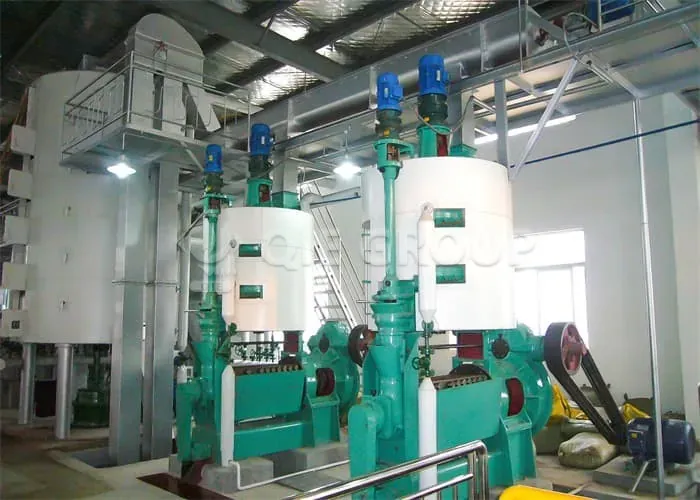
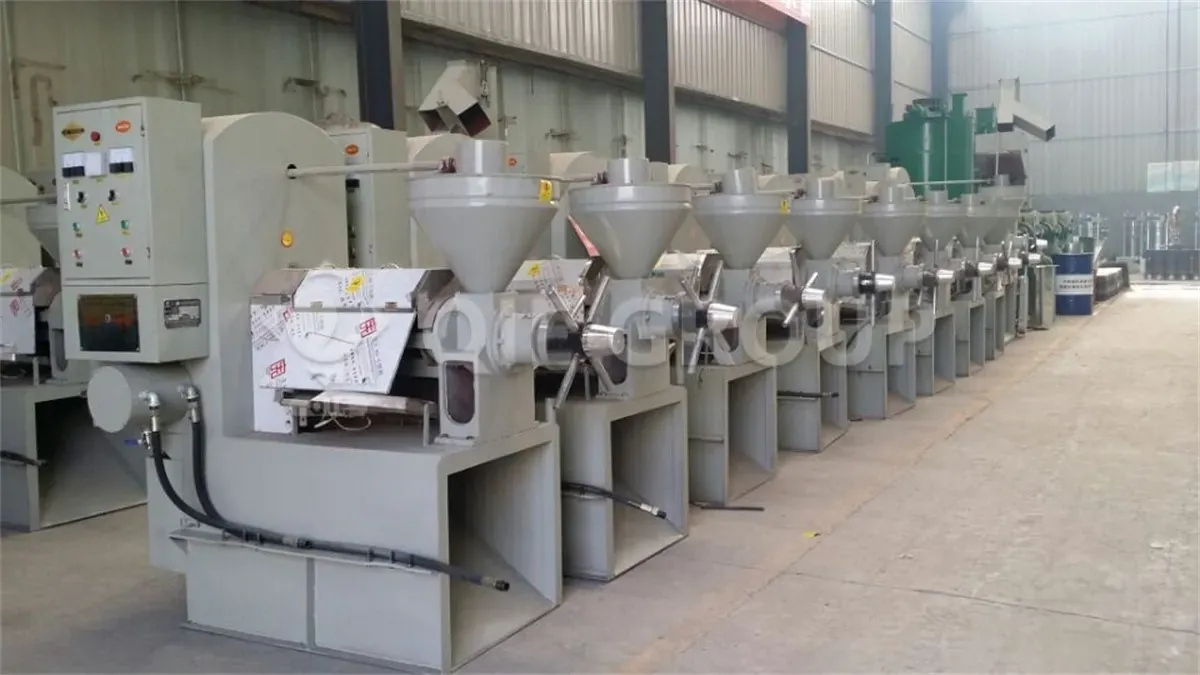
Rice bran oil is gaining attention due to its excellent nutritional profile and stable market demand, gradually transitioning from a regional product to large-scale industrial production. Compared with conventional oilseeds, rice bran has high free fatty acid (FFA), strong enzymatic activity, oxidation-prone nature, and fine particle size, which pose higher technical challenges for oil extraction process and equipment selection.
In mature industrial production, pre-pressing as a key link between stabilization treatment and solvent extraction determines the following:
Overall line utilization (OEE)
Extraction system scale and solvent consumption
Initial crude oil quality and subsequent refining load
Long-term operational stability and life-cycle cost (LCC)
Based on QIE GROUP's EPC project experience, this guide systematically analyzes the core engineering points of rice bran oil pre-pressing in terms of engineering objectives, raw material characteristics, process flow, equipment design, and system integration.
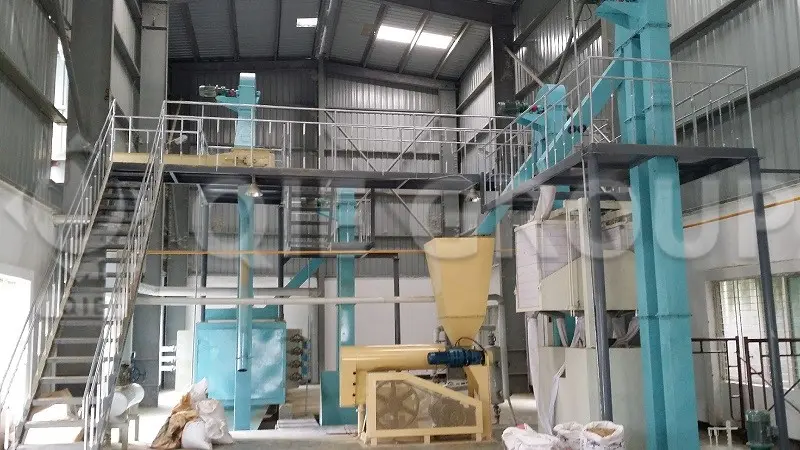
Reduce Solvent Extraction Load: Pre-pressing can extract approximately 60–75% of the oil from rice bran before entering the extractor, reducing material and oil load. Benefits include:
Smaller extractor size
Lower solvent circulation and steam consumption
Reduced load on solvent recovery and exhaust systems
Improve Solvent Penetration: Rice bran is fine and low-density, prone to bridging and dead zones during direct extraction. Pre-pressed porous cake significantly enhances extraction efficiency, with residual oil controlled ≤0.5%.
Control Crude Oil Quality: Pre-pressed crude oil has relatively lower FFA, with controlled heating time to minimize oxidation and provide stable raw material for refining.
Match Large-Scale Continuous Production: For ≥100 TPD continuous lines, pre-pressing plus extraction provides energy and solvent efficiency, and operational stability.
Pre-pressing is suitable for medium to large rice bran oil projects with stable raw material and high yield targets. Small-scale or batch plants may consider direct extraction, but residual oil and process complexity increase.
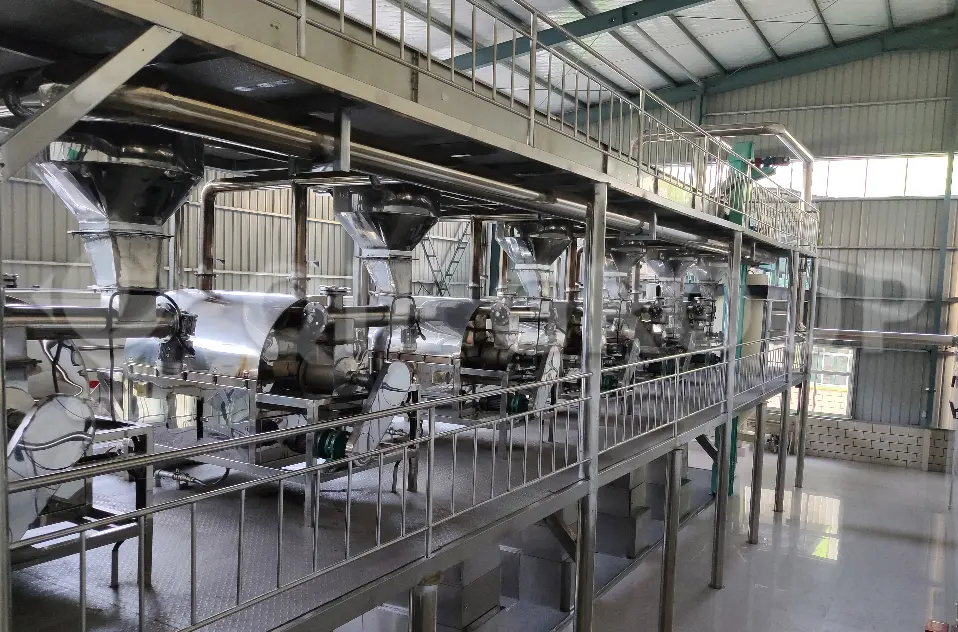
Process Response: Transfer time from stabilization to pre-pressing is controlled within 30 minutes; layout is compact with minimal transport distance.
Equipment Response: Use corrosion-resistant stainless steel (316L), polished surfaces to minimize oxidation, precise temperature control ≤110°C in conditioning.
Process Response: Conditioning improves plasticity and compressibility.
Equipment Response: Forced feeding prevents bridging, optimized press barrel structure to reduce clogging, efficient oil-cake separation.
Stabilization is critical to inhibit lipase activity and limit FFA rise.
Engineering Value:
Stabilization equipment must match capacity and be positioned near pre-press to minimize exposure time.
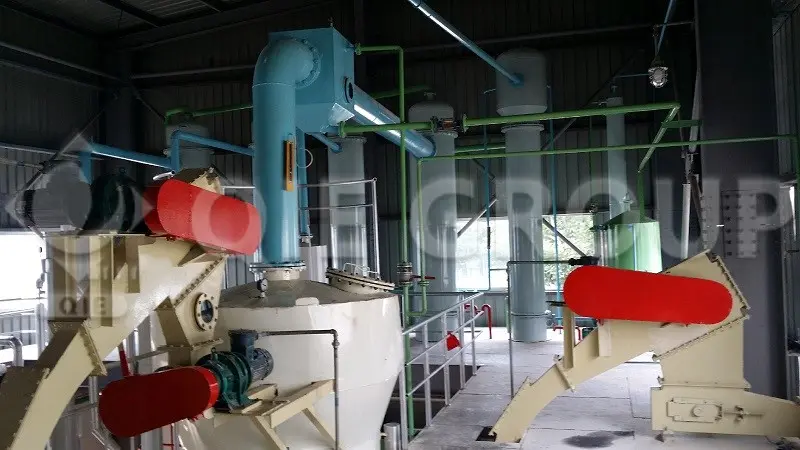
Engineering Insight: Oil yield and cake structure must be balanced; excessively low residual oil is not recommended.
| Issue | Root Cause | Preventive Design |
|---|---|---|
| Feeding blockage | Bridging in feeder, inlet or press | Forced feeding, tapered inlet, anti-clog blade, emergency discharge, improve flow via stabilization & conditioning |
| Oil yield fluctuation | Low or unstable yield | Online moisture & temperature monitoring, adjustable press speed/feed/cake thickness, wear-resistant parts, optimize compression ratio |
| High sediment in crude oil | Turbid oil, higher refining load | Optimize press basket gaps, efficient filtration (vibrating screen, plate-frame, decanter), settling tank |
| Equipment wear | Short life of screw/bar | High-grade wear-resistant materials, easy replacement, spare parts plan |
| Fragile cakes | Poor extraction, fine powder | Optimize conditioning moisture/temp, press compression & cake thickness, ensure material uniformity |
If you are evaluating whether rice bran pre-pressing is justified for your supply, a structured front-end study—testing stabilization quality, defining cake porosity targets, and simulating extractor hydraulics—will convert uncertainty into numbers you can run in your model.
Ready to benchmark your plant against the ranges above? Discuss your rice bran pre-pressing design with the QIE engineering team
 252
|
252
|
 food-grade sunflower seed oil press machine
sunflower oil press
oil press selection
screw hot press
hydraulic cold press
441
|
Construction of large-scale pressing plants
Edible oil pressing equipment
Pressing production line installation
Edible oil processing equipment
Screw oil press installation
Cooking oil equipment manufacturers
278
|
sunflower seed oil press machine
screw oil press
edible oil plant equipment
high-efficiency oil press
sunflower oil production line
147
|
Soybean crushing
Residual oil rate optimization
Large oil press
Oil refinery energy-saving upgrade
Screw oil press
130
|
soybean oil pressing
Pre-pressing and extraction
Project Engineering Assessment
Hardware configuration
QIE Group Turnkey Project Factory
food-grade sunflower seed oil press machine
sunflower oil press
oil press selection
screw hot press
hydraulic cold press
441
|
Construction of large-scale pressing plants
Edible oil pressing equipment
Pressing production line installation
Edible oil processing equipment
Screw oil press installation
Cooking oil equipment manufacturers
278
|
sunflower seed oil press machine
screw oil press
edible oil plant equipment
high-efficiency oil press
sunflower oil production line
147
|
Soybean crushing
Residual oil rate optimization
Large oil press
Oil refinery energy-saving upgrade
Screw oil press
130
|
soybean oil pressing
Pre-pressing and extraction
Project Engineering Assessment
Hardware configuration
QIE Group Turnkey Project Factory