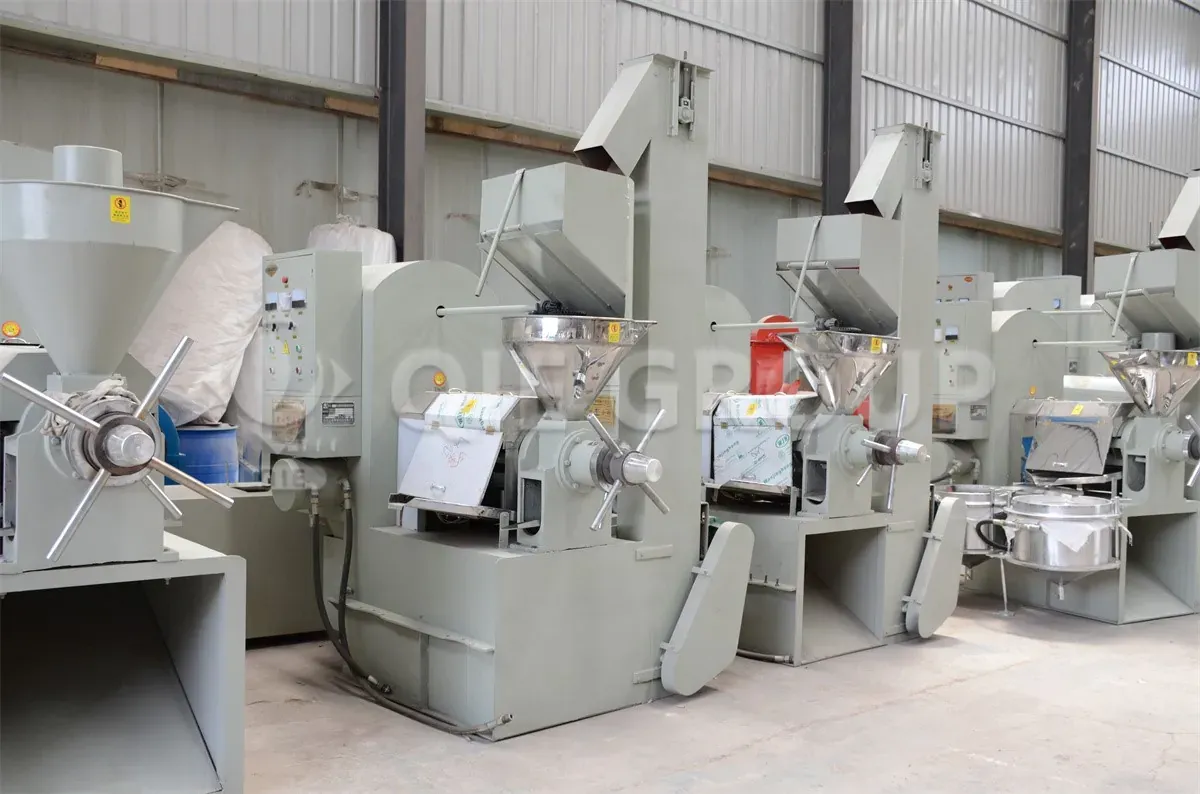
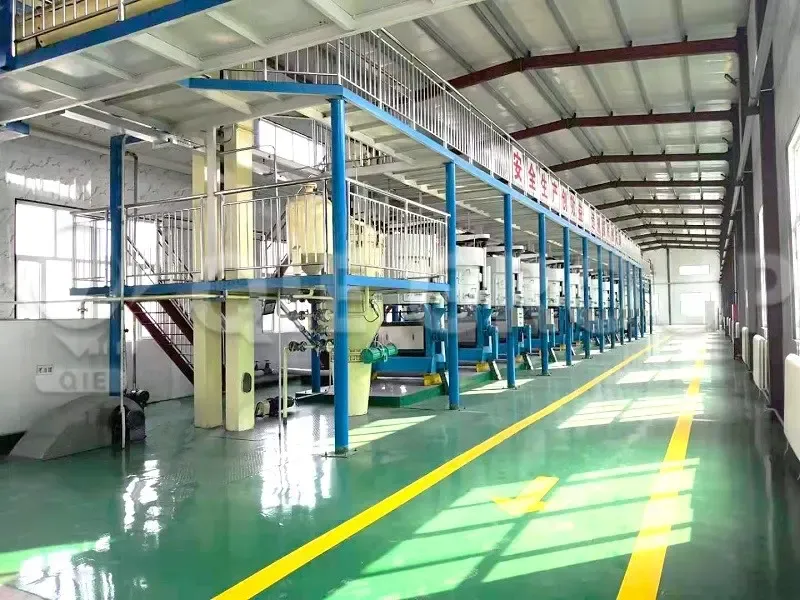
In the premium edible oil market, cold-pressed sesame oil has become the preferred choice for high-value-added oil processing projects due to its natural light-golden color, unique fresh sesame aroma, and rich content of heat-sensitive bioactive components such as lignans (sesamin, sesamolin). However, many oil processing investors face core dilemmas when establishing a plant: How can the temperature be strictly controlled below 60°C in industrial mass production? How can the oil yield loss caused by cold pressing be effectively balanced?
From the perspective of an oil processing engineering expert, this article provides a standardized, full-line technical solution and equipment selection logic for a sesame cold pressing workshop.
In industrial B2B production, the essence of cold pressing is not "generating zero heat," but rather "controlling mechanical friction heat through precise process design." Below are the fundamental differences in engineering indicators between cold pressing and traditional hot pressing processes:
| Technical Indicator | Industrial-Grade Cold Pressing | Traditional Fragrant Hot Pressing |
|---|---|---|
| Core Process Objective | Maximum retention of natural active ingredients (Vitamin E, sesamin) and fresh aroma. | Maximizing single-press oil yield, pursuing a rich, roasted/toasted aroma. |
| Material Pressing Temp. | 30°C - 40°C (low-temperature conditioning, no roasting). | 150°C - 200°C (high-temperature steaming & roasting). |
| Press Chamber Core Temp. | ≤ 60°C | 100°C - 120°C |
| Crude Oil Appearance & Flavor | Clear, light yellow; natural fresh sesame aroma with no charred bitterness. | Reddish-brown; rich, intense roasted aroma. |
| Cake Residual Oil Rate (KPI) | 6.5% - 8.5% (depending on equipment and pressing stages). | 5.0% - 6.0% |
| International Market Premium | Extremely high (typically 1.5 - 2.5 times that of regular hot-pressed oil). | Moderate (mass consumer and catering markets). |
Expert Advice: Cold pressing is not merely a synonym for "higher quality," but rather a dedicated choice for "brand premium and specific niche markets." If your goal is low-cost, high-volume, general catering oil, hot pressing remains more economically viable. If your target is high-end supermarkets, maternal and child gift markets, exports, or cosmetic base oils, a standard cold pressing system is mandatory.
Sesame seeds have small particle sizes and contain various impurities (sand, stones of similar size, iron particles). If cleaning is incomplete, stones and sand will severely abrade the screws of the cold press, and trace metal ions in the mud/sand will accelerate oil oxidation.
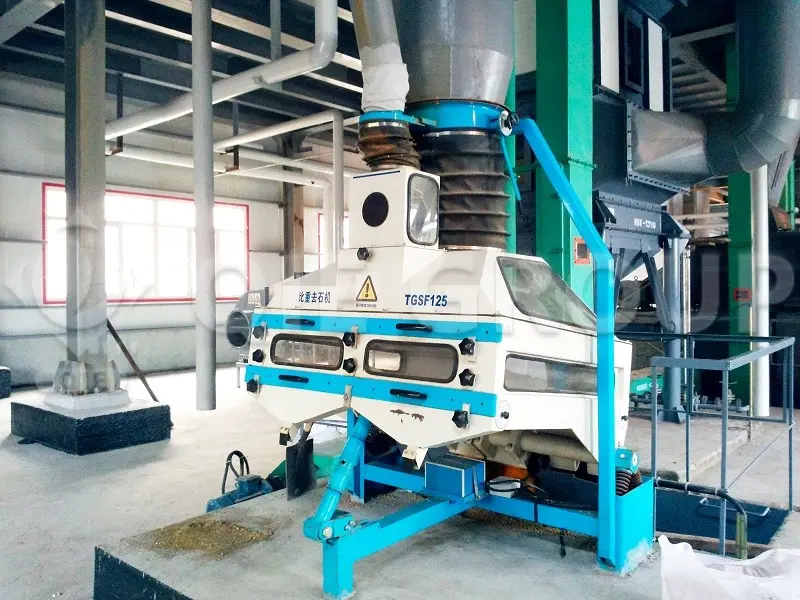
Cold pressing cannot rely on high temperatures to destroy cell walls; therefore, the physical state of the material is strictly regulated.
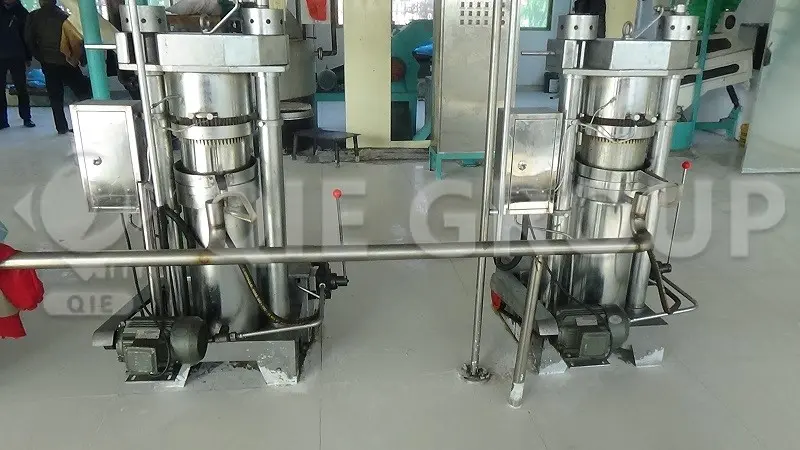
This is the critical stage that determines the success or failure of the production line. In equipment selection, the engineering division of labor between screw cold presses and hydraulic oil presses must be clearly defined:
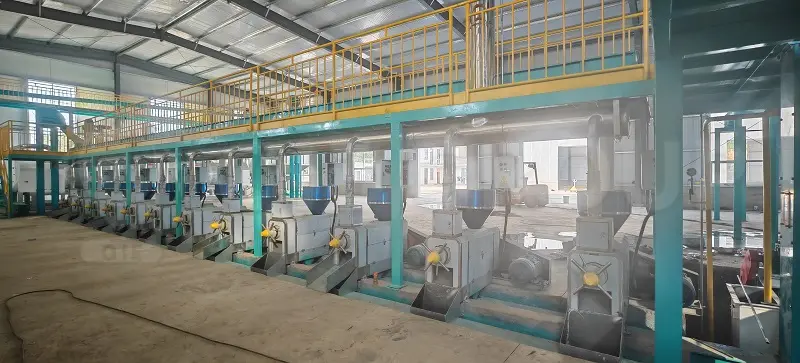
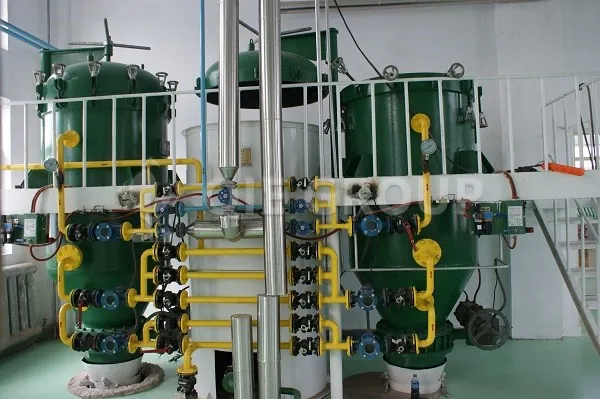
When conducting Engineering, Procurement, and Construction (EPC) plant planning, the following four engineering details directly determine whether the factory can pass international food safety audits (such as HACCP, IFS) and maintain long-term stable operations:
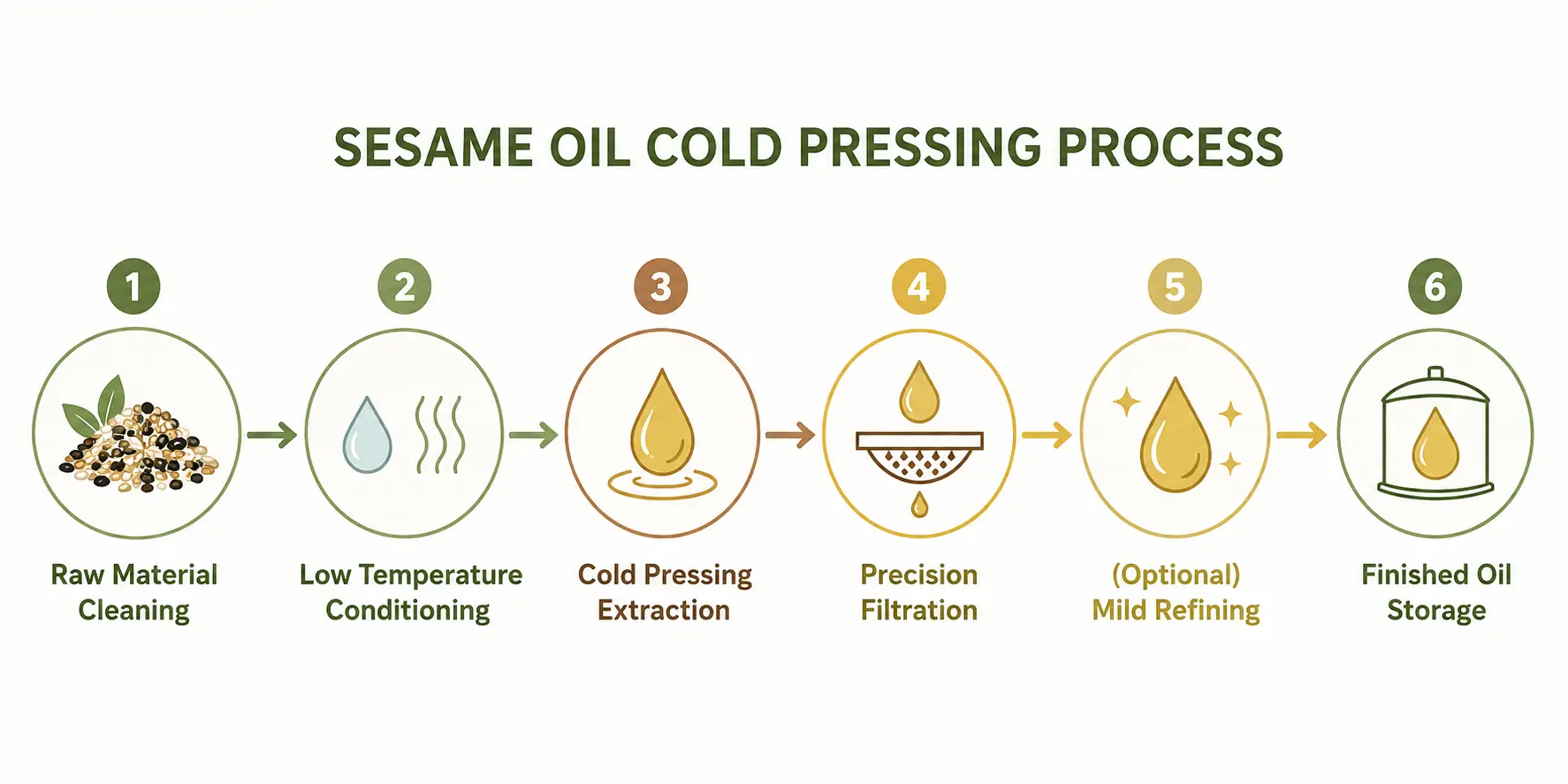
Each process step in the workshop should follow a vertical or straight-line shortest-distance design (Cleaning ➔ Conditioning ➔ Cold Pressing ➔ Filtration ➔ Light Refining ➔ Finished Product Storage), keeping the total conveyance distance under 15 meters. Material must never be repeatedly cross-conveyed within the workshop to prevent temperature rise from friction and secondary oxidation.
The entire workshop must implement constant temperature management (22±2°C). Because cold presses are highly sensitive to ambient temperatures, it is recommended to equip the core pressing zone with localized industrial air conditioning or powerful cold air curtains to prevent poor heat dissipation around the press chamber caused by excessive summer room temperatures.
All pipes, valves, pumps, and vessels in contact with the oil and raw materials must uniformly use 304 or 316L sanitary-grade stainless steel. Internal pipe welds must be polished to a mirror finish standard of Ra ≤ 0.8 μm, strictly eliminating dead corners to prevent acid value inflation catalyzed by iron ions.
The minor waste heat from the conditioning system can be recovered via plate heat exchangers to provide heat tracing and insulation for finished oil storage tanks during winter. Hydraulic or screw drive systems should be equipped with high-performance accumulators and variable frequency drives (VFDs), reducing the total line's peak power consumption by approximately 20% - 25%.
❌ Misconception 1: Believing in Marketed "Standard Screw Presses with Added Heat Sinks"
Some manufacturers take standard high-speed (30-50 rpm) hot presses, add a few external air-cooling fins or water pipes, and label them as "cold presses." Because the internal screw compression ratio has not been re-engineered, the actual core shear temperature inside the chamber still exceeds 70°C - 80°C. This instantly alters the oil's aroma and degrades its properties, making it a false industrial cold press.
❌ Misconception 2: Failing to Actively Cool the Crude Oil Before Filtration
Some plants send freshly pressed crude oil directly into the filter. The temperature rise carried by the crude oil at this stage causes a loss of heat-sensitive aromatic substances exceeding 40%. Furthermore, trace waxes within the oil remain dissolved at higher temperatures and cannot be filtered out, making the finished oil highly prone to precipitation and cloudiness during subsequent storage.
❌ Misconception 3: Relying on "Visual and Tactile" Experience to Adjust Conditioning Moisture
Sesame seeds have a very high oil content and are extremely sensitive to input moisture. Lacking precise online moisture detectors and relying solely on operator experience will cause the oil yield of the same batch to fluctuate by as much as 3% - 5%, and can even lead to an acid value variance exceeding 2.0 mg KOH/g.
When planning a sesame cold pressing project, balancing CAPEX (Capital Expenditure) and OPEX (Operating Expenses) is the cornerstone of commercial success.
Q: What is the actual oil yield typically achieved in sesame cold pressing?
A: The oil content of sesame seeds generally ranges from 48% to 55%. Utilizing QIE GROUP’s low-speed multi-stage screw cold pressing technology, the oil yield typically ranges between 38% and 43% (corresponding to a dry cake residual oil rate of 6.5% - 8%). The actual oil yield depends on the sesame variety, plumpness, and input moisture control.
Q: How can the natural aroma of cold-pressed sesame oil be further enhanced without increasing the pressing temperature?
A: This is primarily achieved via two process points: First, select premium quality, non-moldy, high-oil-content sesame harvested in the current year; the quality of the raw material directly dictates the upper ceiling of the cold-pressed flavor. Second, optimize the front-end physical conditioning process, allowing the aroma precursors inside the sesame seeds to release gently at around 35°C—never attempt to force extraction by excessively increasing pressing pressure.
Q: What is the approximate equipment budget required to build a 10 TPD automated sesame cold pressing line?
A: The investment cost of an industrial full sesame oil production line depends on the level of automation and core material requirements. Taking a standard 10 TPD line as an example, a complete set of equipment matching international food safety standards (including cleaning, low-temperature conditioning, dedicated cold presses, shell-and-tube cooling, vertical leaf filtration, and automated electrical control systems) typically ranges from USD 100,000 to USD 300,000. Specific budgets require customized estimations based on engineering layout blueprints.
As a leading global provider of edible oil processing equipment and full-plant EPC turnkey projects, QIE GROUP understands that an outstanding oil project is not a simple assembly of standalone pressing machines. Instead, it requires the precise matching of processes, parameter stability, and energy optimization across the entire production line over long-term operations.
Whether you are preparing a 10 TPD or a 50 TPD+ medium-to-large sesame cold pressing plant, we can provide you with:
 353
|
353
|
 Oil pressing equipment
Oil extraction efficiency
Edible Oil Processing
Return on investment of oil mill
Oil yield
173
|
Large screw oil press
Energy saving in peanut oil plants
Processing of high oil content raw materials
Low residual oil technology
Application of oil pressing equipment
417
|
Palm Kernel Oil Production Line
Oil Processing Equipment
Palm Kernel Oil Press
Palm Kernel Oil Refining
Palm Kernel Solvent Extraction
226
|
soybean oil pressing
oil yield optimization
edible oil processing
soybean oil production line
crude oil quality
429
|
Palm Oil Press
Single screw oil press
Double screw oil press
Oil refinery energy-saving equipment
Oil pressing equipment selection
Palm oil yield
Oil pressing equipment
Oil extraction efficiency
Edible Oil Processing
Return on investment of oil mill
Oil yield
173
|
Large screw oil press
Energy saving in peanut oil plants
Processing of high oil content raw materials
Low residual oil technology
Application of oil pressing equipment
417
|
Palm Kernel Oil Production Line
Oil Processing Equipment
Palm Kernel Oil Press
Palm Kernel Oil Refining
Palm Kernel Solvent Extraction
226
|
soybean oil pressing
oil yield optimization
edible oil processing
soybean oil production line
crude oil quality
429
|
Palm Oil Press
Single screw oil press
Double screw oil press
Oil refinery energy-saving equipment
Oil pressing equipment selection
Palm oil yield