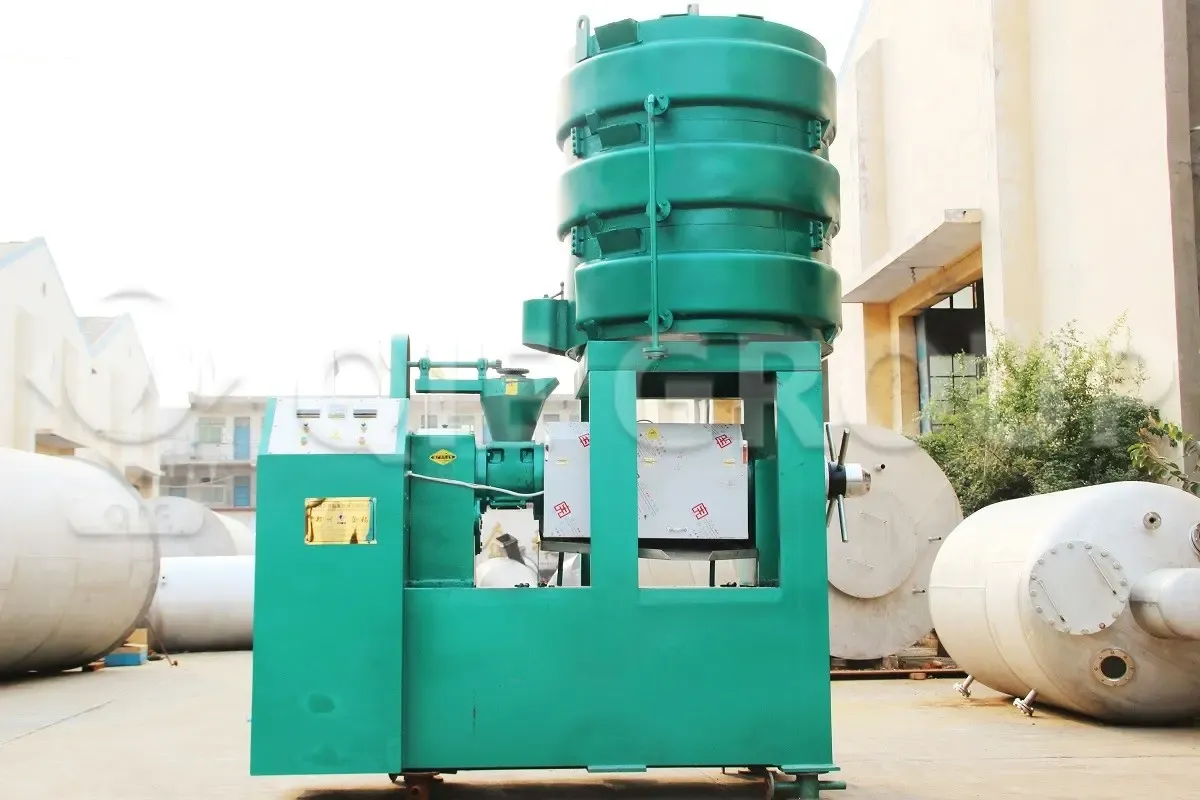
In the soybean crushing process, the "residual oil content" almost entirely determines the profitability of an oil mill. Traditional screw presses, commonly used in the industry, typically maintain a residual oil content of 2% to 3%; however, with improved processing technology and optimized equipment, the residual oil content can be reduced to approximately 1.5% to 1.6%. For soybean processing plants with a daily output of 100 to 300 tons, every 0.1 percentage point reduction translates into considerable annual cost savings.
Based on its engineering experience in soybean pressing, QIE Group analyzed the key technical factors leading to high residual oil content and demonstrated the core method of achieving low residual oil content in our large screw oil press through "structural optimization + process matching".

Many oil mills face the following problems on-site: unstable soybean crushing particle size, large fluctuations in conditioning temperature, and inaccurate moisture control.
Typical impacts include:
Too coarse a particle size results in incomplete cell disruption.
Low conditioning temperature (below 60℃) : Poor oil fluidity.
Too little or too much moisture : both are detrimental to oil release.
Traditional equipment typically uses a "standard pitch + fixed compression ratio," which cannot adapt to the characteristics of different soybean raw materials. Problems include:
Insufficient pressure in certain sections creates "stagnant oil zones".
Uneven screw compression distribution results in insufficient material compression.
Inappropriate screen bar spacing leads to low localized oil discharge efficiency.
The result is that the oil cannot be completely released, resulting in a high residual oil rate.
The fluidity of soybean oil is highly dependent on temperature. Unstable temperature control commonly manifests in two ways:
1) Low temperature → High oil viscosity, making oil removal difficult.
2) Excessive temperature → affects oil quality and may even lead to scorching.
In addition, if the equipment pressure cannot be increased step by step, it will also directly affect the oil discharge efficiency.
To address the aforementioned challenges, we have comprehensively optimized the screw oil press through engineering details. The core technologies include:
The design employs a combination of tapered pitch and functional segments.
Material pushing section (loose)
Compression section (medium compression)
High-pressure section (strong extrusion)
Forming the cake into sections.
This structure allows materials to receive appropriate stress in different sections, reducing dead zones and oil stagnation.
QIE Group's pressing chamber employs a progressively increasing pressure design, allowing the oil to be squeezed out in stages across different pressure ranges. This mechanism, similar to "segmented pressing," significantly improves oil extraction efficiency.
Typical manifestations:
Lower residual oil content
Thicker cakes are more stable
Oil yield fluctuations are small
Temperature is monitored in real time by sensors, and the heating amount can be automatically adjusted at different stages.
Its functions include:
Ensure the oil is in its optimal fluid state
Avoid overheating to prevent nutrient loss
Reduce the need for frequent adjustments by operators
QIE Group's large-scale oil presses adopt a modular structure:
Easier to maintain and upgrade
When used in conjunction with a continuous production line, it can achieve stable operation 24 hours a day.
The cake and oil output are more uniform, and the residual oil content is lower.
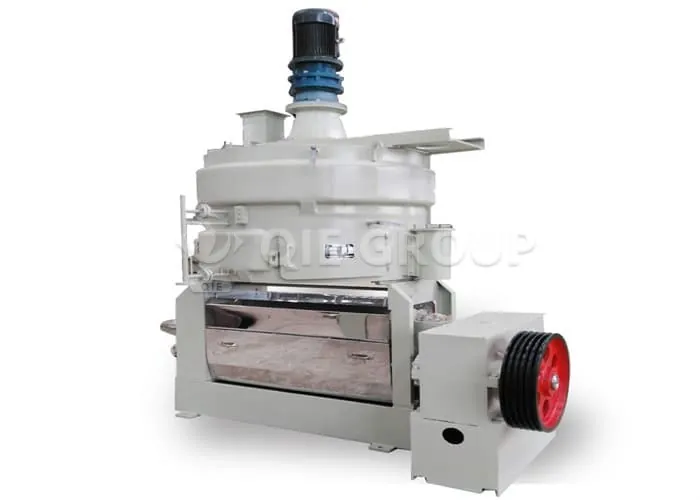
| index | Traditional equipment | QIE optimized equipment |
|---|---|---|
| residual oil content | 2.3% ±0.5% | Approximately 1.5% (under stable pretreatment conditions) |
| Oil yield stability | Frequent fluctuations, with a range of 0.4%. | Fluctuations less than 0.1%, consistently stable. |
| Unit energy consumption | 0.9–1.0 kWh/kg oil | Reduced by 10%–12% (approximately 0.85–0.88). |
| Production stability | Susceptible to temperature/raw material influence | Continuous and highly stable operation |
After adopting the QIE large-scale screw oil press, a large oil mill reduced its residual oil rate from 2.1% to 1.3%, and increased its oil yield by 0.8 percentage points. Taking a daily soybean production of 200 tons as an example, the oil mill's annual raw material cost savings are estimated to exceed one million RMB. Furthermore, the equipment's intelligent temperature control and continuous production significantly improved production efficiency, resulting in more stable overall operations.
 450
|
450
|
 Oil press life
Oil press stability
Screw oil press
Hydraulic oil press
Oil press maintenance
Edible oil processing equipment
Oil press maintenance
Oil press operation precautions
282
|
Cold Press Oil Machine
Screw oil press
Edible oil processing equipment
Hot Pressing
Cold Pressed
Industrial oil production
151
|
Sunflower Seed Oil Press Machine
High quality cooking oil
Screw oil press
Hydraulic oil press
Improved oil quality
155
|
Grape seed screw press oil press
Oilseed oil extraction process
Vegetable oil processing technology
Oilseed oil market trends
Efficient oil extraction technology
275
|
Ethiopian sesame oil machine
Cold pressed sesame oil equipment
High oil yield press
African sesame oil processing
Automated oil extraction
Oil press life
Oil press stability
Screw oil press
Hydraulic oil press
Oil press maintenance
Edible oil processing equipment
Oil press maintenance
Oil press operation precautions
282
|
Cold Press Oil Machine
Screw oil press
Edible oil processing equipment
Hot Pressing
Cold Pressed
Industrial oil production
151
|
Sunflower Seed Oil Press Machine
High quality cooking oil
Screw oil press
Hydraulic oil press
Improved oil quality
155
|
Grape seed screw press oil press
Oilseed oil extraction process
Vegetable oil processing technology
Oilseed oil market trends
Efficient oil extraction technology
275
|
Ethiopian sesame oil machine
Cold pressed sesame oil equipment
High oil yield press
African sesame oil processing
Automated oil extraction