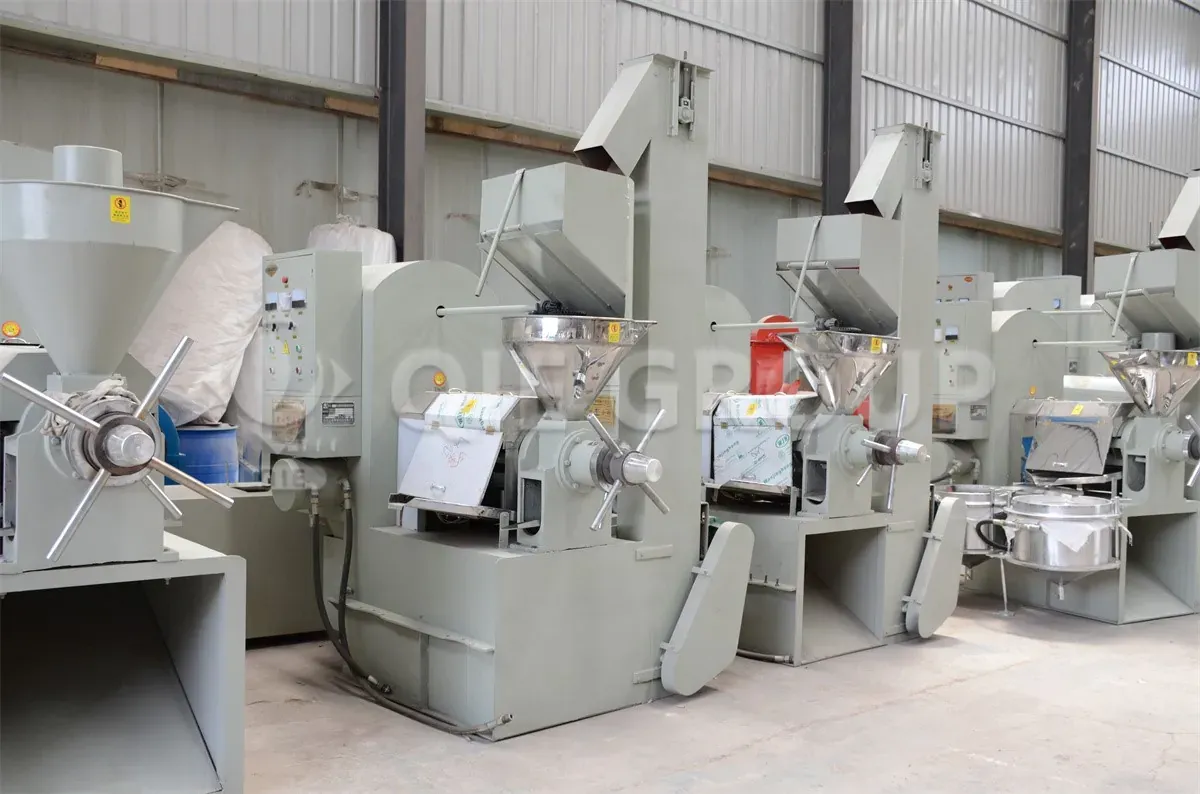
When building or expanding a camellia seed processing plant, selecting the right Tea Seed Oil Extraction Machine Supplier is often far more critical than evaluating individual equipment specifications alone. Tea seed oil (Camellia oil), highly regarded for its high oleic acid content and rich nutritional value, holds a premium position in the global specialty edible oil market. However, wild and cultivated camellia seeds vary significantly in physical characteristics, moisture content, and oil content, placing demanding requirements on custom process design from cleaning and dehulling to pressing and refining.
For global buyers, purchasing decisions must not be restricted to single-machine price comparisons. Instead, they should focus on total lifecycle Return on Investment (ROI), engineering delivery capability, and ongoing technical support.
A supplier’s technical integration capability and field execution experience directly dictate a plant's oil yield, finished oil quality, and long-term operating costs.
In the edible oil processing industry, purchasing standalone machinery and constructing a processing plant are two fundamentally different concepts. Focusing solely on unit prices while ignoring a supplier’s holistic engineering strength often leads to a cascade of hidden operational costs down the line.
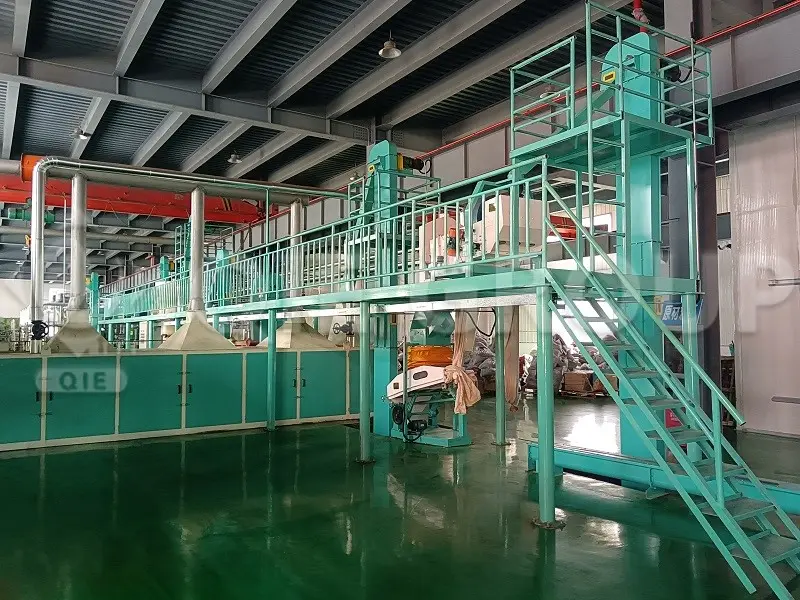
Camellia seeds possess a hard outer hull with negligible oil content (typically <0.5%). If a supplier lacks engineering design expertise, leading to incomplete dehulling or poor kernel-hull separation, excess hull content entering the press will severely abrade the press worms and absorb significant oil, drastically reducing yield. Experienced suppliers precisely calculate dehulling rates and kernel-in-hull ratios to maximize pressing efficiency.
Edible oil processing is a highly energy-sensitive industry. From steam usage during conditioning to connected power loads in continuous pressing, and vacuum or heat recovery systems during refining, the degree of process optimization determines the marginal production cost per ton of oil. Inexperienced vendors often deploy generic designs, leaving plants to shoulder inflated electricity and steam bills for decades.
The greatest pitfall in overseas procurement is a supplier whose responsibility ends once the machinery lands at the port. Equipment installation precision directly affects drive system lifespan. A qualified tea seed oil extraction plant supplier must be capable of dispatching experienced field engineers to handle the entire lifecycle—from foundation embedding, pipe welding, and electrical debugging to trial runs and worker training.
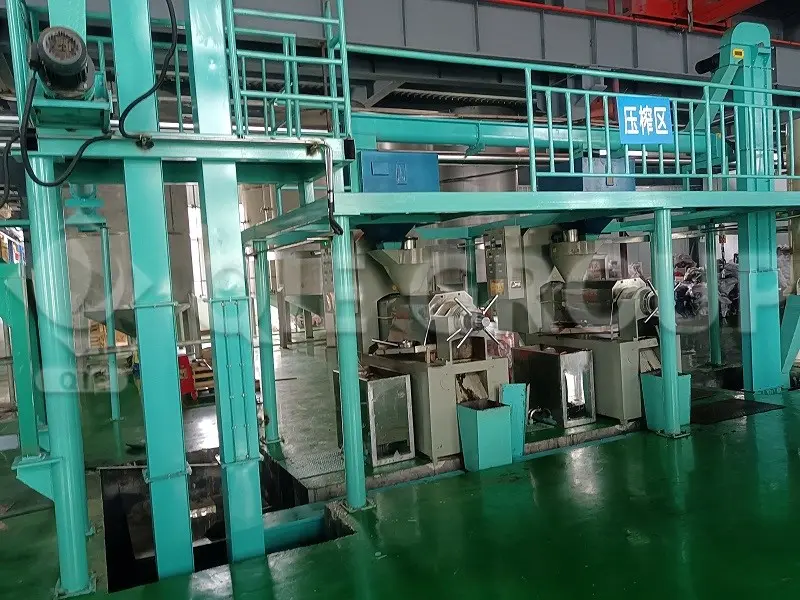
A standard Tea Seed Oil Production Line typically comprises four core sections: preprocessing and dehulling, mechanical pressing, filtration, and refining. Process parameters are dynamically adjusted based on seed quality and final market positioning.
Filtration Only: Suitable exclusively for premium cold-pressed seeds, local virgin flavor oil markets, and raw materials with exceptionally low acid/peroxide values.
Refining Required: Extracted crude oil, hot-pressed crude oil, or high-acid-value raw materials must undergo semi-refining or full refining to satisfy commercial edible oil standards.
Equipment configurations and automation levels differ significantly depending on the target daily processing capacity (TPD).
| Capacity Scale | 5–20 TPD (Small/Pilot) | 20–50 TPD (Medium Commercial) | 100+ TPD (Large Facility) |
|---|---|---|---|
| Recommended Process | Preprocessing + Pressing + Fine Filtration + Batch Refining | Dehulling + Pressing + Semi-Continuous/Continuous Refining | Dehulling + Pre-pressing/Solvent Extraction + Continuous Refining |
| Core Machinery | Combined Cleaning Dehullers, Single Screw Presses, Batch Refiners | Industrial Dehullers, Cookers, Pre-press Units, Bleaching/Deodorizing Towers | Automated Preprocessing, Extractor Systems, Continuous Refining Towers, PLC |
| Automation Level | Semi-automated; manual loading & monitoring support | Medium automation; centralized control cabinets | High automation; fully integrated SCADA / PLC systems |
| Target Buyer | Private Farms, Small Entrepreneurs, Boutique Producers | Regional Oil Processors, Agricultural Cooperatives | Large Agribusiness Groups, State-backed Agricultural Projects |
| Investment Profile | Compact footprint, low startup capital, highly flexible | High cost-to-performance, steady continuity, balanced energy | Substantial CAPEX, maximum yield, minimal marginal cost at scale |
*Note: Specific machine configurations, energy consumption rates, and oil yields vary based on seed variety (e.g., large-grain vs. small-grain), moisture content, oil content, and local utility availability (electricity/steam).
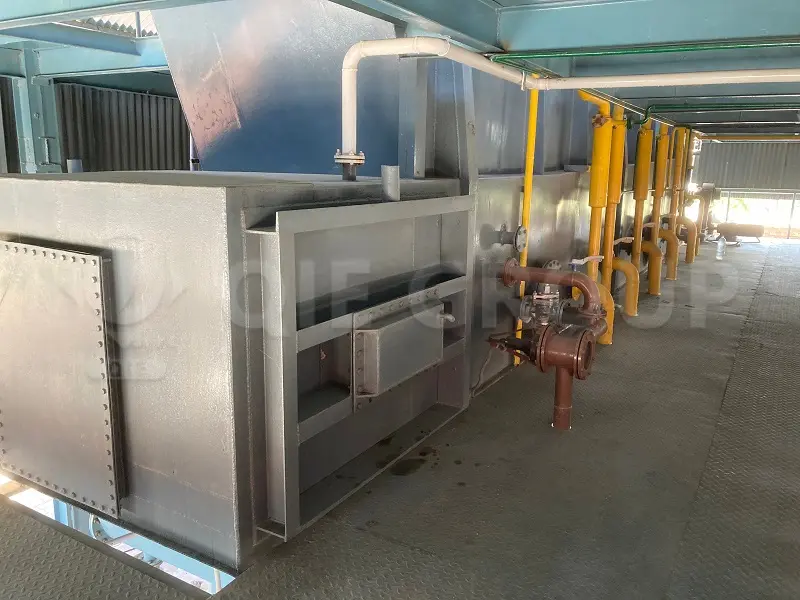
Evaluating a Tea Seed Oil Extraction Machine Supplier requires scrutinizing their in-house manufacturing, custom engineering design, overseas execution record, and full lifecycle support systems.
Verify direct ownership of production facilities over trading intermediaries to ensure strict welding, machining, and parts compatibility.
Ensure capabilities to analyze seed specs and local utility parameters to deliver custom PFDs and 3D Layouts.
Request proof of international project execution, site welding, electrical integration, and local staff training.
Confirm rapid emergency response commitments and wear-part inventory management during seasonal harvests.
With over 40 years of experience in edible oil machinery manufacturing and engineering, QIE Group provides global clients with end-to-end Turnkey Tea Seed Oil Projects—from process design and equipment manufacturing to field installation and commissioning.
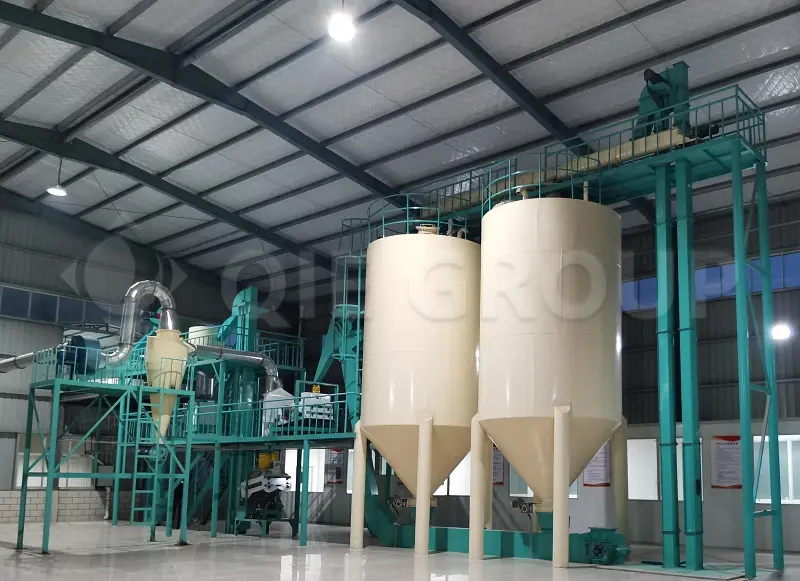
Choosing a turnkey EPC model delegates complex engineering coordination to an experienced contractor, ensuring projects open on schedule and within technical parameters.
Answer: Total investment includes machinery procurement, civil construction, utilities (boiler, power distribution, cooling towers), shipping, installation, and working capital. Equipment costs vary widely between a 5–10 TPD small-scale pressing line and a 50+ TPD fully automated commercial facility. It is best to define your daily throughput and target oil grade first so engineering teams can supply a line-item quotation and budget outline.
Answer: This depends on raw material quality and target markets. If fresh, high-grade seeds are cold-pressed and feature minimal acid values, clarification via centrifugation and fine filtration can yield a premium virgin oil suitable for direct sale. However, if seeds are stored longer (raising acid levels) or if hot pressing or solvent extraction is used, a refining line (degumming, deacidification, bleaching, deodorization) is mandatory to satisfy commercial food safety standards.
Answer: For capacities under 30 TPD, mechanical pressing is generally recommended due to lower initial capital expenditure and simpler operation. For commercial plants processing over 50 TPD, a combination of "pre-pressing + cake solvent extraction" is preferred, as it reduces residual oil in the meal to under 1%, significantly improving long-term economic returns.
Answer: Unusually low equipment prices often mask compromises such as inferior structural steels, substituted stainless steel grades, unbranded gearboxes, thinner vessel walls, or the exclusion of installation and training services. Buyers should scrutinize material specifications, brand lists for bought-in components, total connected power, and whether field commissioning is included, evaluating total cost of ownership rather than initial purchase price alone.
Constructing or expanding a tea seed oil processing facility is a multi-year capital commitment. Selecting a tea seed oil extraction machine supplier with deep engineering heritage, in-house manufacturing, and proven global execution capability is the single most effective way to secure project startup and long-term profitability.
The engineering team at QIE Group is available to discuss your capacity requirements, provide preliminary plant layouts, and deliver customized equipment proposals.
Contact Our Engineering Team → 372
|
372
|
 screw oil press maintenance
edible oil production plant
oil mill SOP
edible oil extraction machinery wear
162
|
smart oil pressing technology
low temperature oil expeller
residual oil rate
oil mill automation
oil extraction plant cost
55
|
oil press machine performance
oil press output
oil extraction efficiency
oil pressing factors
oilseed processing
pretreatment system
433
|
Sunflower seed pressing energy consumption optimization
Energy-saving solutions for large screw oil presses
Pressing chamber configuration techniques
Effect of moisture content on oil yield
Energy-saving renovation of edible oil plants
156
|
Soybean crushing
Residual oil rate optimization
Large oil press
Oil refinery energy-saving upgrade
Screw oil press
screw oil press maintenance
edible oil production plant
oil mill SOP
edible oil extraction machinery wear
162
|
smart oil pressing technology
low temperature oil expeller
residual oil rate
oil mill automation
oil extraction plant cost
55
|
oil press machine performance
oil press output
oil extraction efficiency
oil pressing factors
oilseed processing
pretreatment system
433
|
Sunflower seed pressing energy consumption optimization
Energy-saving solutions for large screw oil presses
Pressing chamber configuration techniques
Effect of moisture content on oil yield
Energy-saving renovation of edible oil plants
156
|
Soybean crushing
Residual oil rate optimization
Large oil press
Oil refinery energy-saving upgrade
Screw oil press