For most continuous commercial soybean pressing projects, a screw oil press is generally more suitable than a hydraulic oil press because a screw press can provide continuous feeding, pressing, oil discharge, and cake discharge. However, there is no single type of oil press that is suitable for every soybean processing project. The right equipment depends on soybean processing capacity, raw material characteristics, pretreatment method, target oil recovery, automation level, investment budget, and whether the project uses mechanical pressing alone or combines mechanical pressing with solvent extraction.
For small-batch production, a hydraulic oil press can also be used. For large-scale industrial soybean processing projects where high oil recovery is the primary objective, solvent extraction may be more appropriate, or a combined mechanical pressing and solvent extraction process may be considered.
What Type of Oil Press Is Best for Soybeans?
For commercial soybean mechanical pressing, a continuous screw oil press is generally the more practical choice.
Unlike a hydraulic press, which operates batch by batch, a screw oil press continuously feeds pretreated soybeans or soybean material into the pressing chamber. The rotating screw conveys, compresses, and presses the material, allowing oil and pressed cake to be separated continuously.
However, oil press selection should not focus on the press itself. A properly designed soybean processing system should consider:
✓ Soybean processing capacity
✓ Raw material condition & moisture content
✓ Pretreatment requirements
✓ Target oil recovery
✓ Soybean cake requirements
✓ Automation level
✓ Crude oil filtration requirements
✓ Whether crude oil requires further refining
✓ Available utilities and plant space
✓ Overall project investment & operations
Key conclusion: If your goal is to continuously produce soybean oil through mechanical pressing, a screw oil press is generally the first type of equipment that should be evaluated.
Why Is a Screw Oil Press Suitable for Soybean Processing?
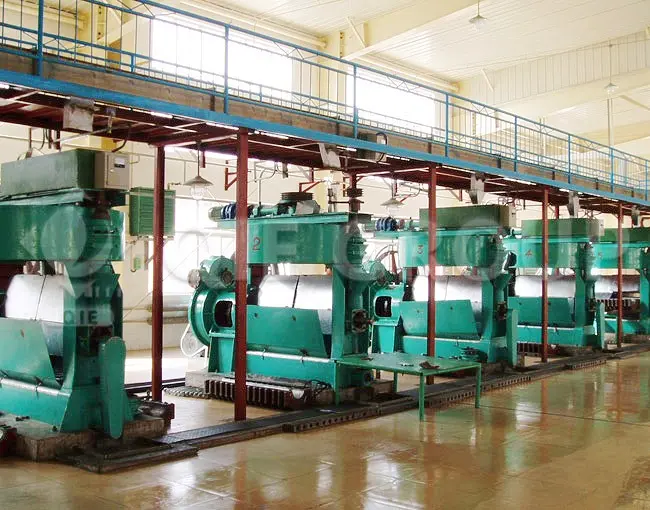
Screw oil presses are widely used for continuous mechanical oil extraction because they can be integrated with upstream pretreatment and downstream oil processing systems.
1. Continuous Production
A screw oil press operates with continuous feeding, pressing, oil discharge, and cake discharge. When a project requires stable and continuous production, it is generally more suitable for commercial processing than batch-operated equipment.
2. Stable Feeding
A properly designed feeding system can continuously deliver pretreated soybean material to the oil press at a stable rate. Fluctuations in feed rate can affect pressing performance, equipment load, and overall operating stability.
3. Mechanical Oil Expression
Inside the chamber, the screw continuously conveys and compresses the material, releasing oil while forming pressed cake. Actual oil recovery depends on raw materials, pretreatment, configuration, and operating parameters.
4. Continuous Cake Discharge
Pressed soybean cake can be continuously discharged and then conveyed, stored, used as an animal feed ingredient, or further processed for additional oil recovery, depending on project requirements.
5. Automation and System Integration
A screw oil pressing system can be relatively easily integrated into a complete soybean oil production line with:
• Automatic feeding systems
• Pretreatment equipment
• Temperature monitoring
• Motor and load monitoring
• Crude oil filtration equipment
• Cake conveying systems
• PLC control systems
Can a Hydraulic Oil Press Process Soybeans?
Yes. A hydraulic oil press can process soybeans, but it is generally more suitable for batch production and smaller-scale projects where continuous processing capacity is not the primary requirement.
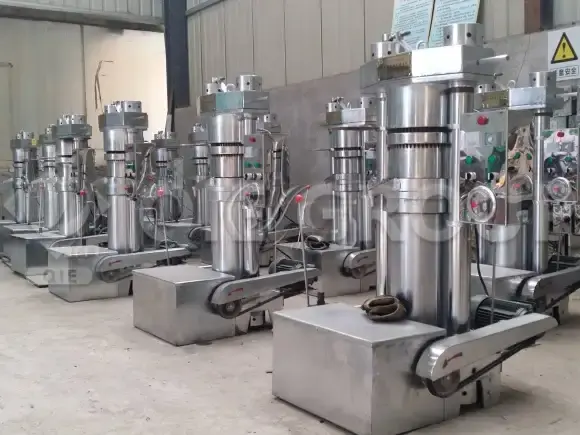
A hydraulic oil press applies pressure to the material inside the pressing chamber through a hydraulic system. After one pressing cycle is completed, the pressed cake must be removed before the next batch is loaded and pressed.
Advantages of a Hydraulic Oil Press
- Relatively simple working principle
- Suitable for batch production
- Can be used for small-scale or specialty oil production
- Provides flexibility when continuous high-capacity production is not required
Limitations for Large-Scale Production
- Operates in batches rather than continuously
- Lower continuous processing capacity within the same production system
- Requires more manual or semi-automatic material handling
- More difficult to integrate into a fully continuous production line
Therefore, a hydraulic oil press is not unsuitable for soybeans. However, when a project requires continuous, high-capacity commercial soybean processing, it is generally less suitable than a screw oil press.
Does Soybean Need Pretreatment Before Pressing?
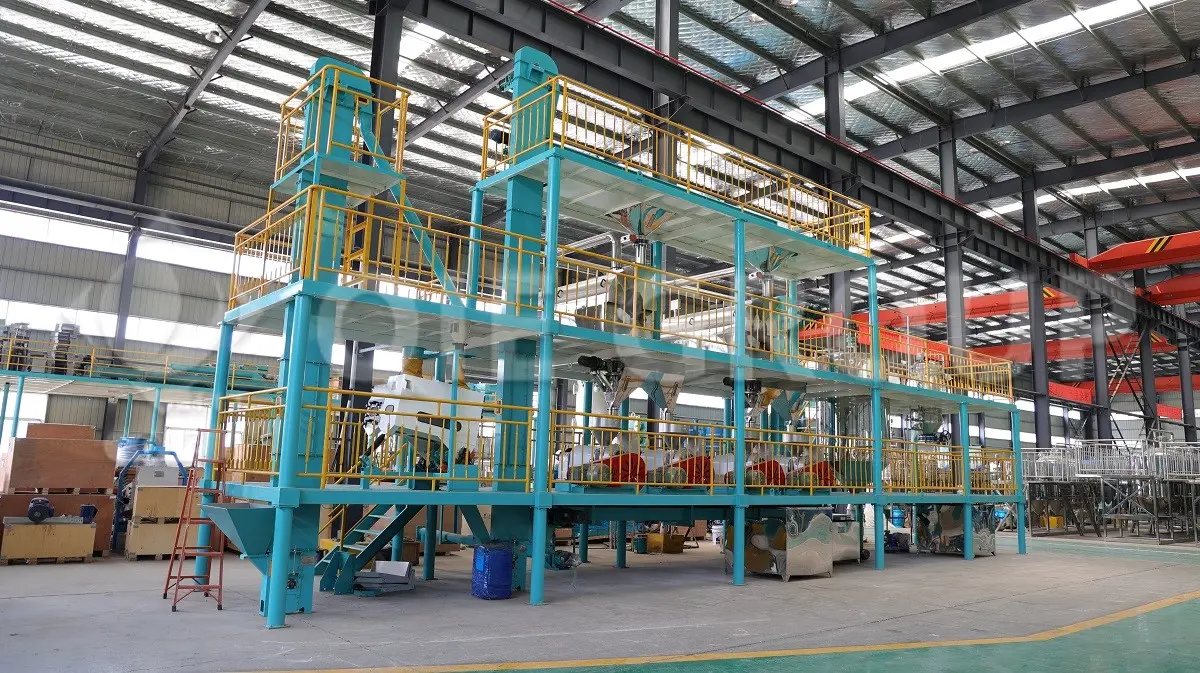
Yes. Proper pretreatment is generally an important step for achieving stable and efficient soybean pressing. The exact pretreatment configuration depends on the condition of the soybean raw material and the final processing route.
Typical Soybean Mechanical Pretreatment Sequence
Cleaning →
Crushing →
Conditioning / Cooking →
Flaking →
Pressing →
Crude Oil Filtration
1. Cleaning
Removes stones, metal particles, dust, and impurities to protect downstream equipment.
2. Crushing
Reduces particle size and prepares material for subsequent conditioning.
3. Conditioning or Cooking
Adjusts material temperature and moisture to improve pressing characteristics.
4. Flaking or Other Pretreatment
Increases surface area and disrupts cell structures to facilitate oil release.
What Happens if Soybean Pretreatment Is Insufficient?
• Unstable feeding
• Poor oil release
• Increased mechanical load
• Unstable cake formation
• Reduced oil recovery
• Harder downstream processing
Conclusion: Soybean oil presses should normally be selected together with the pretreatment system rather than as a standalone piece of equipment.
What Is the Soybean Oil Pressing Process?
A basic soybean mechanical pressing production line follows this process:
Soybeans → Cleaning → Pretreatment → Screw Pressing → Crude Oil Filtration → Crude Soybean Oil
The pressed cake follows a separate route and can be conveyed, stored, used as an animal feed ingredient, or further processed for additional oil recovery. If crude oil is intended for edible use, it requires further refining:
Cleaning → Pretreatment → Pressing → Filtration → Degumming/Refining → Bleaching → Deodorization → Finished Soybean Oil
Mechanical Pressing vs. Solvent Extraction for Soybeans: Which Is Better?
There is no single processing method that is suitable for every soybean project. Mechanical pressing is relatively simple for small- and medium-scale projects, whereas solvent extraction is ideal for large industrial plants targeting maximum oil recovery.
| Comparison Factor |
Mechanical Pressing |
Solvent Extraction |
| Working principle |
Releases oil from material through mechanical pressure |
Extracts oil using a solvent such as hexane |
| Process complexity |
Relatively simple |
Relatively complex |
| Residual oil in meal |
6.0%–8.0% |
≤ 0.5% |
| Oil recovery |
Generally lower than solvent extraction |
Generally higher |
| Main equipment |
Pretreatment, oil presses, filtration equipment, etc. |
Extractor, solvent recovery system, & related equipment |
| Investment |
Generally lower |
Generally higher |
| Typical application |
Small/medium-scale pressing & some large projects |
Large-scale industrial projects requiring high oil recovery |
| Explosion & Environmental |
Standard industrial machinery safety requirements |
Strict explosion protection (ATEX) & recovery systems |
When Is Mechanical Pressing Suitable?
- Small or medium processing capacity
- Preference for a relatively simple process
- Mechanical oil recovery meets project requirements
- Strong emphasis on lower initial investment & simple operation
- Pressed cake has commercial value
When Should Solvent Extraction Be Considered?
- Large processing capacity
- High requirements for oil recovery
- Specific low residual oil requirements in extracted meal
- Suitable equipment, safety systems, and utilities are available
For some large plants, pre-pressing + solvent extraction can be combined: a screw oil press is used first, followed by solvent extraction on the cake to maximize recovery.
Soybean Oil Press Selection Guide Based on Daily Processing Capacity
Small Commercial Scale
5 – 20 TPD
Pretreatment: Cracker + vertical cooking kettle
Oil extraction: Screw oil press
Filtration: Plate-and-frame pressure filter
Medium Industrial Scale
20 – 50 TPD
Pretreatment: Cleaning, magnetic separator, flaking mill, vertical multi-layer cooker
Oil extraction: Multiple screw oil press units
Clarification: Leaf filter + continuous crude oil degumming
Large Industrial Scale
> 100 TPD
Complete Industrial Line: Full pretreatment + solvent extraction + refining system (continuous degumming, deacidification, bleaching, deodorization)
How to Choose a Soybean Oil Press & Avoid Mistakes
Rule #1: Select the oil press according to the complete processing process rather than choosing equipment based only on the advertised capacity.
9 Key Factors to Evaluate:
- Soybean Processing Capacity: Tons/day and planned operating hours.
- Raw Material Characteristics: Variety, origin, moisture, oil content, storage.
- Pretreatment Requirements: Compatibility with upstream cleaning/cooking.
- Target Oil Recovery: Clarify raw oil content vs. recovery vs. residual cake oil.
- Soybean Cake Requirements: Residual oil, moisture, and temperature targets.
- Automation Level: PLC control, load monitoring, auto-feeding.
- Crude Oil Filtration & Refining: Downstream edible oil standards.
- Maintenance & Spare Parts: Wear parts availability and local support.
- Total Project Cost: Including utilities, installation, and auxiliaries.
Common Selection Mistakes:
- Looking only at price: Sacrifices durability and after-sales support.
- Trusting advertised capacity blindly: Ignores raw material & setup variables.
- Focusing only on oil yield: Evaluated without context of raw oil content.
- Ignoring pretreatment: Expecting the press to solve raw seed issues.
- Undersizing equipment: Causes severe plant bottlenecks.
- Ignoring filtration & refining: Leads to poor finished oil quality.
- Failing to test raw materials: Overlooking variety compatibility.
Complete Equipment Checklist
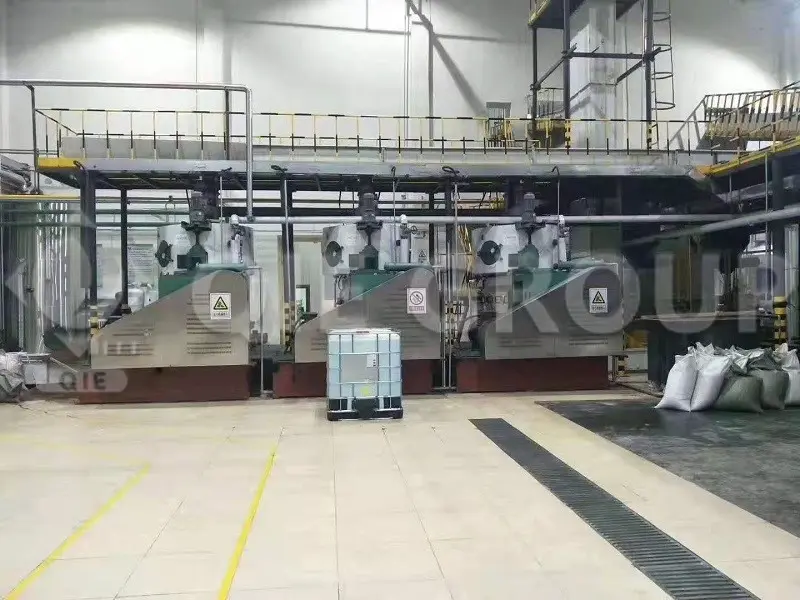
Besides the screw oil press, a complete line requires:
✔ Cleaning Equipment
✔ Cracking Equipment
✔ Conditioning / Cooking Equipment
✔ Flaking Equipment
✔ Screw Oil Press
✔ Crude Oil Filtration Equipment
✔ Cake Conveying & Storage Equipment
(Large lines add: Solvent extraction, desolventizing, oil refining, heat recovery, and automated control systems)
Prepare Before Buying
To get an accurate proposal, prepare:
• Daily processing capacity & operating hours
• Raw soybean moisture & oil content
• Finished oil & cake quality requirements
• Plant space, electricity, and utility limits
• Scope (Pressing only vs. Extraction vs. Refining)
• Estimated project budget
FAQ
Q: Can soybean pressing cake be further processed?
A: Yes. Depending on project requirements, soybean pressing cake can be used as an animal feed ingredient or further processed to recover additional residual oil or for other applications.
Q: Can QIE GROUP provide a complete soybean oil production line?
A: Yes. Depending on project requirements, QIE GROUP can provide equipment and engineering solutions covering soybean pretreatment, mechanical pressing, solvent extraction, filtration, and edible oil refining.
Q: Can Soybeans Be Processed by Cold Pressing?
A: In commercial soybean processing, cold pressing (below 60°C) is generally not economically practical. Without thermal conditioning, oil recovery drops significantly and residual cake oil remains high. It is strictly limited to low-volume niche markets.
Q: What Residual Oil Content Can Be Expected in Press Cake Under Standard Pretreatment?
A: Under optimized conditions (flake thickness ≤0.30 mm, moisture 7–8%, cooking temp 105–110°C), residual oil in press cake from a heavy-duty screw press is typically
6.0%–8.0%.
Q: Why Do Large Plants Use Direct Solvent Extraction Instead of Pre-Pressing + Extraction?
A: Soybeans have a relatively low natural oil content (18–20%). Direct solvent extraction can process properly prepared soybean flakes efficiently without requiring heavy pre-pressing equipment, controlling residual meal oil to ≤0.5%.
QIE GROUP Soybean Oil Processing Solutions
Selecting the most suitable soybean processing route depends on your raw soybean characteristics, target daily processing capacity, utility availability, and market positioning. QIE GROUP provides complete turnkey edible oil processing plant EPC solutions:
Custom Process Flow Design: Integrating pretreatment, pressing, extraction, & refining.
Material & Heat Balance: Optimizing steam, water, and power consumption.
3D CAD Workshop Layout: Tailored engineering matching your actual plant dimensions.
Ready to Plan Your Soybean Oil Pressing Project?
Send us your capacity, moisture level, project location, and processing scope (pressing, extraction, or refining), and QIE engineers will prepare a detailed technical proposal and Preliminary Budget Quote.
Get a Custom Engineering Proposal & Quote

 247
|
247
|
 twin screw palm fruit oil press palm oil press machine supplier palm oil extraction efficiency palm oil mill machinery equipment


.webp?x-oss-process=image/resize,h_800,m_lfit/format,webp)


