
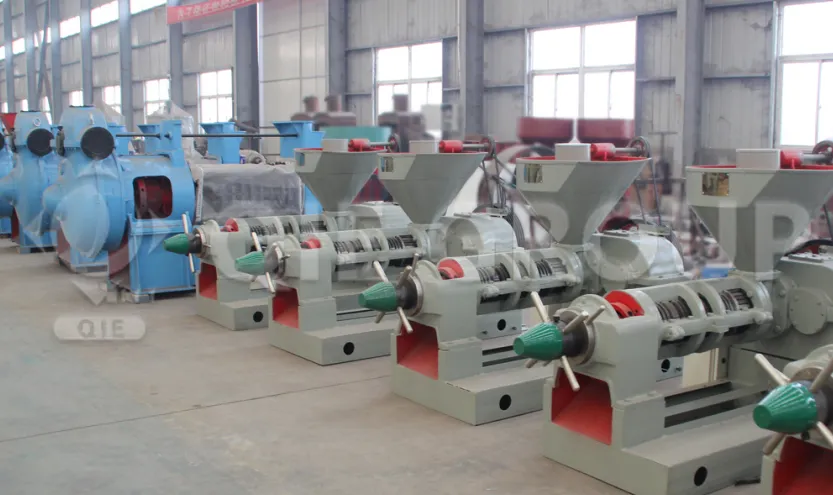
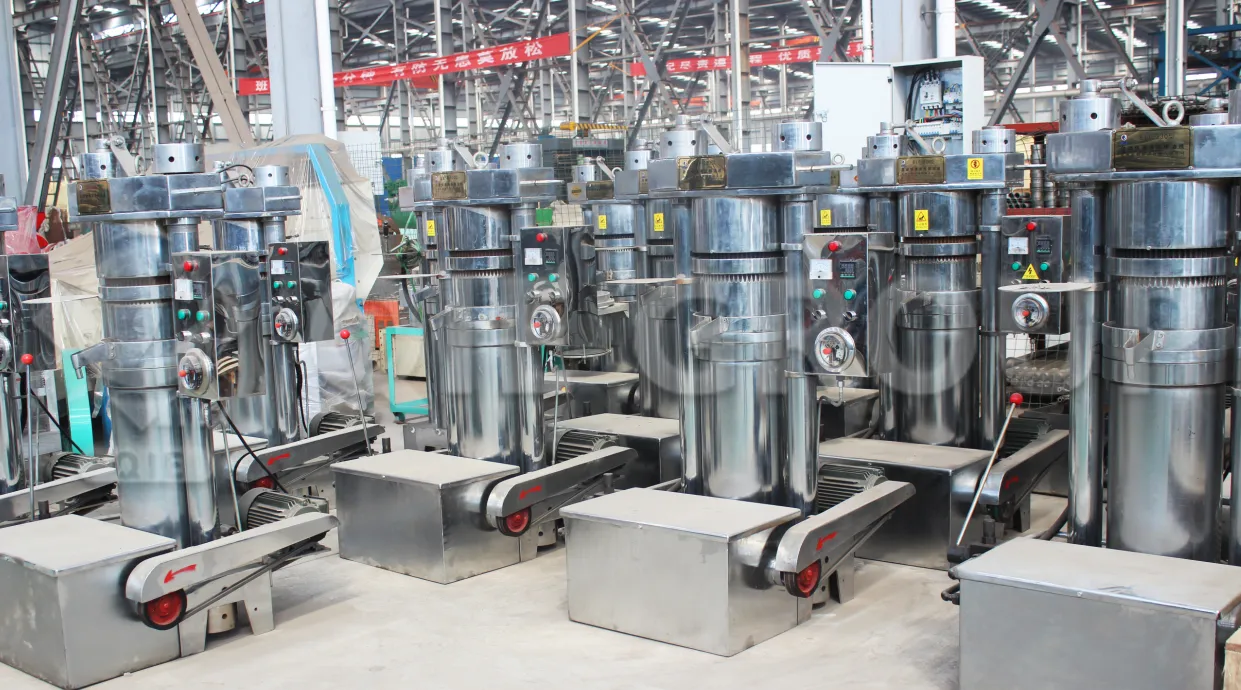
Cold pressing limits thermal exposure during extraction, while hot pressing heats or conditions the oilseed before pressing to improve oil release in suitable oilseeds. Neither method is universally better for every production line.
| Factor | Cold Pressing | Hot Pressing |
|---|---|---|
| Processing | Limits heat input during extraction | Uses heating or conditioning before pressing |
| Oil characteristics | May better preserve natural flavor and certain heat-sensitive compounds | Heating can change flavor, color, and some heat-sensitive compounds |
| Oil recovery | Depends on oilseed and press settings | Conditioning may improve pressing performance |
| Typical applications | Specialty oils and flavor-focused products | Commercial oil production and larger-scale processing |
| Equipment | Oil press and necessary pretreatment equipment | Oil press, usually with suitable heating or conditioning equipment |
Actual oil recovery and quality depend on the raw material, pretreatment, equipment design, and operating conditions.
Cold pressing uses a mechanical screw press while limiting heat input during extraction.
It is often considered for sesame, flaxseed, walnut, and sunflower seed oils where product characteristics and controlled thermal exposure are priorities.
Hot pressing generally involves heating or conditioning the prepared oilseed before mechanical pressing.
For large-scale operations, pre-pressing followed by solvent extraction may also be worth evaluating when higher overall oil recovery is a priority.
Before selecting equipment, consider these factors:
Cold pressing may suit specialty oil production, while hot pressing is worth evaluating for commercial-scale processing. The final decision should be based on the complete production line, not the press alone.
Explore QIE's large screw oil press machine for mechanical pressing equipment options.
Not necessarily. Some screw presses can operate under different processing conditions, but suitable configurations depend on the oilseed, required pretreatment, temperature control, and target capacity. Confirm equipment suitability with the manufacturer.
No. Cold-pressed oil may still require filtration or refining, depending on crude oil quality, intended use, and product specifications.
No. For oilseeds with relatively low oil content or projects requiring high oil recovery at large scale, a pre-pressing and solvent extraction system may be more economical. The appropriate route depends on capacity, raw material, and investment objectives.
QIE provides edible oil processing equipment and customized production-line solutions based on oilseed type, target capacity, and product requirements.
Contact QIE TodayTell us about your oil processing project. Our engineering and sales team will help you identify suitable equipment and processing solutions.
 493
|
 Oil press life Oil press stability Screw oil press Hydraulic oil press Oil press maintenance Edible oil processing equipment Oil press maintenance Oil press operation precautions
182
|
Physical pressing equipment Edible oil pressing production line Screw oil press Hydraulic oil press Small edible oil pressing equipment Edible oil processing equipment
495
|
Construction of large-scale pressing plants Edible oil pressing equipment Pressing production line installation Edible oil processing equipment Screw oil press installation Cooking oil equipment manufacturers
339
|
How to improve the oil output rate of the press Optimizing the oil yield of edible oil press How to improve the oil yield of oil press Oil press maintenance Methods for improving oil yield in edible oil factories Oil press oil output rate
516
|
Peanut Oil Press Peanut oil press oil output rate High efficiency screw oil press Peanut oil processing equipment Edible oil factory equipment maintenance Peanut oil processing equipment


